Financing Major Plumbing Repairs | Options Every Homeowner Should Know
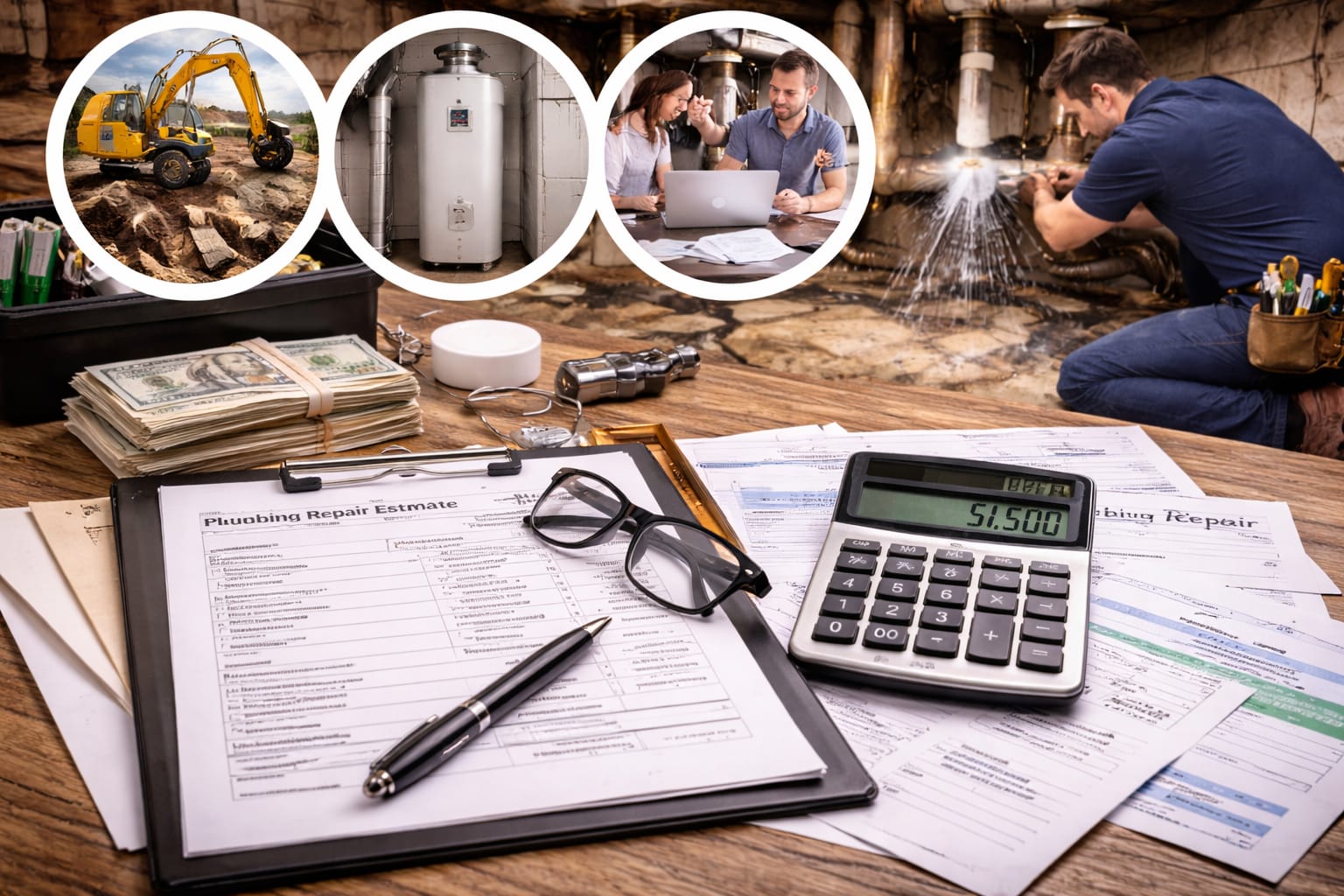
Plumbing financing refers to payment plans, loans, and credit options that allow homeowners to pay for major repairs and replacements over time rather than as a lump sum, making essential services accessible when emergency situations don’t allow advance budgeting. Major plumbing failures arrive without financial warning. In Austin, service calls average $303 and major repairs range from $1,200-$2,500+ depending on the issue. A collapsed sewer line discovered through backed-up toilets, a water heater flooding your basement at midnight, or a slab leak requiring concrete demolition rarely align with convenient budget timing or available savings. Understanding financing options helps Austin homeowners address critical plumbing emergencies immediately while managing payments responsibly.
These repairs cannot wait. Delayed sewer line repairs contaminate your property and create health hazards. Postponed water heater replacement leaves families without hot water for daily needs. Ignored slab leaks silently destroy foundations and structural components beneath your home.
At ABM Plumbing Company, we recognize that repair urgency doesn't eliminate financial reality. Understanding available financing options helps Central Texas homeowners address critical plumbing problems immediately while managing payments responsibly. We serve Austin and Central Texas, throughout the Greater Austin area with flexible financing solutions tailored to emergency situations. Here's comprehensive guidance about financing major plumbing work without overwhelming your budget, including options available specifically for our service areas.
Defining Major Plumbing Repairs
Major plumbing projects involve substantial costs through extensive labor, specialized equipment, significant material requirements, or comprehensive system replacements affecting entire homes.
Projects typically qualifying as major repairs:
Sewer line replacement: Main sewer lines carrying all household waste to municipal systems or septic tanks cost $3,000-$15,000 to repair or replace depending on damage extent, repair method (trenchless versus traditional excavation), and line length.
Tree root intrusion, collapsed clay pipes, and corroded cast iron lines represent common sewer problems requiring comprehensive repairs rather than simple fixes.
Whole-home repiping: Complete supply line replacement throughout a home addresses widespread galvanized steel corrosion, polybutylene pipe failures, or pervasive leaks indicating systemic problems. Costs typically range $4,000-$15,000 based on home size, pipe materials selected, and wall access difficulty.
Partial repiping focusing on problem areas costs $2,000-$6,000 but may prove temporary if adjacent pipes show similar deterioration.
Water heater system replacement: Standard tank water heater replacement runs $1,200-$2,500 while tankless systems cost $2,500-$4,500 installed. Premium high-efficiency models, necessary gas line upgrades, or required electrical panel modifications increase costs further.
Emergency water heater replacement during active flooding often includes water extraction and damage mitigation adding $500-$2,000 to base replacement costs.
Slab leak detection and repair: Locating and repairing leaks in pipes beneath concrete foundations requires electronic detection equipment, concrete cutting, pipe access excavation, repair completion, and concrete restoration. Total costs typically reach $2,000-$6,000 per leak location.
Multiple slab leaks may indicate systemic pipe failure requiring rerouting supply lines above the slab at costs of $3,000-$8,000 rather than repairing individual breaks.
Comprehensive water damage restoration: Plumbing failures causing extensive water damage require professional remediation including water extraction, structural drying, mold prevention, damaged material removal, and reconstruction. These projects often exceed $5,000-$25,000 depending on damage extent and affected areas.
Foundation-affecting repairs: Plumbing work requiring foundation access, underpinning, or structural modifications adds engineering consultation, permit fees, and construction costs beyond standard plumbing expenses.
These major projects justify financing consideration due to immediate necessity combined with costs exceeding typical emergency fund reserves.
The Financial Case for Financing Urgent Repairs
While avoiding debt appeals to many homeowners, certain situations make financing major repairs financially superior to depleting savings or delaying necessary work.
Consequences of delayed major plumbing repairs:
Sewer line problems worsen rapidly as tree roots expand blockages and structural damage propagates through pipe systems. A $4,000 repair avoided this year often becomes $8,000-$12,000 next year after additional pipe sections fail.
Water damage compounds exponentially with time. A basement flood contained within hours costs $2,000-$5,000 for remediation. The same situation ignored for days allows mold colonization requiring $8,000-$20,000 in professional remediation plus potential health impacts.
Foundation damage from slab leaks increases with every day of active leaking. Prolonged water exposure undermines concrete, corrodes reinforcing steel, and creates voids beneath foundations requiring expensive structural repairs.
Plumbing failures during winter freeze events risk catastrophic damage. Burst frozen pipes flood homes with hundreds of gallons before discovered, creating damage far exceeding original repair costs.
Opportunity cost of depleted emergency funds:
Completely draining emergency savings for plumbing repairs leaves families vulnerable to job loss, medical emergencies, or other urgent situations requiring immediate funds.
Financial advisors typically recommend maintaining 3-6 months of expenses in liquid emergency funds. Major plumbing repairs consuming these reserves create serious financial instability.
Financing major repairs while preserving emergency funds provides financial resilience against multiple simultaneous challenges—job loss during pandemic, medical emergency requiring travel, or vehicle failure demanding immediate replacement.
Strategic timing considerations:
Addressing plumbing problems immediately prevents secondary damage escalating total costs. Financing $5,000 in repairs today beats paying $12,000 later after water damage and mold remediation become necessary.
Tax considerations sometimes favor timing major repairs during specific years. Home office deductions, rental property expense timing, or medical deduction thresholds may influence optimal repair scheduling.
Comprehensive Financing Options Analysis
Multiple financing mechanisms exist for major plumbing repairs, each with distinct advantages, limitations, and appropriate use cases.
Personal Savings and Emergency Funds
Using accumulated savings avoids interest costs and debt obligations but carries opportunity costs and potential vulnerability.
Advantages:
-
Zero interest expense saves hundreds or thousands versus financing
-
Immediate fund availability without applications or approval delays
-
No credit score impact or debt-to-income ratio effects
-
Complete payment flexibility without minimum monthly obligations
Disadvantages:
-
Depletes reserves built for emergencies and unexpected situations
-
May take years rebuilding savings to previous levels
-
Creates vulnerability if additional emergencies occur before replenishment
-
Opportunity cost from removing funds from investment accounts earning returns
Optimal use cases:
Homeowners with substantial savings exceeding 6-12 months of expenses can cover major repairs without creating dangerous vulnerability.
Repairs under $3,000-$5,000 often merit paying cash to avoid financing costs and complexity for relatively manageable amounts.
Situations where financing approval seems unlikely due to credit challenges make savings the only viable option.
Strategic considerations:
Consider using partial savings plus financing rather than completely depleting reserves. Financing 50-70% while paying 30-50% cash preserves some emergency protection.
Credit Cards
Credit cards provide fastest fund access but generally carry highest interest rates making them expensive for large balances carried beyond introductory periods.
Advantages:
-
Immediate availability without separate applications for existing cardholders
-
0% introductory APR offers provide interest-free financing for 12-21 months
-
Rewards points or cash back offset costs by 1-2%
-
Payment flexibility allowing minimum payments during financial stress
Disadvantages:
-
Regular APRs of 18-28% create expensive financing after introductory periods
-
High balances significantly impact credit utilization ratios and credit scores
-
Minimum payments barely cover interest on large balances, extending repayment years
-
Temptation to accumulate additional charges beyond plumbing repairs
Optimal use cases:
Smaller repairs of $2,000-$5,000 manageable within 0% introductory periods work well with disciplined payoff plans.
Homeowners with excellent credit qualifying for premium cards with extended 0% periods and high limits benefit most.
Emergency situations requiring immediate work before other financing approvals process use credit cards as bridge financing.
Strategic approach:
Calculate required monthly payments to eliminate balances before introductory rates expire. A $5,000 balance needs $278 monthly payments over 18 months.
Transfer balances to 0% balance transfer cards (typically 3-5% transfer fee) extending interest-free periods when initial cards' promotional rates expire.
Home Equity Loans and HELOCs
Home equity financing leverages property value providing large borrowing capacity at relatively low interest rates for homeowners with substantial equity.
Home Equity Loans characteristics:
Fixed interest rates typically 6-9% based on credit scores and loan-to-value ratios provide predictable monthly payments.
Lump sum disbursement at closing provides immediate funds for large projects with clear total costs.
Repayment terms of 5-30 years allow manageable monthly payments spreading costs over extended periods.
Closing costs of $500-$2,000 plus potential appraisal fees increase total borrowing costs.
HELOC (Home Equity Line of Credit) characteristics:
Revolving credit lines allowing draws as needed provide flexibility for projects with uncertain final costs.
Variable interest rates typically starting 7-10% can increase over time with prime rate changes.
Interest-only payment options during draw periods (typically 10 years) minimize short-term payment burden.
Smaller upfront costs than traditional home equity loans make HELOCs attractive for smaller borrowing needs.
Advantages:
-
Significantly lower interest rates than credit cards or personal loans
-
Large borrowing capacity often $50,000-$250,000 based on available equity
-
Interest may be tax-deductible if repairs qualify as home improvements
-
Extended repayment terms create very manageable monthly payments
Disadvantages:
-
Home serves as collateral risking foreclosure if payments cannot be maintained
-
Application process takes 2-6 weeks from application to fund availability
-
Closing costs add to total borrowing expense
-
Variable rate HELOCs carry payment uncertainty as rates fluctuate
Optimal use cases:
Very large projects exceeding $10,000-$15,000 benefit most from home equity financing's lower rates and extended terms.
Homeowners with substantial equity (30%+ of home value) and stable employment qualify most easily.
Projects combining multiple major repairs or upgrades justify home equity loan processing time and costs.
Non-urgent repairs allowing time for application processing fit home equity financing timelines.
Strategic considerations:
Compare total interest paid over loan life versus shorter-term higher-rate options. A 15-year home equity loan at 7% costs more total interest than a 5-year personal loan at 9% despite lower rate.
Consider tax deductibility. Interest deduction worth 22-32% of interest paid (based on tax bracket) substantially reduces effective borrowing costs.
Contractor and Plumbing Company Financing
Many plumbing companies partner with financing providers offering installment plans specifically for home repairs with streamlined approval processes.
Typical program characteristics:
Promotional periods with 0% interest for 12-24 months on approved credit allow interest-free financing for qualified borrowers.
Regular APRs of 9-20% apply after promotional periods or for borrowers not qualifying for 0% offers.
Monthly payment requirements based on balance and term selection provide predictable budgeting.
Quick approval processes often providing same-day decisions facilitate rapid project starts.
Application simplicity with minimal documentation requirements (often just income verification and credit check) accelerates funding.
Advantages:
-
Point-of-service application convenience eliminates separate lender searches
-
Fast approval decisions prevent project delays
-
Promotional 0% financing provides substantial savings when fully paid during promotional period
-
Deferred interest structures (rather than accruing interest) reward timely payoff
Disadvantages:
-
Deferred interest programs charge all accumulated interest if any balance remains at promotional period end
-
Regular APRs after promotions often exceed bank personal loan rates
-
May require opening retail credit accounts impacting credit report inquiries
-
Prepayment of full balance required to avoid interest in deferred programs
Optimal use cases:
Repairs requiring immediate start without time for traditional loan applications benefit from contractor financing speed.
Borrowers confident in repaying balances within promotional periods maximize 0% interest benefits.
Emergency situations where other financing sources haven't yet approved use contractor programs as immediate solutions.
Strategic management:
Calculate precise monthly payments required to eliminate balances before promotional periods expire. Set automatic payments at calculated amounts ensuring timely payoff.
Mark promotional period end dates prominently in calendars with reminders 60-90 days before expiration.
Pay promotional balance minimums while making larger payments on regular APR debts, then aggressively pay promotional balance final months before interest applies.
Personal Loans from Banks and Credit Unions
Unsecured personal loans provide fixed-rate financing without collateral requirements through traditional lending institutions.
Typical loan characteristics:
Loan amounts of $1,000-$50,000 accommodate most major plumbing repair costs without home equity requirements.
Fixed interest rates of 7-20% based on credit scores, income, and debt-to-income ratios provide payment predictability.
Repayment terms of 2-7 years balance manageable monthly payments with reasonable total interest costs.
Application processes taking 2-7 days from submission to funding allow relatively quick fund access.
Advantages:
-
No collateral requirements protect homes from foreclosure risk
-
Fixed rates and terms provide complete payment predictability
-
Generally lower rates than credit cards though higher than home equity products
-
Faster approval than home equity loans without appraisal requirements
Disadvantages:
-
Higher rates than secured loans for borrowers with average credit
-
Smaller maximum amounts may not cover very large projects
-
Origination fees of 1-6% increase total borrowing costs
-
Harder qualification for borrowers with credit challenges
Optimal use cases:
Repairs costing $5,000-$25,000 fit personal loan ranges optimally.
Homeowners without substantial home equity or preferring not to use homes as collateral benefit from unsecured lending.
Borrowers with good-to-excellent credit (700+ scores) qualify for most competitive rates.
Strategic considerations:
Compare total interest paid including origination fees across multiple lenders. A 9% rate with 5% origination fee costs more than 11% with no fee over short terms.
Credit unions often provide rates 2-4 percentage points lower than banks for members in good standing.
Evaluating Financing Options for Your Situation
Selecting optimal financing requires analyzing specific repair costs, your financial position, and available options considering total costs over complete repayment periods.
Key comparison factors:
Total cost of borrowing: Calculate total interest plus fees paid over entire repayment period rather than focusing solely on interest rates or monthly payments.
A $10,000 repair financed through contractor 0% promotional financing costs $10,000 if paid within 18 months. The same amount via 5-year personal loan at 10% costs $12,748 total. A 15-year home equity loan at 7% costs $13,455 despite lower interest rate through extended term.
Monthly payment affordability: Ensure monthly obligations fit comfortably within budgets leaving cushion for unexpected expenses.
Financial advisors recommend total debt payments not exceed 36% of gross monthly income. A $5,000 household with $1,800 maximum debt payments must fit plumbing repair financing within existing obligations.
Payoff timeline flexibility: Consider whether rigid payment requirements or flexible payoff options suit your financial situation better.
HELOCs allow interest-only payments during draw periods providing flexibility during income disruptions. Fixed personal loans require consistent monthly payments regardless of circumstances.
Credit score impacts: Different financing types affect credit scores differently based on credit utilization, new inquiries, and account types.
Maxing out credit cards dramatically increases utilization ratios potentially dropping scores 50-100 points. Personal loans and home equity products typically impact scores minimally when payments remain current.
Tax implications: Interest deductibility substantially reduces effective borrowing costs for taxpayers itemizing deductions.
Home equity loan interest remains deductible for repairs qualifying as home improvements. A 7% loan becomes 4.9% effective rate in 30% tax bracket through deductible interest.
Preparing for Future Major Repairs
While financing addresses immediate repair needs, strategic planning prevents future financial crises from inevitable plumbing system aging.
Building dedicated repair reserves:
Automatic monthly transfers of $200-$400 into dedicated home maintenance accounts accumulate $2,400-$4,800 annually covering many major repairs without financing.
After financing major repairs, maintain monthly contributions building reserves for next inevitable system failure.
Inspection programs identifying problems early:
Annual professional plumbing inspections costing $150-$300 identify developing problems before catastrophic failures requiring emergency repairs and premium pricing.
Early detection allows scheduling repairs during convenient times, shopping for competitive quotes, and potentially handling work in phases spreading costs.
Insurance reviews ensuring adequate coverage:
Verify homeowner insurance covers sudden plumbing failures and resulting water damage. Standard policies typically cover burst pipes but exclude gradual damage from slow leaks.
Consider optional water backup coverage protecting against sewer line failures and drain backups often excluded from standard policies.
Some insurers offer premium discounts for leak detection systems and automatic shutoff installations reducing claims probability.
System upgrade timing strategy:
Replace aging water heaters, supply lines, and other components proactively before failures force emergency replacement at premium costs.
Financing planned replacements during promotional 0% periods costs far less than emergency financing at regular rates plus emergency labor premiums.
Making Informed Financing Decisions
Major plumbing repairs demand immediate attention regardless of financial preparedness. Understanding available financing options and their appropriate applications helps homeowners address critical problems without creating long-term financial hardship.
At ABM Plumbing Company, our licensed plumbers provide honest assessments about repair urgency and timing flexibility helping homeowners make informed decisions about financing needs. We work with multiple financing partners offering competitive options for qualified borrowers while respecting that financial decisions remain personal choices.
We'll explain which repairs require immediate attention versus those allowing time to arrange optimal financing. This transparency helps you balance plumbing system needs with financial realities.
Major plumbing repairs in Austin are expensive. Sewer line replacement averages approximately $2,000 for typical Austin homes, water heater replacement costs $600-$3,900, and repiping a house can exceed $10,000. Fortunately, financing options exist to spread these costs. Many Austin plumbers partner with lenders to offer 12-60 month payment plans, sometimes with promotional 0% APR periods.
Frequently Asked Questions
What financing options are available for Austin plumbing repairs?
Many Austin plumbing companies offer third-party financing through lenders like Synchrony. Options typically include 12, 24, or 60-month terms at varying interest rates. Some promotions offer 0% APR for 12 months on qualifying repairs. ABM Plumbing works with multiple lenders and can discuss options before work begins. Call (512) 620-8200.
What’s the typical cost of major repairs in Austin?
Main sewer line replacement: approximately $2,000 on average (costs vary by distance and difficulty). Water heater replacement: $1,200-$2,500 for tank, $2,500-$4,500 for tankless. Repiping a house: $5,000-$15,000. Emergency repairs cost 1.5-3x more. Financing makes these affordable at $100-$400 monthly depending on amount and term.
Do I need a specific credit score for plumbing repair financing?
Most lenders work with customers having fair to good credit (around 620+). Even if your credit is lower, some lenders approve based on income. Discuss your situation with the plumbing company before they begin work. Ask about options if financing is denied.
Are there government assistance programs for plumbing repairs in Austin?
Some Austin nonprofits offer repair assistance for low-income homeowners. Contact Austin Energy and Austin Water about conservation grant programs that subsidize efficient upgrades. ABM Plumbing may know of available programs in your neighborhood.
Contact ABM Plumbing Company when facing major plumbing repairs. We'll assess your situation thoroughly, explain all necessary work clearly, and help you understand realistic timelines allowing informed financing decisions that protect both your home and your financial stability.
About the Author
Byron D Smith is a Responsible Master Plumber at ABM Plumbing Company of Central Texas. Licensed Texas Master Plumber serving Central Texas. Byron holds Texas Master Plumber License #45625 with the Responsible Master Plumber endorsement and oversees all plumbing work performed by ABM Plumbing.
Need Professional Plumbing Help?
Contact ABM Plumbing Company for expert service in Austin, Round Rock, Cedar Park, Georgetown, Pflugerville and surrounding areas.
Get a Free Quote