Complete Annual Plumbing Inspection Checklist
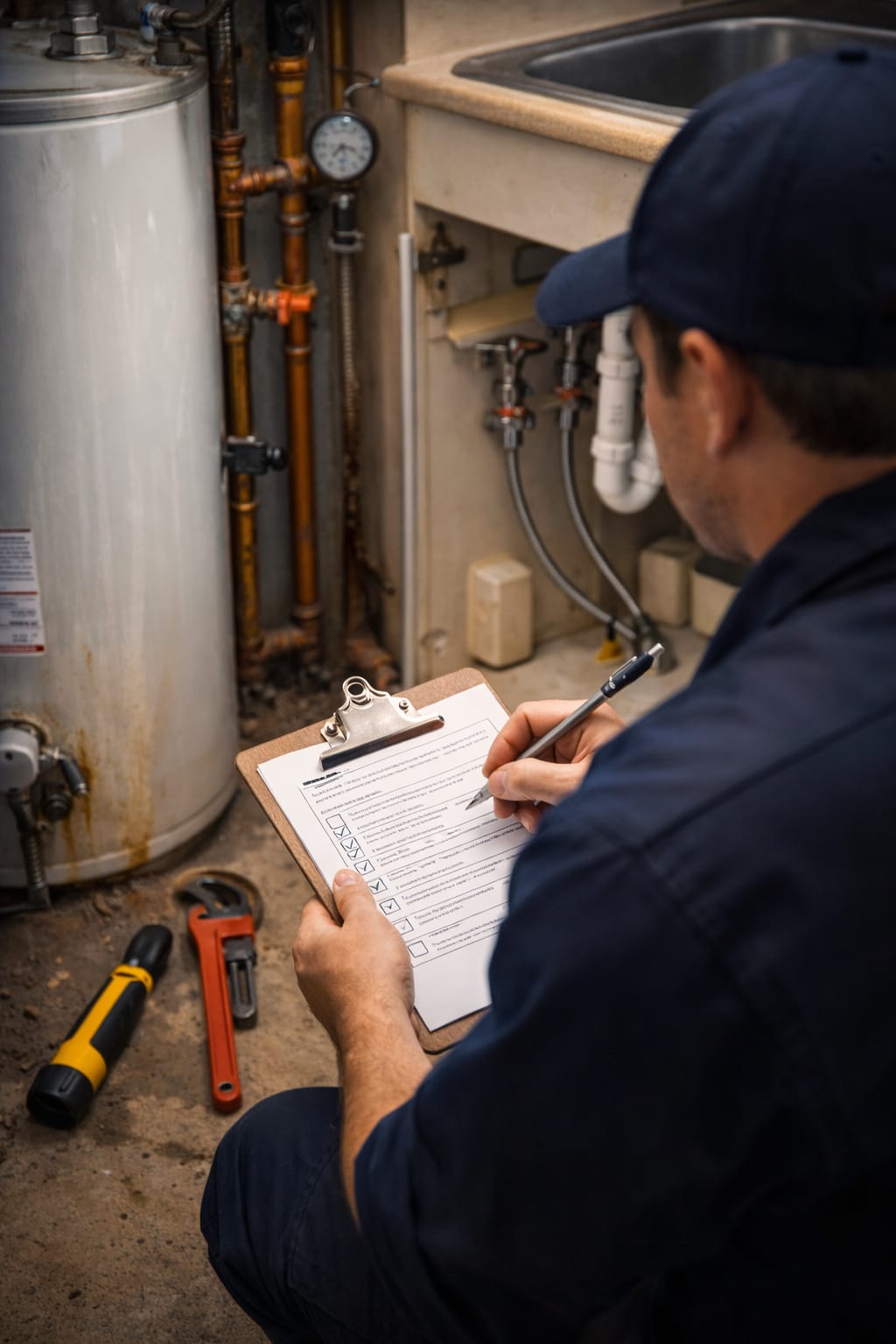
Most plumbing problems don’t start as emergencies. They begin as small, often invisible issues that slowly worsen over time. In Central Texas homes around the Central Texas area, an annual plumbing inspection helps catch those problems early, before they turn into leaks, flooding, or system failures.
This checklist is designed for homeowners who want a practical, thorough way to assess their plumbing system once a year. Some items are simple visual checks, while others may point to when it’s time to call a professional. Even completing part of this list can help extend the life of your plumbing and reduce unexpected repairs.
Check for Visible Leaks
Start with a slow walk through your home, looking for visible signs of water where it shouldn’t be.
Inspect under sinks, around toilets, behind washing machines, and near dishwashers. Look for dripping water, damp cabinet bottoms, warped wood, or water stains. Even a small, steady drip can waste a surprising amount of water and lead to hidden damage over time.
Also check exposed pipes in garages, basements, crawl spaces, and utility rooms for moisture or corrosion.
Inspect Water Pressure
Water pressure that is too high or too low can signal underlying issues.
Turn on several fixtures throughout the house and note any sudden pressure drops, sputtering, or inconsistent flow. High pressure may feel convenient, but it puts extra strain on pipes, valves, and appliances, increasing the risk of leaks.
If water pressure feels unusually strong or weak, it may be worth having it tested and adjusted.
Examine Toilets for Leaks and Stability
Toilets are one of the most common sources of hidden leaks.
Check around the base for moisture or staining, which could indicate a failing wax seal. Gently rock the toilet to see if it feels loose, as movement can damage the seal over time.
Remove the tank lid and listen for running water when the toilet is not in use. A constantly running toilet often means worn internal components that should be replaced.
Test Faucets and Fixtures
Turn on every faucet, shower, and tub in the home.
Watch for dripping after the water is turned off, uneven spray patterns, or squealing sounds when valves are opened or closed. These can indicate worn washers, cartridge issues, or mineral buildup.
Pay attention to how long it takes for hot water to arrive, as long delays may suggest inefficiencies or pipe layout issues.
Inspect Drains for Slow Flow
Slow drains can be an early warning sign of buildup in your plumbing system.
Run water in sinks, tubs, and showers and watch how quickly it drains. Gurgling sounds, bubbles, or water backing up can indicate partial blockages or venting problems.
Addressing slow drains early can help avoid full clogs or sewer backups later.
Check Exposed Pipes for Corrosion or Damage
Look closely at exposed plumbing lines for rust, discoloration, flaking metal, or white mineral buildup.
Corrosion weakens pipes over time and often leads to leaks. Pay special attention to older plumbing materials and areas where pipes connect to fittings or valves.
If you notice heavy corrosion or recurring leaks in the same area, it may be a sign that sections of pipe are nearing the end of their lifespan.
Inspect the Water Heater
Your water heater should be included in every annual plumbing inspection.
Check around the base for moisture or rust. Look at the temperature and pressure relief valve and ensure there are no signs of leakage. Inspect supply lines for corrosion or bulging.
If your water heater is nearing the end of its expected lifespan, regular inspections become even more important to prevent sudden failure.
Test Shutoff Valves
Every shutoff valve in the home should be tested at least once a year.
This includes fixture shutoffs under sinks and toilets, as well as the main water shutoff valve. Valves that won’t turn, leak when operated, or feel stuck should be addressed before an emergency occurs.
A functioning shutoff valve is one of the most important safety features in a plumbing system.
Look for Signs of Hidden Water Damage
Not all plumbing issues are immediately visible.
Watch for unexplained increases in water bills, musty odors, peeling paint, warped flooring, or staining on ceilings and walls. These signs can indicate leaks behind walls, under floors, or above ceilings.
Catching hidden leaks early can prevent mold growth and structural damage.
Inspect Outdoor Plumbing
Outdoor plumbing is often overlooked but just as important.
Check hose bibs, outdoor faucets, irrigation connections, and exposed exterior pipes. Look for leaks, cracks, or signs of freezing damage. Ensure hoses are disconnected when not in use and that outdoor fixtures are properly supported.
Seasonal temperature changes can be especially hard on exterior plumbing components.
Review Appliance Connections
Appliances such as washing machines, dishwashers, and refrigerators rely on supply lines that can fail over time.
Inspect hoses for bulging, cracking, or corrosion. Older rubber hoses should be replaced with braided stainless steel lines for added durability. Make sure connections are tight but not overtightened.
A failed appliance hose can release a large volume of water very quickly.
When a Professional Inspection Makes Sense
While many of these checks can be done by homeowners, some issues require specialized tools or experience to evaluate properly. Sewer lines, water pressure regulation, gas lines, and aging plumbing systems benefit from professional inspection.
If your home is older, has a history of plumbing issues, or you’re planning renovations, a comprehensive inspection can provide peace of mind and help prioritize future repairs.
Keeping Your Plumbing System Reliable Year After Year
A thorough annual plumbing inspection is one of the smartest investments Austin homeowners can make. Central Texas conditions, including very hard water at from the Colorado River, expansive clay soil that shifts with moisture levels, and seasonal freeze risks from December through mid-February, put extra stress on residential plumbing systems. Homes in established neighborhoods like Hyde Park, Tarrytown, and Allandale with older pipes are especially vulnerable. An annual inspection by a licensed plumber can catch small problems before they become expensive emergencies, potentially saving Austin homeowners thousands in repair costs.
Frequently Asked Questions
How much does a plumbing inspection cost in Austin?
A comprehensive plumbing inspection in Austin typically costs $150 to $350, depending on home size and complexity. ABM Plumbing Company offers thorough inspections for homes across Austin. Call (512) 620-8200 to schedule yours.
How often should Austin homes have plumbing inspected?
Austin plumbing professionals recommend annual inspections for all homes. Homes older than 25 years, homes with mature live oak trees near sewer lines, and homes that experienced issues during Winter Storm Uri (2021) should consider inspections every 6 months.
What does a plumbing inspection include?
A complete inspection covers water heater condition and efficiency, water pressure testing (optimal range is 40 to 60 PSI), drain flow rates, visible pipe condition, toilet and fixture operation, water meter leak tests, and sewer line assessment. In Austin, inspectors also check for hard water damage and mineral buildup.
Can a plumbing inspection find hidden leaks?
Yes. Professional plumbers use water meter readings, pressure tests, and sometimes electronic leak detection to find hidden leaks behind walls, under slabs, and in crawl spaces. In Austin homes with expansive clay soil, slab leaks are particularly common and can be caught early with regular inspections.
An annual plumbing inspection is a proactive way to protect your home, conserve water, and avoid surprise repairs. If you’d like help performing a thorough inspection or addressing any issues you uncover, ABM Plumbing Company offers professional plumbing inspections focused on long-term reliability and clear recommendations. A well-maintained plumbing system is one of the best investments you can make in your home.
About the Author
Byron D Smith is a Responsible Master Plumber at ABM Plumbing Company of Central Texas. Licensed Texas Master Plumber serving Central Texas. Byron holds Texas Master Plumber License #45625 with the Responsible Master Plumber endorsement and oversees all plumbing work performed by ABM Plumbing.
Need Professional Plumbing Help?
Contact ABM Plumbing Company for expert service in Austin, Round Rock, Cedar Park, Georgetown, Pflugerville and surrounding areas.
Get a Free Quote