Reading Your Water Meter to Detect Leaks | A Homeowner's Guide
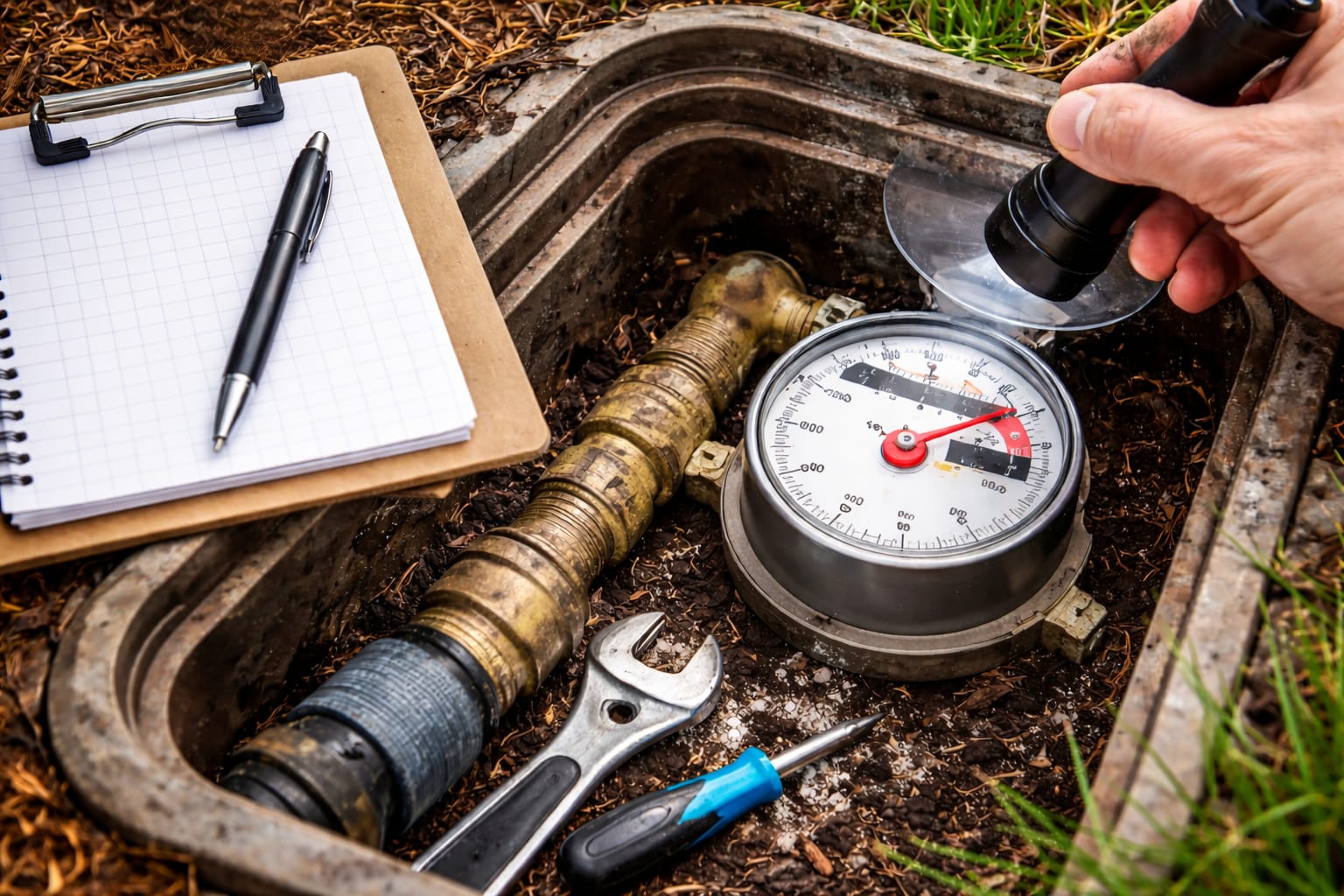
Austin and surrounding Central Texas residents served by local water utilities can use this guide to monitor your consumption through your water meter, just as Austin Water recommends for conservation-conscious homeowners.
Hidden plumbing leaks silently waste thousands of gallons monthly while inflicting cumulative damage to foundations, walls, and structural components. A toilet flapper leak wastes 200 gallons daily—6,000 gallons monthly adding $40-80 to water bills. Underground supply line leaks waste even more while undermining foundations and creating subsurface voids.
Most homeowners remain unaware of hidden leaks until water bills spike dramatically or visible damage appears. By then, months of waste and deterioration have already occurred costing far more than early detection and repair would have required.
Your water meter provides continuous leak detection monitoring requiring only basic observation skills and five minutes quarterly. At ABM Plumbing Company, we teach homeowners to use water meters as powerful diagnostic tools identifying problems long before expensive damage develops. Here's comprehensive guidance about water meter reading and leak detection.
Understanding Water Meter Function and Purpose
Water meters measure total water volume entering properties from municipal mains or well systems. These precision instruments track consumption for billing purposes while providing valuable diagnostic information about system integrity.
Meter measurement methods:
Mechanical displacement meters use internal chambers filling and emptying with each water volume increment. Rotating pistons or oscillating discs mechanically drive register dials displaying cumulative usage.
These traditional meters dominate residential installations through reliability, accuracy, and decades-proven performance without electrical power requirements.
Electronic meters measure flow electronically through magnetic or ultrasonic sensors transmitting data to digital displays and often to utilities via wireless communication.
Newer installations increasingly use electronic meters providing utilities with real-time consumption data and leak alerts though costing more than mechanical alternatives.
Measurement units:
US water meters typically measure in gallons or cubic feet. One cubic foot equals 7.48 gallons—a conversion factor necessary interpreting some meter displays.
Residential meters commonly register in 10-gallon or 1 cubic foot increments with additional precision dials showing fractional amounts down to individual gallons.
Accuracy specifications:
Quality residential meters maintain ±2% accuracy across normal flow ranges. This precision makes them reliable leak detection tools when properly read and interpreted.
Meters occasionally fail or lose accuracy over time. Utilities periodically test and replace meters ensuring continued accurate billing and leak detection capability.
Locating Your Water Meter
Finding your water meter represents the first step toward using it for leak detection. Meter locations vary by region, climate, and installation era.
Common meter locations:
Underground meter pits: Most common configuration places meters in buried concrete or plastic vaults near property lines typically within 5-15 feet of street curbs.
These boxes include hinged metal or composite lids marked "WATER" or "WATER METER" often painted utility company colors. Lift rings or built-in handles facilitate lid removal.
Remove accumulated dirt, leaves, or debris before fully lifting lids. Some meter pits contain multiple meters serving adjacent properties—ensure you identify your specific meter before reading.
Basement installations: Cold climate regions often install meters indoors preventing freeze damage. Look near where main supply lines enter homes—typically along foundation walls facing streets.
These meters usually mount on walls near main shutoff valves at eye level for convenient reading without tools or excavation.
Crawl space locations: Homes with crawl spaces sometimes have meters just inside foundation access points. These installations require crawling or flashlight illumination for reading.
Garage or utility room placement: Some properties, particularly in temperate climates, have meters in garages, utility rooms, or dedicated meter closets providing protected access.
Identifying your specific meter:
Property addresses typically appear on meter faces, register covers, or adjacent tags. Verify you're reading the correct meter in multi-unit buildings or properties with multiple services.
Water utility bills include meter serial numbers. Compare bill numbers against meter identifications ensuring you monitor the correct device.
Decoding Water Meter Displays
Water meters use various display configurations presenting consumption data and flow indicators. Understanding your specific meter type enables accurate reading and interpretation.
Straight-reading digital displays:
Modern meters increasingly feature odometer-style digital displays reading directly in gallons or cubic feet. These displays require no calculation or interpretation—simply record visible numbers representing total cumulative consumption since meter installation.
Sequential readings show consumption between measurements. If Monday shows 245,678 gallons and Friday shows 245,973 gallons, you consumed 295 gallons over that period.
Analog dial configurations:
Older mechanical meters often feature multiple circular dials—typically 5-7 dials arranged horizontally across the register face. These dials rotate at different speeds representing different magnitude digits.
Reading these meters requires understanding that adjacent dials typically rotate opposite directions. Some dials turn clockwise while neighbors rotate counterclockwise—note directional arrows on dial faces.
Record numbers indicated by pointers starting from highest magnitude dial (often labeled 100,000 or 10,000) proceeding to smallest magnitude. When pointers rest between numbers, record the lower number.
Practice improves accuracy. Compare your readings against utility bills verifying correct interpretation before relying on measurements for leak detection.
Flow indicators—the leak detection key:
Separate from consumption displays, most meters include flow indicators specifically designed detecting active water movement even when main dials barely register.
Triangular or star-shaped indicators: Small triangular, star, or gear-shaped pointers rotate whenever water flows. Even tiny leaks cause visible movement distinguishing active flow from static conditions.
These sensitive indicators detect flows as low as 0.1 gallons per minute—a rate so slow main register dials appear motionless yet indicates significant 144 gallons daily waste.
Low-flow dials: Some meters feature dedicated low-flow dials sweeping full rotations for small consumption amounts. One complete rotation might represent just 1-2 gallons making leak detection highly sensitive.
Electronic flow displays: Digital meters sometimes show current flow rates in gallons per minute or indicate active flow through flashing indicators or on-screen messages.
Performing Accurate Leak Detection Tests
Systematic water meter testing identifies active leaks with high confidence when following proper procedures eliminating false positives from legitimate consumption.
Basic leak detection procedure:
Step 1: Cease all water use throughout the property. This critical requirement ensures any detected flow represents leaks rather than intentional consumption.
Turn off all faucets, showers, and hose bibs. Verify closure by listening for running water and checking fixtures visually.
Ensure no toilets are running. Flush each toilet then wait 10 minutes for tanks to completely refill and valves to close before testing. Running toilets create constant flow mimicking leak symptoms.
Verify all water-using appliances are off. Dishwashers mid-cycle, washing machines filling, or active ice makers invalidate tests. Wait until all cycles complete before testing.
Disable automatic irrigation systems preventing timed cycles during testing periods. Bypassing irrigation controllers ensures outdoor watering won't register as leaks.
Notify household members about testing preventing inadvertent water use invalidating results. Post notes on fixtures if testing during occupied periods.
Step 2: Record initial meter reading. Note exact numbers on all consumption dials or digital displays. Photograph meter faces for reference eliminating transcription errors or memory uncertainty.
Observe flow indicator position noting its orientation for comparison after waiting period.
Step 3: Wait and observe. Remain at meter location for minimum 15 minutes observing flow indicator continuously. Any movement during this observation period confirms active leaks with high certainty.
For maximum sensitivity and leak quantification, record initial reading then wait 1-4 hours before taking second reading. Extended periods allow calculation of leak rates guiding urgency and troubleshooting.
Step 4: Compare readings and indicator status. If flow indicators moved or consumption numbers changed despite zero intentional use, leaks definitely exist somewhere between meter and final fixtures.
Calculate leak rate by dividing consumption change by elapsed time. A 5-gallon increase over 2 hours indicates 2.5 gallons per hour or 60 gallons daily—significant waste requiring attention.
Overnight testing for enhanced sensitivity:
Evening tests before bed through morning recheck maximize detection sensitivity while ensuring household inactivity. Record meter reading after final bathroom use (typically 10 PM - midnight) then recheck first thing upon waking (6-8 AM).
Eight-hour overnight periods provide substantial leak accumulation making even small leaks obvious. A 0.5 gallon per hour leak—barely detectable in 15-minute tests—shows clear 4-gallon increase overnight.
This method particularly helps confirming intermittent leaks from pressure fluctuations or temperature-dependent conditions less consistent during brief daytime tests.
Isolating Leak Locations Through Systematic Testing
Once leak existence is confirmed, systematic isolation procedures narrow potential locations guiding repair priorities and professional diagnostic efforts.
Interior versus exterior leak differentiation:
After confirming leaks through meter testing, close main house shutoff valve located where supply lines enter buildings—typically near meters in basements or near hot water heaters.
Wait 15-30 minutes allowing system pressure stabilization then recheck meter flow indicators and readings.
If meter stops moving: Leaks exist within home's interior plumbing system—pipes inside foundations, walls, or ceilings, plus all fixtures and appliances. This conclusion focuses troubleshooting on accessible areas potentially repairable without excavation.
If meter continues showing flow: Leaks exist in supply lines between meters and main shutoffs—typically underground sections running from street connections to foundation penetrations. These exterior leaks require professional detection and often excavation for access.
Multi-building property isolation:
Properties with detached structures served by single meters—garages with bathrooms, guest houses, workshops with utility sinks—require additional isolation determining which building contains leaks.
Systematically close branch shutoff valves serving individual structures while monitoring meters identifying leak locations through elimination.
Interior leak location strategies:
Toilet leak testing: Toilets represent most common interior leak sources accounting for 25-30% of residential leaks. Simple dye testing quickly identifies running toilets without meter monitoring.
Add food coloring or dye tablets to toilet tanks. Wait 15 minutes without flushing. If color appears in bowls, flappers or fill valves are leaking requiring replacement.
Test every toilet in homes. Multiple simultaneous toilet leaks commonly exist in properties with aging fixtures.
Faucet and fixture inspection: Systematically inspect all faucets, showers, tubs, and appliances for visible drips or running water. Check under sinks for supply line connection leaks or corrosion signs.
Hot water isolation: Turn off water heater power (electric) or gas supply valve (gas heaters) then close cold water inlet valves supplying water heaters.
Monitor meters with heaters isolated. If leaks stop, problems exist in water heaters themselves or hot water distribution systems—useful diagnostic information narrowing repair scope.
Observation for secondary indicators:
Unexplained wet areas: Damp spots on walls, ceilings, or floors indicate active leaks even without visible water. These areas feel cool to touch and may show discoloration or texture changes.
Mold or mildew growth: Musty odors or visible mold especially in typically dry areas suggest hidden moisture from concealed leaks.
Water staining: Ceiling stains, wall discoloration, or floor warping indicate current or past leak activity requiring investigation.
Foundation cracks or settling: Severe underground leaks undermine soil supporting foundations creating voids that cause settlement cracks and structural movement.
Unusually lush vegetation: Underground leaks create constantly moist soil supporting exceptionally green grass or plant growth in specific areas—often visible as distinct verdant patches during drought when surrounding vegetation shows stress.
Quantifying Leak Severity and Urgency
Detected leak rates guide urgency levels and repair prioritization. Different leak magnitudes carry different implications requiring varying response timelines.
Minor leaks (under 1 gallon/hour or 24 gallons/day):
These slow leaks—typical of worn faucet washers or early-stage toilet flappers—waste 720 gallasses monthly costing $5-15 on utility bills.
While not emergencies, address these leaks within weeks preventing progressive worsening and cumulative costs. Most resolve through simple washer or flapper replacements costing under $100.
Moderate leaks (1-5 gallons/hour or 24-120 gallons/day):
Common moderate leaks include fully failed toilet flappers, dripping shower valves, or small supply line cracks. These waste 720-3,600 gallons monthly costing $15-75 on bills.
Address these within days to week preventing water damage if leaks are interior or soil undermining if underground. Repairs typically cost $150-500 depending on location and accessibility.
Significant leaks (5-20 gallons/hour or 120-480 gallons/day):
Major fixture failures, water heater connections, or moderate underground line cracks produce these substantial leaks wasting 3,600-14,400 gallons monthly costing $75-300 on bills.
These demand immediate professional attention within 24-48 hours as potential water damage or soil undermining accelerates rapidly. Repair costs vary widely ($300-2,000+) based on leak location and access requirements.
Severe leaks (over 20 gallons/hour or 480+ gallons/day):
Burst pipes, major line failures, or catastrophic fixture breaks create emergency conditions requiring immediate shutoff and professional repair. These waste 14,400+ gallons monthly—costs becoming secondary to preventing thousands in property damage.
Call emergency plumbing services immediately. Don't delay for regular business hours as damage accumulates exponentially with time.
Regular Monitoring Schedules and Best Practices
Systematic meter monitoring provides ongoing leak surveillance catching problems at earliest opportunity preventing maximum damage and waste.
Recommended monitoring frequency:
Quarterly leak detection tests: Perform comprehensive leak tests every three months establishing baseline consumption patterns and detecting slowly developing leaks before significant waste accumulates.
Monthly quick checks: Brief meter observations during monthly bill reviews catch obvious problems between quarterly detailed tests.
Post-plumbing work verification: Always test for leaks within 24-48 hours after any plumbing repairs, installations, or service ensuring work quality and detecting installation issues immediately.
Seasonal transition testing: Check for leaks when weather changes dramatically. Freezing conditions stress systems while thawing reveals freeze damage. Hot summer months stress different components through thermal expansion.
Record keeping advantages:
Maintain simple logs recording:
-
Test dates
-
Meter readings
-
Calculated daily consumption
-
Household size during measurement periods
This historical data establishes normal consumption baselines making anomalies obvious. Sudden consumption increases prompt immediate testing before next quarterly schedule.
Consumption benchmarks:
Average person consumes 80-100 gallons daily though wide variations exist based on habits, appliance efficiency, and irrigation. Four-person households typically use 300-400 gallons daily.
Consumption exceeding these benchmarks by 20%+ without obvious causes (guests, lawn watering, pool filling) suggests leaks warrant investigation.
Professional Leak Detection Technology
While meter testing confirms leak existence and approximate magnitudes, locating specific leak points—especially underground or concealed within structures—often requires professional equipment and expertise.
Professional detection methods:
Acoustic leak detection: Specialized microphones detect characteristic sounds leaking water makes passing through soil, concrete, or pipe materials. Experienced technicians follow sound intensity gradients pinpointing leak locations within feet.
This non-invasive method works excellently for underground supply line leaks avoiding exploratory excavation.
Thermal imaging: Infrared cameras detect temperature differentials caused by water leaks. Wet areas appear cooler than surrounding dry materials revealing hidden leaks behind walls or under floors.
This technology particularly helps slab leak detection showing leak locations before breaking concrete.
Tracer gas detection: Technicians pressurize plumbing with safe detectable gases then use sensors locating where gases escape through leaks. This method works when acoustic detection proves difficult or inconclusive.
Video pipe inspection: Sewer cameras inserted through drain cleanouts reveal drain line leaks, cracks, and root intrusion though don't locate supply line leaks.
Professional detection advantages:
Licensed plumbers combine detection technology with system knowledge and experience efficiently locating leaks while homeowners struggle.
Accurate location prevents unnecessary demolition and excavation reducing repair costs substantially versus exploratory approaches.
Professional detection typically costs $200-500—expensive seeming until compared against $2,000-5,000 repair costs from inaccurate leak location attempts.
Preventive Measures Reducing Leak Probability
While no plumbing lasts forever, proactive maintenance and quality installations dramatically reduce leak frequency and severity.
Preventive strategies:
Regular plumbing inspections: Annual professional inspections identify developing problems before leaks occur. Worn washers, corroding pipes, and failing fixtures get addressed proactively.
Pressure regulation: Maintain system pressure at 50-60 PSI through properly functioning pressure reducing valves. Excessive pressure accelerates wear causing premature failures.
Supply line replacement schedule: Replace flexible supply lines (washing machines, dishwashers, toilets, faucets) every 8-10 years before age-related failures occur.
Fixture maintenance: Replace toilet flappers every 3-5 years and faucet washers when leaks first appear rather than waiting for major waste accumulation.
Water treatment: Address corrosive or scale-forming water through pH adjustment or softening preventing pipe deterioration and fixture mineral buildup.
Freeze protection: Insulate exposed pipes and maintain adequate heating in vulnerable spaces preventing burst pipes during cold weather.
Understanding Your Water Consumption Baseline
Beyond leak detection, meter monitoring provides valuable consumption awareness supporting water conservation and cost management.
At ABM Plumbing Company, we help homeowners understand their water meter operation and establish systematic monitoring practices catching leaks early. Our licensed plumbers provide leak detection testing for confirmed issues, pinpointing exact locations and providing quality repairs preventing recurrence.
We believe informed homeowners protect their properties more effectively than those waiting for problems to announce themselves through damage or astronomical bills. Five minutes quarterly reading meters can save thousands in repairs and waste.
Your Austin Water meter is your first line of defense against hidden leaks and waste. Located near the street in your front yard, it measures every gallon. Austin residents average 131 gallons daily; usage above that indicates a problem. Learning to read your meter takes minutes but can save hundreds in water bills and prevent water damage.
Frequently Asked Questions
Where is my Austin Water meter and how do I read it?
Your meter is in the ground in your front yard near the street (usually marked with a small cover). Lift the cover carefully. The meter shows usage in gallons. The small dial on the right face shows increments. Large numbers show total usage. Compare month-to-month readings. If confused, call Austin Water at (512) 974-2199; they’ll show you.
What usage should I expect in Austin?
The average Austin resident uses 131 gallons daily. A family of four typically uses 400-500 gallons daily. If your usage is 600-800 gallons daily without explanation, you likely have a leak. Austin Water can provide your historical average to compare. Understanding your baseline helps detect anomalies quickly.
How can I detect a leak using my meter?
Turn off all water inside and outside. Wait 5-10 minutes. Check your meter dial. If it moves, you have a leak. Note the reading. Wait 2 hours without using water. If the meter advances, you definitely have a leak. Check your water bill—a sudden increase (20%+) indicates a leak. Call a plumber to locate and fix it quickly.
What leak flow rates should I watch for?
A drip (1 drop per second) wastes 3,000 gallons yearly. A slow leak costs $30-$50/month on your Austin Water bill. A burst pipe wastes 200+ gallons hourly. Underground leaks may be undetectable until they cause surface damage (wet patches in yard). Fix any confirmed leak immediately to avoid waste.
Contact ABM Plumbing Company if water meter monitoring reveals suspected leaks you cannot locate independently. Our professional leak detection services efficiently pinpoint problems allowing targeted repairs protecting your home and budget.
About the Author
Byron D Smith is a Responsible Master Plumber at ABM Plumbing Company of Central Texas. Licensed Texas Master Plumber serving Central Texas. Byron holds Texas Master Plumber License #45625 with the Responsible Master Plumber endorsement and oversees all plumbing work performed by ABM Plumbing.
Need Professional Plumbing Help?
Contact ABM Plumbing Company for expert service in Austin, Round Rock, Cedar Park, Georgetown, Pflugerville and surrounding areas.
Get a Free Quote