Burst Pipe Emergency Protocol What to Do When a Pipe Bursts
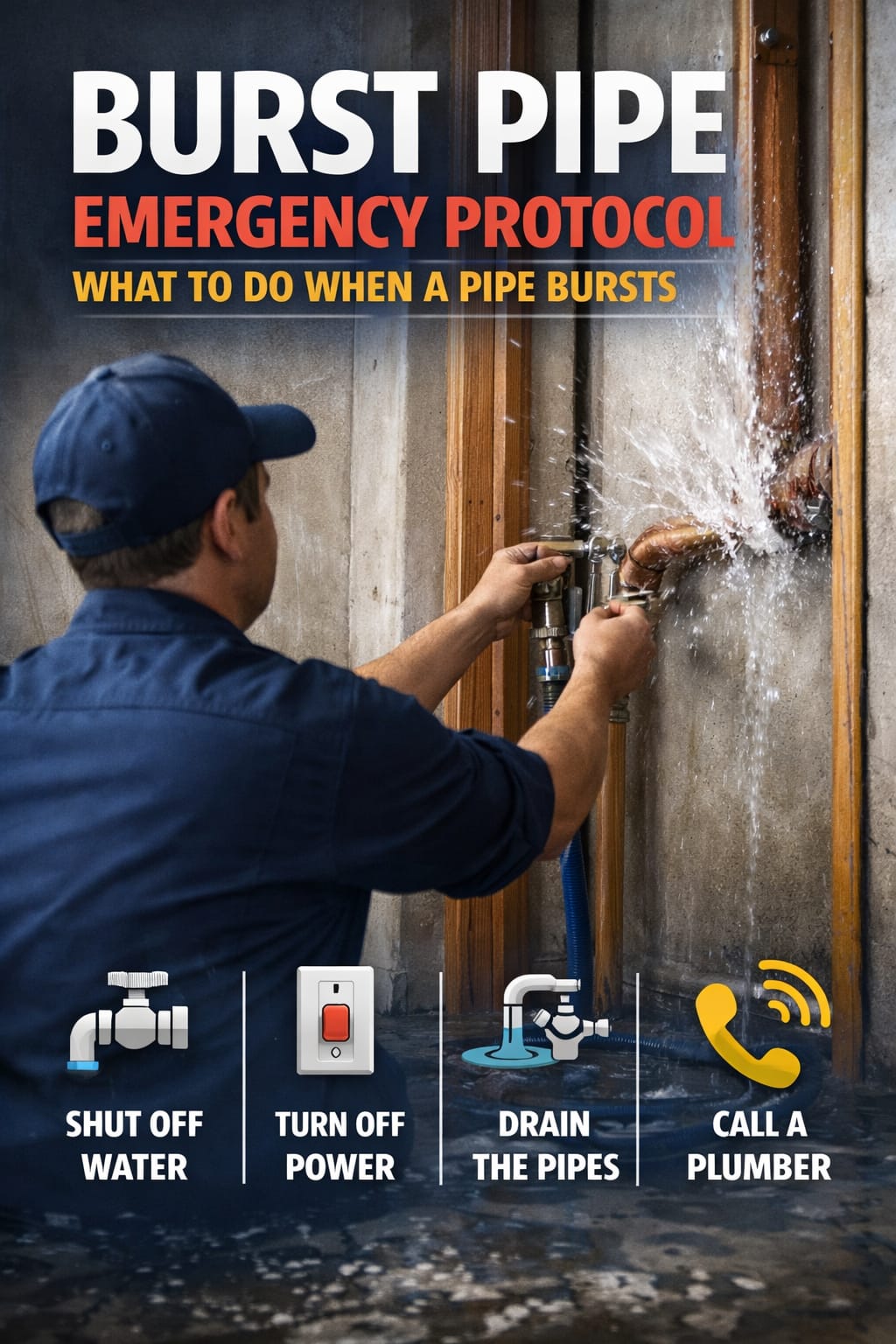
A burst pipe is a plumbing emergency that requires immediate action. When a water line ruptures, it releases pressurized water that causes rapid, extensive damage to your home’s structure, belongings, and foundation. Licensed plumbers can stop the leak within 1–2 hours by locating the burst, shutting off water, and replacing the damaged section—though emergency service fees ($300–$450 for the initial call plus $150–$300/hour labor) apply after business hours. Learn more about emergency plumber fees and what to expect.
Having a clear emergency plan helps reduce damage, lowers repair costs, and gets your plumbing system safely back under control. The protocol below outlines the best steps to take immediately after a pipe bursts, along with common mistakes to avoid. In Austin neighborhoods like Mueller, Hyde Park, and Tarrytown, where older homes have aging cast iron or clay tile lines, burst pipes are particularly common during winter freeze cycles.
Central Texas homeowners know that freeze season (December 1 through February 15) brings real risk. Austin’s Winter Storm Uri in February 2021 caused widespread burst pipes, prompting significant repair assistance and underscoring the importance of being prepared. Expansive clay soils common in the area can shift pipes, and tree roots from live oaks often intrude on sewer lines, compounding plumbing risks throughout Central Texas communities including Pflugerville, Leander, Lakeway, and Bee Cave.
Shut Off the Water Supply Immediately
The most important action is stopping the flow of water.
Locate and close the home's main water shutoff valve as quickly as possible. In many homes, the main shutoff valve is found near the water heater, in a garage or utility room, or outside near the foundation. In colder regions, it may be located in a basement.
If the leak appears to be isolated to a fixture, such as a toilet supply line or an under-sink line, you may be able to shut off the local valve instead. However, if you are unsure where the water is coming from, shutting off the main valve is the safest choice.
Turn Off the Water Heater
After shutting off the water, the next priority is protecting your water heater.
For a gas water heater, switch the control to pilot mode or turn the unit off completely. For an electric water heater, shut off the power at the breaker panel.
Running a water heater without proper water flow can cause severe damage and may create safety issues, especially with electric units.
Shut Off Electricity if Needed
If the water is leaking near electrical outlets, appliances, lights, or extension cords, shut off electricity to the affected area.
Do not walk through standing water to reach a breaker panel. If there is any doubt about safety, contact a licensed professional right away.
Drain the Plumbing System
Even after the water is shut off, water already in the pipes can continue escaping through the burst section.
Open the lowest faucet in the building first, then open higher faucets to help relieve pressure and allow the system to drain. Flush toilets once to empty tanks and bowls, but keep in mind they will not refill once the water is off.
This step helps reduce continued dripping and prevents pressure buildup while waiting for repairs.
Contain the Water and Protect the Area
Once the leak is under control, focus on limiting the spread of water.
Use buckets, pans, towels, or rags to catch and redirect water away from walls, cabinets, and flooring. If water is spreading across a larger area, use a wet/dry vacuum if available. Move furniture, rugs, and valuables out of the affected area as soon as possible.
Removing water quickly reduces the chance of swelling, warping, and long-term structural damage.
Document the Damage
Before disposing of damaged materials or beginning major cleanup, take clear photos and videos of the affected areas and any damaged belongings.
This can be helpful for insurance claims and can also provide your plumbing contractor with useful information about where the water traveled and what areas may need to be inspected.
Call an Emergency Plumber
A burst pipe is not usually a situation where a temporary patch is enough. Professional repair ensures the damaged section is repaired properly, the pipe materials are compatible, and the system can be safely pressurized again.
An emergency plumber can locate the source of the burst, repair or replace the damaged pipe, check nearby piping for weaknesses, and identify what caused the failure so it can be prevented in the future.
Start Drying the Home Immediately
Stopping the leak is only the first part of the emergency. Moisture left behind can lead to mold, unpleasant odors, and additional damage behind walls and under flooring.
Use fans and dehumidifiers if available. Open windows for ventilation when weather allows. Remove wet rugs and fabric items, and keep airflow moving through the affected area. If ceilings or drywall have absorbed water, a water restoration professional may be needed to prevent hidden mold growth.
What Not to Do After a Pipe Bursts
A few common mistakes can make the situation worse.
Do not wait to address the leak, even if it seems small. Water damage spreads rapidly.
Do not rely on tape, putty, or a clamp as a permanent repair. These can help temporarily reduce water loss, but they often fail under pressure.
Do not turn the water back on until the damaged section has been properly repaired and inspected. Restoring pressure too soon can cause immediate flooding again.
Do not leave the water heater running if you are unsure it is safe. This can damage the unit and create dangerous conditions.
Do not assume a burst pipe is a random event. In most cases, burst pipes are caused by freezing conditions, corrosion, high water pressure, poor installation, or worn fittings.
Common Causes of Burst Pipes and How to Prevent Them
Freezing temperatures are a major cause of burst pipes, especially in Austin where January is historically the peak month for freeze events. When water freezes, it expands and creates pressure inside the pipe, which can lead to rupture. Pipe insulation, opening cabinet doors during cold weather, and letting faucets drip during extreme temperatures can reduce risk. Licensed Texas plumbers follow the 2024 Uniform Plumbing Code when making repairs, ensuring your system is safe and code-compliant.
Corrosion and aging plumbing can also contribute to failures. Austin’s very hard water accelerates corrosion in older metal pipes, especially cast iron and copper lines common in 1960s–70s homes. Water treatment using lime softening helps, but older pipes still weaken internally over time. Regular inspections and proactive pipe replacement help prevent sudden leaks. Homes in Barton Hills, Travis Heights, and South Congress, built on expansive clay soils, face additional risk from pipe shifts and settling.
High water pressure can stress the plumbing system and shorten the life of fittings, valves, and appliances. If you notice banging pipes, frequent leaks, or unusual pressure changes, your home may benefit from a pressure check or a pressure-reducing valve.
Poor installation or weak fittings can lead to burst pipes even in newer systems. Professional repairs and proper pipe supports are key to keeping pipes secure and reducing strain over time.
Preparing for the Next Emergency
The best time to plan for a burst pipe is before one happens.
Know where your main water shutoff valve is located and make sure it can be operated. Keep basic tools on hand, such as an adjustable wrench, towels, buckets, and a wet/dry vacuum if possible. If you live in an area prone to freezing, insulating exposed pipes and winterizing outdoor plumbing can save you from a costly emergency.
If you ever experience a burst pipe, rapid response and professional repair make a major difference in limiting damage and restoring peace of mind.
ABM Plumbing Company of Central Texas provides same-day emergency plumbing services during business hours throughout Austin. If you experience a burst pipe or other plumbing emergency, call us immediately at (512) 620-8200 for prompt, professional assistance.
Frequently Asked Questions
How long does it take to repair a burst pipe?
Most burst pipe repairs take 1 to 3 hours, depending on the location and accessibility of the damaged pipe. Simple repairs in accessible areas may take less time; repairs behind walls or underground may require additional work. Licensed plumbers can also check adjacent piping for weakness while they have the system open.
How much does emergency burst pipe repair cost in Austin?
Emergency service calls typically cost $300–$450, with hourly labor running $150–$300/hour depending on time of day and complexity. After-hours and weekend emergency rates are 1.5 to 3 times the regular rate. The total cost depends on pipe location, materials needed, and whether additional repairs are required.
Can I use a temporary fix like epoxy putty or hose clamp?
Temporary patches may reduce water loss briefly, but they are not a permanent solution for burst pipes. They often fail under pressure, especially in high-pressure systems or with larger breaks. Licensed plumbers recommend full pipe replacement or repair to ensure system safety and prevent immediate re-failure when water pressure is restored.
What causes burst pipes most often in Austin?
In Austin, burst pipes result from multiple factors: winter freezing (January is historically the peak freeze month), expansive clay soil settling and shifting pipes, aging cast iron or clay tile lines in homes built in the 1960s–70s, very hard water causing corrosion, high water pressure, and tree root intrusion from live oaks on sewer lines. Licensed plumbers can diagnose the specific cause during repair.
About the Author
Byron D Smith is a Responsible Master Plumber at ABM Plumbing Company of Central Texas. Licensed Texas Master Plumber serving Central Texas. Byron holds Texas Master Plumber License #45625 with the Responsible Master Plumber endorsement and oversees all plumbing work performed by ABM Plumbing.
Need Professional Plumbing Help?
Contact ABM Plumbing Company for expert service in Austin, Round Rock, Cedar Park, Georgetown, Pflugerville and surrounding areas.
Get a Free Quote