How Your Home Plumbing System Works | A Simple Guide for Homeowners
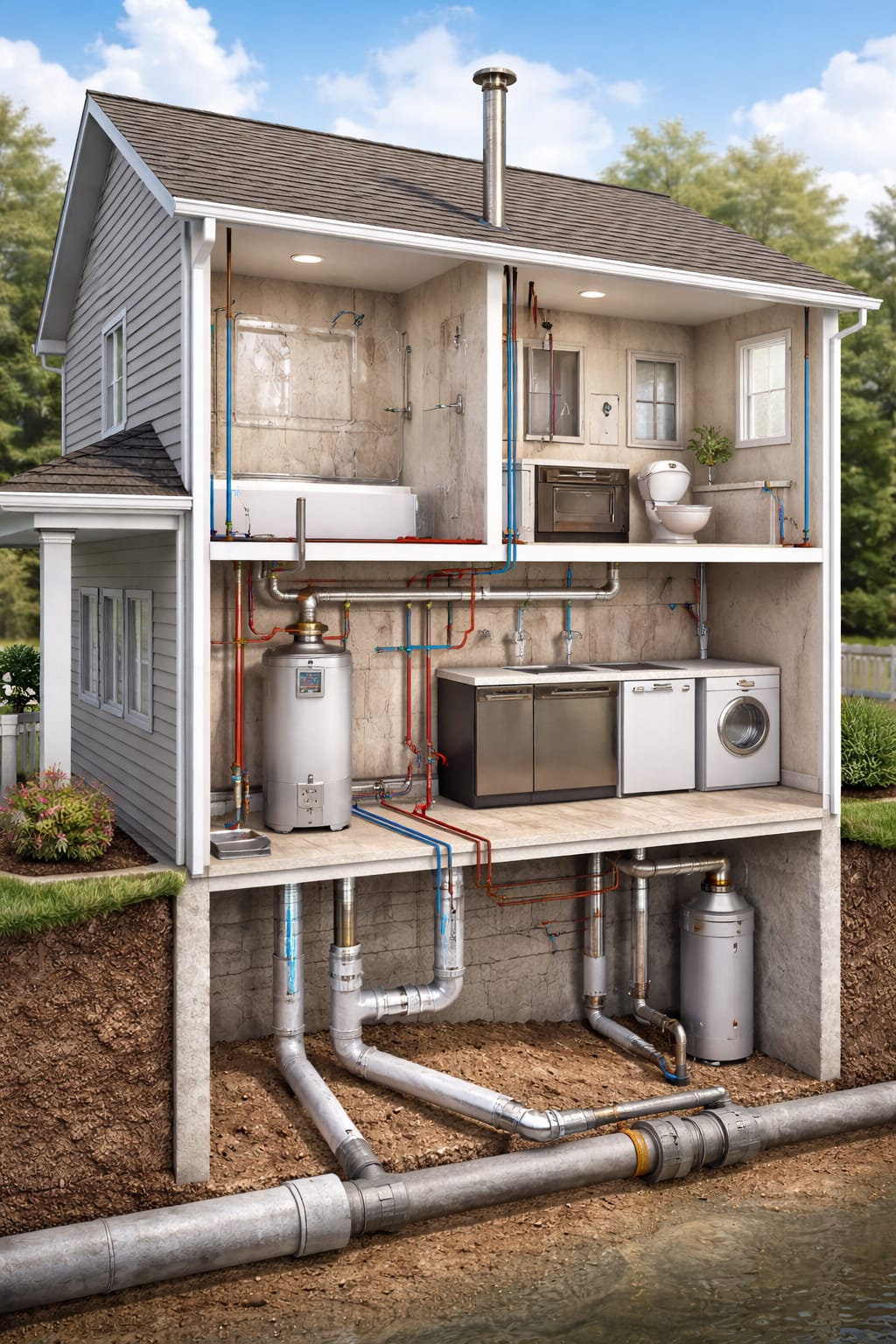
Most homeowners interact with their plumbing systems dozens of times daily—flushing toilets, washing hands, showering, running dishwashers—without considering the complex infrastructure making these conveniences possible. This invisible network of pipes, valves, fixtures, and venting systems operates reliably for years until failures suddenly disrupt daily routines.
If you’re a homeowner in Austin-area communities from Round Rock to Kyle, understanding your plumbing system is essential for maintaining your Central Texas home. ABM Plumbing Company has served the Austin area for years, helping homeowners like you protect this critical infrastructure.
Understanding basic plumbing system components and their functions helps homeowners identify developing problems before catastrophic failures occur, communicate effectively with plumbing professionals, and make informed decisions about maintenance and repairs.
At ABM Plumbing Company, we believe educated homeowners protect their properties more effectively than those treating plumbing as mysterious black boxes. Here's a comprehensive yet accessible explanation of residential plumbing system operation.
Water Supply System Fundamentals
Every home's plumbing begins at the property line where municipal water mains or private wells connect to your supply system. This entry point determines water quality, pressure, and availability for your entire household.
Municipal water supply connections:
City water systems deliver treated, pressurized water through underground mains running beneath streets. A service line branches from this main to your property, typically entering through the foundation or crawl space.
Water meters installed at property lines measure consumption for billing purposes. These meters often include shutoff valves allowing water department personnel to disconnect service if necessary.
Water pressure from municipal systems typically ranges 40-80 PSI (pounds per square inch). Pressure below 40 PSI creates weak flow at fixtures while pressure exceeding 80 PSI stresses pipes, fixtures, and appliances accelerating wear and failures.
Private well systems:
Homes with well water rely on submersible pumps extracting groundwater from depths of 50-300 feet depending on local water tables and geological conditions.
Pressure tanks store 20-80 gallons of pressurized water maintaining consistent supply between pump cycles. Pressure switches activate pumps when tank pressure drops below set points, typically 30-50 PSI.
Well systems require additional components including pressure relief valves, check valves preventing backflow, and often whole-house filtration addressing sediment, minerals, or contaminants common in groundwater.
Main supply line characteristics:
Supply lines entering homes range from 3/4-inch to 1-inch diameter copper, PEX, or occasionally older galvanized steel. Larger diameter pipes support higher flow rates for multiple simultaneous fixture uses.
Main shutoff valves located near where supply lines enter buildings allow complete water system isolation during emergencies or major repairs. Every household member should know this valve's location and operation.
From main supply lines, smaller branch lines distribute water throughout the home. These branches typically reduce to 1/2-inch diameter serving individual fixtures or groups of closely located fixtures.
Pressure regulation:
Homes with water pressure exceeding 80 PSI should install pressure reducing valves (PRVs) protecting plumbing systems from excessive stress. These adjustable valves maintain consistent 50-60 PSI regardless of varying municipal supply pressure.
PRVs install on main supply lines after shutoff valves but before any branch lines. Proper installation includes pressure gauges allowing monitoring and adjustment as needed.
Thermal expansion tanks work with PRVs preventing pressure spikes when water heaters heat water increasing its volume within closed plumbing systems. Without expansion accommodation, these pressure increases stress pipes and fixtures.
Hot Water Distribution Systems
Residential hot water systems split cold water supply, routing portions through water heaters before distributing heated water through dedicated supply lines running parallel to cold water pipes.
Water heater types and operation:
Tank water heaters store 30-80 gallons of heated water maintaining 120-140°F temperatures through gas burners or electric elements. As hot water draws from tanks, cold water enters replacing withdrawn volume triggering heating cycles.
Recovery time—the duration required to heat full tanks after depletion—typically runs 30-60 minutes for gas heaters and 60-120 minutes for electric models. Understanding your heater's recovery rate prevents running out of hot water during high-demand periods.
Tankless water heaters heat water on-demand as it flows through high-powered heat exchangers. These units provide endless hot water but require adequate gas supply or electrical capacity supporting their concentrated heating power demands.
Flow rate limitations restrict simultaneous hot water uses with tankless heaters. A unit providing 5 gallons per minute struggles supplying a shower (2.5 GPM) and dishwasher (2 GPM) simultaneously.
Hot water distribution patterns:
From water heaters, dedicated hot water lines run throughout homes typically following similar routes as cold water supply lines. This parallel routing explains why most fixtures have separate hot and cold handles or controls.
Hot water travels through pipes cooling slightly during transit, explaining why distant fixtures take longer delivering hot water than those near water heaters. This waiting period wastes water and energy while flushing cooled water from pipes.
Recirculation systems address this waste by continuously pumping hot water through supply lines maintaining constant temperature at all fixtures. These systems add complexity and energy costs but provide instant hot water anywhere in the home.
Mixing valves and temperature control:
Single-handle faucets contain cartridges mixing hot and cold water streams in ratios determined by handle position. These cartridges wear over time causing temperature control problems or leaks.
Thermostatic mixing valves at water heaters or individual fixtures prevent scalding by limiting maximum water temperature regardless of hot water supply temperature. These safety devices particularly protect children and elderly household members.
Anti-scald valves required by modern codes in showers maintain consistent temperatures even when cold water pressure drops from simultaneous toilet flushes or other uses. Without these valves, sudden temperature spikes cause dangerous burns.
Drainage and Waste Removal Systems
While supply systems use pressure moving water upward and throughout homes, drainage systems rely exclusively on gravity carrying wastewater downward and away from properties.
Drain system components and operation:
Every fixture connects to drain pipes sized appropriately for expected waste volumes and types. Kitchen sinks use 1.5-2 inch drains handling food particles and grease. Toilets require minimum 3-inch drains accommodating solid waste. Bathtubs and showers connect to 1.5-2 inch drains managing hair and soap residue.
These individual fixture drains connect to progressively larger branch drain lines combining flows from multiple fixtures. Branch drains typically range 2-4 inches diameter depending on number and types of connected fixtures.
Main drain lines or soil stacks running vertically through homes collect waste from all branch drains. These 3-4 inch pipes extend from lowest drainage points through roofs where they function as primary vent stacks.
Gravity flow principles:
Drain pipes must slope continuously downward at minimum 1/4 inch per foot allowing gravity to move waste effectively. Improper slope—either insufficient pitch or backward slope—creates standing water, slow drainage, and recurring clogs.
Horizontal drain runs should minimize length and turns as each direction change and additional distance slows waste movement and increases clog probability. Professional plumbers design drainage systems with minimal horizontal runs and smooth transitions.
Connection to sewer or septic:
Homes with municipal sewer access connect main drain lines to street-level sewer mains through underground service lines. These connections typically occur at property lines with cleanout access allowing mechanical clearing if blockages develop.
Properties with septic systems route main drains to buried tanks where solid waste settles and decomposes while liquid effluent flows to drain fields. These systems require regular pumping every 2-5 years removing accumulated solids preventing system failure.
P-Traps and Drain Seals
Every plumbing fixture includes a trap—typically P-shaped—creating water seals preventing sewer gases from entering living spaces through drain openings.
P-trap design and function:
P-traps are U-shaped pipe sections installed immediately below fixture drains. These traps hold 2-4 inches of standing water creating effective barriers against gas migration.
As wastewater flows through fixtures, it pushes through standing trap water replacing it with fresh water that remains after drainage completes. This constant water refreshment maintains effective seals.
Trap weir depth—the height of water standing in traps—must balance between effective sealing (requiring deeper water) and self-scouring action (benefiting from shallower profiles). Standard 2-inch trap weirs provide optimal balance for most fixtures.
Common trap problems:
Dried traps in rarely-used fixtures lose their water seals through evaporation. Guest bathrooms, basement utility sinks, and floor drains unused for months develop sewer gas odor problems as trap water evaporates.
Running water through these fixtures monthly maintains trap seals. Adding small amounts of mineral oil to trap water slows evaporation in very rarely used drains.
Clogged traps from accumulated hair, soap scum, or debris create slow drainage and standing water in fixtures. These clogs typically form gradually over months as buildup constricts flow passages.
Damaged or incorrectly installed traps leak water or fail to maintain proper seals. Loose connections, cracked plastic, or corroded metal traps require replacement restoring proper function.
S-traps and code violations:
Older homes sometimes contain S-traps—directly inverted P-traps discharging downward without horizontal sections. Modern codes prohibit S-traps because they're prone to siphoning—drainage suction pulling trap water through pipes leaving no seal.
Replacing S-traps with proper P-traps during renovations corrects this deficiency preventing sewer gas problems.
Plumbing Venting Systems
Venting represents plumbing's most misunderstood yet critical system component. Proper venting ensures smooth drainage, maintains trap seals, and prevents sewer gas infiltration.
Venting system purposes:
Air admission allows wastewater to drain smoothly by preventing vacuum formation behind flowing waste. Without adequate venting, drainage creates negative pressure slowing flow and potentially siphoning trap water.
Pressure equalization prevents trap seal loss when large waste volumes flowing through shared drain lines create pressure differentials that could push or pull trap water away from sealing positions.
Sewer gas venting allows gases generated in sewer systems or septic tanks to escape harmlessly through roof vents rather than bubbling through fixture traps into living spaces.
Vent system configuration:
Primary vent stacks are vertical pipes extending from main drain lines through roofs. These large-diameter vents (typically 3-4 inches) provide main system air admission and exhaust.
Branch vents connect individual or groups of fixtures to primary vent stacks or extend independently through roofs. These smaller vents (1.5-2 inches) ensure each fixture receives adequate air admission.
Vent placement follows specific code requirements regarding distances from fixture traps, minimum heights above flood rims, and proper roof penetration details preventing weather infiltration.
Common venting problems:
Clogged vents from bird nests, leaves, or ice formation block air flow creating drainage problems and trap seal issues. Gurgling drains, slow drainage, and sewer odors often indicate vent blockages.
Undersized vents insufficient for connected fixture drainage volumes create similar problems to clogged vents. Adding fixtures without correspondingly increasing vent capacity overloads systems.
Improperly placed vents located too far from fixture traps fail to provide effective air admission. Code-specified maximum distances between traps and vents exist preventing this problem.
Missing vents in DIY or unpermitted plumbing additions create immediate drainage and odor problems. Professional evaluation identifies and corrects these dangerous deficiencies.
Fixture Components and Operation
Fixtures represent visible plumbing system endpoints where users interact with supply and drainage infrastructure. Understanding fixture internals helps identify and sometimes resolve problems independently.
Faucet types and mechanisms:
Compression faucets use rubber washers compressed against valve seats stopping water flow when handles turn fully closed. These traditional faucets require periodic washer replacement as compression gradually degrades rubber.
Cartridge faucets contain cylindrical cartridges with internal passages that align with supply ports allowing water flow in specific handle positions. These cartridges eventually wear requiring complete replacement.
Ball faucets use rotating balls with aligned openings controlling water flow and temperature through single-handle operation. Worn seals within ball assemblies cause leaks requiring complete ball assembly replacement.
Ceramic disc faucets employ highly durable ceramic discs grinding against each other to control flow. These premium faucets last longest but cost most to manufacture and purchase.
Toilet operation principles:
Toilet flushes begin with users activating flush handles or buttons lifting flush valves inside tanks. This action releases 1.6-7 gallons (depending on toilet age and type) into bowls rapidly.
Bowl water combines with incoming flush water filling P-trap passages completely. This total filling initiates siphon action pulling bowl contents through traps and into drain systems.
After flush valves close, fill valves admit fresh water refilling tanks for next flushes while simultaneously sending water through overflow tubes refilling bowl P-traps.
Float mechanisms (either ball floats or internal floats within fill valves) shut off water flow when tanks reach proper levels, typically 1 inch below overflow tube tops.
Common fixture problems:
Dripping faucets indicate worn internal components—washers in compression faucets or cartridges/seals in other types. These leaks waste surprising water volumes and increase utility bills substantially.
Running toilets from failed flappers, worn fill valves, or misadjusted floats waste 200+ gallons daily adding hundreds to annual water bills while straining water heater capacity unnecessarily.
Slow fixture drains suggest developing clogs, venting problems, or improper drainage system slope. Addressing slow drains early prevents complete blockages requiring emergency service.
Why Plumbing Systems Fail
Understanding common failure mechanisms helps homeowners anticipate problems and implement preventive strategies extending system life.
Age-related deterioration:
Galvanized steel pipes installed before 1960 corrode internally over 40-70 years gradually restricting water flow and eventually developing leaks. Homes with original galvanized plumbing require replacement planning.
Copper pipes last 50-70 years generally but suffer accelerated corrosion in aggressive water conditions—acidic pH, high mineral content, or electrical grounding through plumbing systems.
Plastic pipe materials including PEX, CPVC, and PVC typically outlast metal pipes but can fail prematurely from excessive heat exposure, chemical contact, or UV light degradation.
Rubber components—washers, O-rings, seals—harden over 5-15 years losing flexibility required for effective sealing. Regular replacement prevents leak development.
Water quality impacts:
Hard water containing dissolved calcium and magnesium gradually deposits scale inside pipes, water heaters, and fixtures restricting flow and reducing efficiency. Water softeners prevent this accumulation.
Acidic water with pH below 7.0 accelerates copper pipe corrosion creating pinhole leaks and eventual failures. Neutralizing filters correct pH preventing damage.
Sediment from well water or aging municipal systems accumulates in water heaters, valve bodies, and aerators requiring periodic cleaning and maintenance.
Installation quality effects:
Improper installation techniques—inadequate support, incorrect slope, incompatible materials—cause premature failures regardless of component quality or age.
DIY repairs often create problems through improper materials, overtightened connections, or skipped code requirements. These installations fail faster and more catastrophically than professional work.
Operating conditions:
Excessive water pressure above 80 PSI stresses all plumbing components accelerating wear and failures. Pressure regulation extends system life dramatically.
Freezing temperatures burst pipes when water expands during solidification. Adequate insulation and heating prevents freeze damage in vulnerable locations.
Recognizing Problems Requiring Professional Attention
While understanding system operation helps homeowners maintain plumbing effectively, certain situations demand professional expertise and specialized equipment.
Signs requiring plumber consultation:
Multiple slow drains throughout the home suggest main drain line problems—clogs, root intrusion, or pipe deterioration—beyond homeowner capabilities addressing safely and effectively.
Persistent leaks returning after attempted repairs indicate underlying problems requiring professional diagnosis. Repeated DIY attempts often worsen original issues.
Water pressure changes affecting entire houses suggest supply line issues, pressure regulator failures, or municipal system problems requiring assessment beyond homeowner knowledge.
Sewer odors throughout homes indicate failed trap seals, blocked vents, or cracked drain pipes. These problems risk health through sewer gas exposure containing toxic and explosive compounds.
Visible water damage—ceiling stains, wall discoloration, floor warping—signals active leaks requiring immediate professional location and repair preventing structural damage.
Unusual sounds—hammering, gurgling, whistling—indicate system operating abnormally. While not always urgent, professional evaluation identifies causes before failures occur.
Maintaining Your Plumbing System
Regular maintenance dramatically extends plumbing system life while preventing most emergency failures.
Homeowner maintenance activities:
Monthly drain flushing with hot water helps remove accumulating grease and soap preventing gradual clog development. This simple practice particularly benefits kitchen drains.
Quarterly aerator cleaning removes mineral deposits maintaining proper flow rates and spray patterns. Unscrew aerators, clean screens, and reassemble for optimal performance.
Annual water heater flushing removes sediment accumulation extending equipment life and maintaining heating efficiency. This simple service prevents premature tank failure.
Twice-yearly supply line inspection under sinks and behind toilets identifies developing leaks, corrosion, and worn components before failures occur.
Professional maintenance services:
Annual comprehensive plumbing inspections by licensed plumbers identify problems requiring repair before failures cause property damage or emergency situations.
Professional drain cleaning every 18-24 months prevents major blockages costing far less than emergency service clearing severe clogs or addressing resulting damage.
Water heater professional service including anode rod inspection and replacement extends tank life 5-10 years beyond typical lifespan saving thousands in premature replacement costs.
Understanding Your Unique Plumbing System
Every home's plumbing system reflects its age, regional building practices, and modification history. Understanding your specific system helps target maintenance and anticipate problems.
At ABM Plumbing Company, we help homeowners understand their unique plumbing systems through comprehensive inspections and clear explanations. Our licensed plumbers identify system strengths, existing problems, and developing issues allowing informed maintenance planning.
We believe educated homeowners make better decisions about repairs, upgrades, and emergency responses. Understanding how your plumbing operates transforms mysterious failures into manageable situations.
Contact ABM Plumbing Company to schedule a comprehensive plumbing system inspection and receive personalized guidance about your home's specific infrastructure. We'll explain your system thoroughly, identify any concerns, and help you develop effective maintenance strategies protecting your property investment.
Frequently Asked Questions
What’s the basic layout of home plumbing?
Supply lines bring water in. Drains take wastewater out. Vents allow air in drains. Austin’s hard water makes maintenance critical.
What causes most failures?
Hard water buildup, tree roots (oak/pecan), clay soil shifts, freeze damage, and age.
Should I know my water shutoff?
Absolutely. In emergencies (burst pipe, severe leak), you must shut water off immediately.
How old is typical Austin plumbing?
Many homes: 30-50+ years. Galvanized pipes corrode. PEX is modern standard. Professional inspection recommended.
About the Author
Byron D Smith is a Responsible Master Plumber at ABM Plumbing Company of Central Texas. Licensed Texas Master Plumber serving Central Texas. Byron holds Texas Master Plumber License #45625 with the Responsible Master Plumber endorsement and oversees all plumbing work performed by ABM Plumbing.
Need Professional Plumbing Help?
Contact ABM Plumbing Company for expert service in Austin, Round Rock, Cedar Park, Georgetown, Pflugerville and surrounding areas.
Get a Free Quote