Understanding Water Pressure: What Homeowners Need to Know
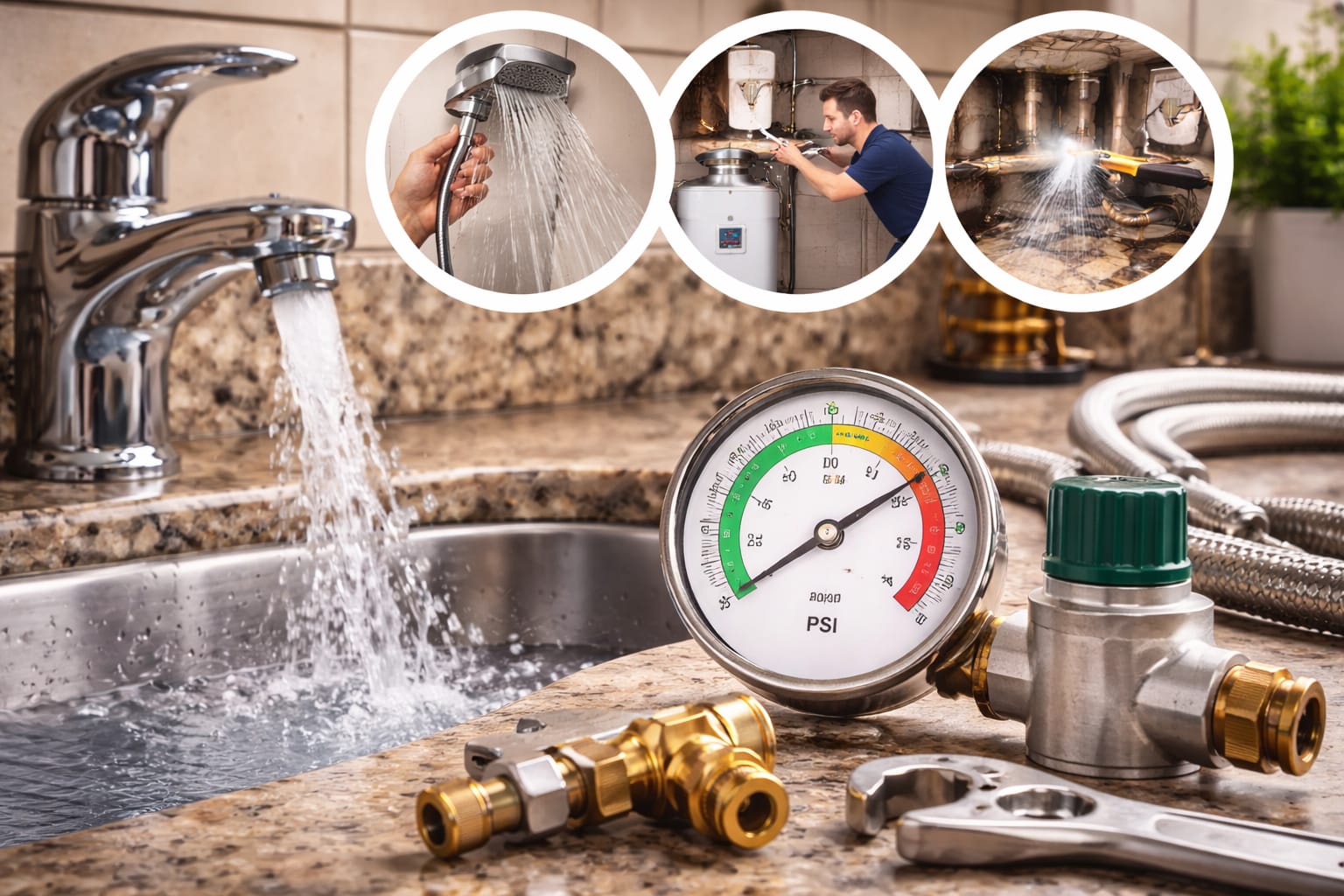
Water pressure invisibly influences every water-using activity in your home—from morning showers to dishwasher efficiency to washing machine performance. Most homeowners never consider water pressure until problems become obvious through weak flow, banging pipes, or premature appliance failures.
Austin homeowners often experience unique water pressure challenges due to the characteristics of our Central Texas water supply. ABM Plumbing Company understands these local conditions and can help you optimize your water pressure.
Improper water pressure operates insidiously. Excessive pressure silently stresses pipes, fixtures, and appliances for years before catastrophic failures announce the problem. Insufficient pressure frustrates daily activities while potentially indicating serious underlying issues requiring immediate attention.
At ABM Plumbing Company, we regularly diagnose water pressure problems causing both immediate inconveniences and long-term damage. Understanding water pressure fundamentals helps homeowners identify issues early and protect their plumbing investments. Here's comprehensive guidance about residential water pressure and its critical impacts on plumbing system health.
Water Pressure Fundamentals
Water pressure represents the force pushing water through supply pipes and out of fixtures. This force, measured in pounds per square inch (PSI), determines flow rates, fixture performance, and stress levels throughout plumbing systems.
How water pressure develops:
Municipal water systems create pressure through elevated storage tanks or mechanical pumping stations. Water tower height directly determines base pressure—each foot of elevation generates 0.433 PSI. A 150-foot water tower creates approximately 65 PSI at ground level.
Mechanical pumps in flat regions generate equivalent pressure through motorized compression. These systems maintain target pressures typically ranging 50-80 PSI throughout distribution networks.
Private well systems use submersible pumps and pressure tanks creating adjustable pressure levels. Pressure switches activate pumps when tank pressure drops below preset minimums (typically 30-40 PSI) and deactivate when reaching maximum settings (usually 50-60 PSI).
Pressure versus flow rate:
Homeowners often confuse water pressure with flow rate, though these represent distinct concepts. Pressure is the force behind water movement while flow rate measures actual water volume delivered over time.
High pressure doesn't guarantee high flow if pipes are restricted, corroded, or undersized. Conversely, low-pressure systems with properly sized, clean pipes can deliver adequate flow for most purposes.
Optimal plumbing systems balance appropriate pressure (50-60 PSI) with adequate pipe sizing ensuring sufficient flow rates without excessive stress on components.
Optimal Residential Water Pressure Ranges
Residential plumbing systems function best within specific pressure ranges balancing performance against component stress and longevity.
Ideal pressure range:
50-60 PSI represents optimal pressure for most homes providing strong fixture flow without excessive component stress. This range ensures satisfying showers, efficient appliance operation, and extended plumbing system life.
Modern fixtures and appliances are engineered expecting this pressure range. Manufacturers design components, seals, and valves to withstand these pressures throughout expected service lives of 10-20 years.
Minimum functional pressure:
40 PSI represents the lower boundary of acceptable residential pressure. Below this threshold, upper-floor fixtures receive inadequate pressure, showers feel weak, and appliances may not operate properly.
Homes with pressure consistently below 40 PSI require intervention identifying and addressing causes—supply line restrictions, municipal system problems, or excessive elevation above supply sources.
Two-story homes need higher base pressure than single-story properties. Each vertical foot of elevation from supply point to fixture reduces pressure by 0.433 PSI. Second-floor fixtures 15 feet above entry points lose approximately 6.5 PSI from elevation alone.
Excessive pressure thresholds:
Pressure exceeding 60 PSI stresses plumbing components accelerating wear though many systems tolerate these levels for years before problems surface.
Pressure above 80 PSI creates unsafe conditions. At these levels, pipe joints, valve seals, appliance connections, and fixture components experience forces beyond design specifications. Failures become increasingly likely with each PSI above this threshold.
Some municipal systems deliver pressure exceeding 100 PSI during low-demand periods. Without pressure regulation, this extreme stress causes rapid component deterioration and frequent failures.
Regional variations:
Geographic terrain significantly affects water pressure. Homes at bottom of hills receive higher pressure from elevated water sources while hilltop properties experience lower pressure fighting gravity.
Municipal systems serving varied elevations often maintain higher base pressures ensuring adequate service to elevated areas. This practice creates excessive pressure at lower elevations requiring individual property regulation.
Seasonal demand fluctuations cause pressure variations. Winter pressure often runs higher as reduced lawn irrigation and other outdoor uses decrease system load. Summer pressure may drop during peak evening watering periods.
Recognizing Low Water Pressure Problems
Insufficient water pressure manifests through various symptoms ranging from minor annoyances to indicators of serious plumbing failures.
Common low pressure symptoms:
Weak shower performance: Showers requiring full hot and cold valve opening yet delivering unsatisfying spray indicate pressure problems. Healthy systems provide strong flow with valves 50-75% open allowing adjustment range.
Showerheads rated 2.5 gallons per minute require minimum 40 PSI delivering advertised flow. Lower pressure produces disappointing results regardless of showerhead quality.
Slow fixture filling: Bathroom sinks taking 45+ seconds filling for handwashing or bathtubs requiring 15+ minutes for full baths suggest insufficient pressure or flow restrictions.
Kitchen sink faucets should fill one-gallon containers in 20-30 seconds. Longer fill times indicate problems requiring diagnosis.
Appliance performance issues: Washing machines with extended fill cycles or dishwashers displaying fill errors often suffer from inadequate supply pressure.
These appliances contain timed fill cycles expecting specific pressures. When actual pressure falls below design requirements, fill times extend triggering error codes and incomplete operation.
Simultaneous use pressure drops: Pressure remaining strong during single fixture use but dropping dramatically when multiple fixtures operate simultaneously indicates inadequate system capacity or main supply line restrictions.
Healthy plumbing systems maintain reasonable pressure during typical simultaneous uses—showers during dishwasher operation, toilet flushing during sink use. Severe drops during these normal combinations signal problems.
Causes of low pressure:
Supply line restrictions: Corroded galvanized steel pipes developing internal rust buildup gradually reduce effective diameter restricting flow and dropping pressure. Homes built before 1960 commonly face this progressive deterioration.
Mineral deposits in hard water areas accumulate inside pipes over decades narrowing passages and reducing flow capacity. These restrictions particularly affect hot water lines where mineral precipitation accelerates.
Faulty pressure regulators: Pressure reducing valves (PRVs) can fail partially closed restricting pressure throughout homes. These failures develop gradually as internal springs weaken or diaphragms deteriorate.
PRV failures sometimes follow water service interruptions or pressure surges shocking mechanisms and changing calibration.
Municipal supply problems: Water main breaks, system maintenance, or failing municipal infrastructure reduces supply pressure affecting entire neighborhoods.
During drought conditions or seasonal peak demand, municipal systems struggle maintaining target pressures particularly in elevated service areas.
Undiscovered leaks: Significant underground leaks between street mains and homes create pressure drops at property entry points. These hidden failures waste thousands of gallons while reducing available pressure.
Main line leaks sometimes announce themselves through unexpected wet areas in yards or unusual water meter activity when all fixtures are off.
Undersized supply lines: Homes with 1/2-inch main supply lines serving multiple bathrooms and appliances experience pressure drops during simultaneous use as undersized pipes cannot deliver adequate volume.
Modern homes typically use 3/4-inch or 1-inch main supply lines supporting multiple simultaneous uses without dramatic pressure loss.
Identifying High Water Pressure Dangers
Excessive water pressure causes more total damage than low pressure despite being less immediately obvious to homeowners. High pressure stress accumulates over months and years before manifesting through catastrophic failures.
High pressure warning signs:
Water hammer—banging pipes: Sudden loud banging when quickly closing faucets indicates water hammer—pressure waves slamming through pipes when flow stops abruptly. While arrestors can address symptoms, underlying high pressure often causes the problem.
Severe water hammer stresses pipe connections, welds, and joints eventually causing leaks or complete joint separation flooding homes with minimal warning.
Leaking fixtures and connections: Faucets and toilet fill valves developing leaks despite relatively new age often indicate excessive pressure overwhelming seals and gaskets designed for standard pressure ranges.
Supply line compression fittings weeping water similarly suggest pressure exceeding connection design limits.
Shortened appliance lifespan: Water heaters, washing machines, and dishwashers failing before expected 10-15 year lifespans may suffer from high pressure stress.
Solenoid valves, mixing valves, and internal seals in these appliances deteriorate rapidly under excessive pressure leading to premature failures and expensive replacements.
Running toilets: Toilet fill valves damaged by excessive pressure fail to shut off completely causing continuous running. While simple repairs replace valves, underlying high pressure causes recurring failures.
Frequent plumbing repairs: Homes requiring unusually frequent repair service for leaking pipes, failed fixtures, or burst supply lines likely suffer from excessive pressure accelerating normal wear.
Consequences of sustained high pressure:
Pipe joints under constant excessive stress develop microscopic cracks that gradually enlarge over months or years before sudden catastrophic failures flood homes.
Fixture internal components—cartridges, seals, diaphragms—designed for 60 PSI maximum wear rapidly at 80-100 PSI. Expected 10-year lifespans shrink to 3-5 years.
Water heater tanks experience accelerated corrosion and stress at high pressure. Temperature-pressure relief valves may discharge frequently, and tank integrity degrades faster leading to premature failure or even catastrophic rupture.
Supply line bursts become increasingly probable. Flexible braided supply lines rated for 150 PSI burst pressure develop weaknesses at compression fittings where constant 100+ PSI stress eventually exceeds material strength.
Causes of Water Pressure Fluctuations
Understanding why pressure varies helps homeowners determine which problems require professional intervention versus normal system operation.
Municipal supply variations:
Time-of-day pressure changes reflect demand patterns. Early morning and late evening when usage drops, pressure rises as systems maintain production but deliver less volume. Peak evening hours during summer irrigation see pressure drops from maximum demand.
These variations typically stay within acceptable ranges (40-80 PSI) unless municipal infrastructure struggles meeting demand during peak periods.
Seasonal effects:
Winter pressure often runs 5-15 PSI higher than summer due to reduced outdoor water use. Homeowners may not notice these variations unless pressure exceeds comfortable thresholds during low-demand periods.
Drought conditions sometimes force municipal supply restrictions reducing available pressure particularly in elevated service areas receiving water last along distribution chains.
Pressure regulator failures:
PRVs fail in two modes—stuck partially closed reducing pressure throughout homes, or stuck fully open allowing full street pressure (often 80-120 PSI) into homes causing all high-pressure problems described earlier.
Gradual PRV failures drift from set points over months as internal components wear. Initially 60 PSI systems slowly creep toward 70-80 PSI as regulation weakens.
Thermal expansion effects:
Closed plumbing systems—those with PRVs and backflow preventers blocking return flow to municipal mains—experience pressure spikes when water heaters heat water increasing its volume with no expansion outlet.
These thermal expansion pressures can add 50-75 PSI to baseline pressure creating dangerous combined pressures exceeding 120-150 PSI. Thermal expansion tanks accommodate volume increases preventing these dangerous pressure spikes.
Supply line issues:
Partially closed main shutoff valves restrict pressure throughout homes. These valves sometimes close partially during municipal work or homeowner adjustments and aren't fully reopened.
Failing check valves or backflow preventers restrict flow and reduce pressure when internal components deteriorate or debris lodges in valve mechanisms.
Water Pressure Testing Methods
Accurate pressure measurement provides essential diagnostic information identifying problems and verifying solutions.
Homeowner testing procedures:
Inexpensive pressure gauges ($10-25) attaching to outdoor hose bibs allow basic pressure testing. These gauges display static pressure when all fixtures are off and dynamic pressure during use.
Test static pressure by shutting off all water-using fixtures and appliances, waiting 30 minutes for pressure stabilization, then recording gauge readings. Compare results against optimal 50-60 PSI range.
Test dynamic pressure during typical simultaneous uses—running showers, flushing toilets, operating washing machines—observing pressure maintenance or drops indicating capacity issues.
Check pressure at different times—early morning, midday, peak evening hours—identifying municipal supply variations or time-dependent problems.
Professional testing advantages:
Licensed plumbers use calibrated professional gauges providing more accurate readings than homeowner-grade equipment. These precise measurements guide repair decisions and verify regulation settings.
Multiple test point readings throughout homes identify whether problems affect entire properties or localize to specific areas suggesting branch line restrictions rather than main supply issues.
Flow rate testing combined with pressure readings distinguishes between pressure problems and flow restriction issues requiring different solutions.
Pressure data logging over 24-48 hour periods captures variations homeowners might miss during spot testing, revealing intermittent problems or demand-related pressure swings.
Pressure Regulation and Control Systems
Homes receiving excessive municipal pressure require regulation protecting plumbing systems while maintaining adequate pressure for proper function.
Pressure reducing valves (PRVs):
PRVs install on main supply lines immediately after shutoff valves and water meters reducing street pressure to safe levels throughout homes. These adjustable devices typically set between 50-60 PSI regardless of varying street pressure.
Quality PRVs cost $150-$300 installed including shut-off valve integration and pressure testing. These devices protect thousands of dollars in plumbing infrastructure making them excellent investments.
PRV installation requires professional plumbing services ensuring proper sizing, correct placement, and accurate adjustment. Improperly installed PRVs create pressure problems rather than solving them.
Modern PRVs incorporate adjustment mechanisms allowing pressure fine-tuning without disassembly. Adjustment typically involves rotating external screws while monitoring downstream pressure gauges.
Thermal expansion tanks:
Homes with PRVs creating closed plumbing systems require thermal expansion tanks accommodating water volume increases during heating preventing dangerous pressure spikes.
These tanks contain internal bladders or diaphragms separating water from compressed air. As heated water expands, it compresses air absorbing volume increase without pressure buildup.
Expansion tanks cost $150-$400 installed including proper pre-charge pressure setting and secure mounting. They install on cold water lines near water heaters with compression fittings allowing future service or replacement.
Failed expansion tanks (indicated by water leaking from air valve stems) must be replaced as they cannot be repaired. Failure symptoms include pressure relief valves discharging during heating cycles or excessive pressure readings after water heater operation.
Pressure monitoring systems:
Some homes benefit from continuous pressure monitoring systems alerting homeowners to dangerous pressure excursions. These systems particularly help properties with failing PRVs or unstable municipal supplies.
Smart water monitoring systems including pressure tracking connect to home automation providing smartphone alerts when pressure exceeds safe thresholds.
Health and Safety Implications
Water pressure problems extend beyond inconvenience and repair costs to genuine health and safety concerns requiring prompt attention.
High pressure safety risks:
Burst pipes flooding homes create slip hazards, electrical dangers from water near outlets or appliances, and structural damage from prolonged moisture exposure.
Water heater ruptures from excessive pressure release scalding water and steam creating severe burn risks particularly dangerous to children, elderly, or mobility-impaired household members.
Sudden pipe failures at night flood homes for hours before discovery causing extensive damage and potential mold growth creating respiratory health hazards.
Low pressure concerns:
Inadequate pressure prevents proper fixture function potentially leading to hygiene issues from incomplete waste flushing or difficulty maintaining cleanliness.
Appliance malfunction from low pressure leaves laundry or dishes improperly cleaned creating sanitation concerns.
Professional Pressure Problem Solutions
While homeowners can test pressure and identify problems, solutions typically require licensed plumbing professionals.
Common professional interventions:
PRV installation or replacement: Homes without pressure regulation receiving excessive street pressure need PRV installation. Properties with failed PRVs require replacement restoring proper regulation.
Professional installation ensures correct sizing for home water demand, proper placement meeting code requirements, and accurate pressure setting balancing performance and system protection.
Expansion tank installation: Closed systems without thermal expansion protection need properly sized expansion tanks preventing dangerous pressure buildup during water heating.
Supply line replacement: Homes with corroded galvanized pipes causing low pressure and restricted flow require partial or complete repiping restoring proper pressure and flow capacity.
Leak detection and repair: Pressure problems from hidden leaks need professional detection using specialized equipment locating underground or concealed failures.
Municipal coordination: Persistent pressure problems affecting multiple properties may require municipal water department intervention adjusting system pressures or repairing failing infrastructure.
Maintaining Proper Water Pressure
Once pressure problems are corrected, ongoing monitoring and maintenance preserve system health.
Monitoring recommendations:
Test pressure semi-annually using hose bib gauges checking for gradual changes indicating developing problems. Record readings creating baselines identifying trends.
After any municipal water service interruptions, test pressure as work sometimes affects regulation or introduces debris affecting PRV function.
Maintenance practices:
PRVs typically last 10-20 years but benefit from periodic professional inspection ensuring continued proper function. Internal components gradually wear requiring eventual replacement.
Expansion tank pre-charge pressure should match PRV setting. Annual pressure checks ensure proper charge preventing tank failure.
System upgrades:
Homes planning significant plumbing renovations should evaluate pressure regulation during planning. Adding bathrooms or major appliances may require PRV resizing or additional capacity.
Older homes without PRVs benefit from installation during any major plumbing work as these devices dramatically extend system life preventing expensive failures.
Professional Pressure Assessment
Understanding water pressure fundamentals helps homeowners recognize problems requiring professional intervention before minor issues become major failures.
At ABM Plumbing Company, our licensed plumbers provide comprehensive pressure testing and system evaluation identifying problems and recommending appropriate solutions. We use calibrated professional equipment ensuring accurate diagnosis rather than guesswork.
We'll test pressure at multiple locations throughout your home, evaluate PRV function if installed, check for thermal expansion protection, and identify any factors affecting pressure stability. This thorough assessment provides clear understanding of your system's condition and necessary improvements.
Contact ABM Plumbing Company to schedule professional water pressure testing and system evaluation. We'll ensure your plumbing operates at optimal pressure protecting your investment while maintaining comfortable, efficient performance.
Frequently Asked Questions
What’s normal water pressure in Austin?
Ideal: 40-60 PSI. Austin varies by neighborhood and elevation. Some areas run 30 PSI, others 80+.
Why is my water pressure low?
Single fixture: mineral buildup in aerator (DIY fix). Whole house: check regulator, call plumber.
Can high pressure damage my home?
Yes. Over 80 PSI stresses pipes and appliances. Install regulator ($100-$300).
What’s the cost to fix pressure in Austin?
Simple fix: free-$50. Regulator install: $150-$300. Major issue diagnosis: $100-$300.
About the Author
Byron D Smith is a Responsible Master Plumber at ABM Plumbing Company of Central Texas. Licensed Texas Master Plumber serving Central Texas. Byron holds Texas Master Plumber License #45625 with the Responsible Master Plumber endorsement and oversees all plumbing work performed by ABM Plumbing.
Need Professional Plumbing Help?
Contact ABM Plumbing Company for expert service in Austin, Round Rock, Cedar Park, Georgetown, Pflugerville and surrounding areas.
Get a Free Quote