PEX vs. Copper vs. PVC | A Homeowner's Pipe Guide
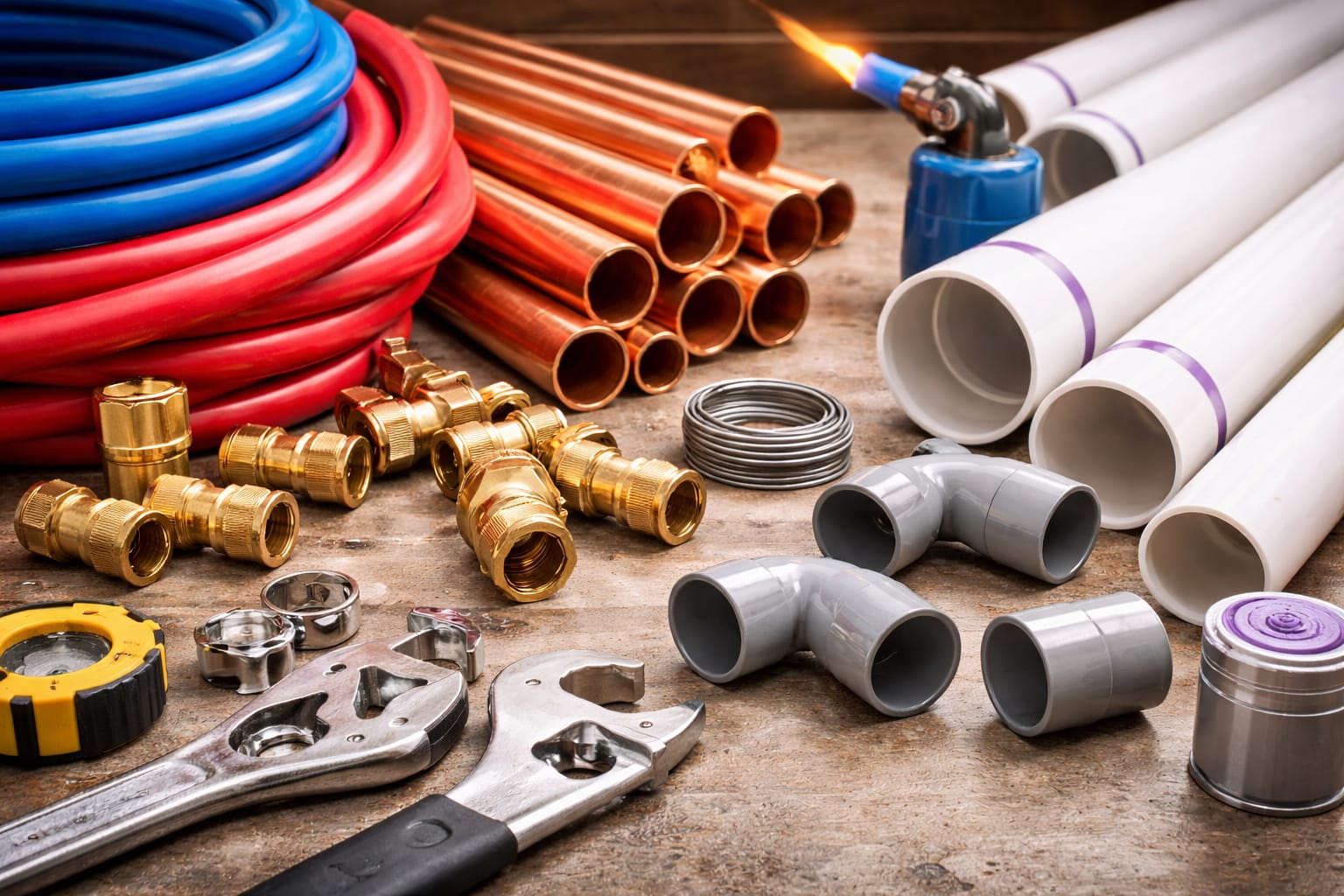
Plumbing pipe selection profoundly impacts system longevity, maintenance costs, and long-term reliability. The wrong material choice creates recurring problems, premature failures, and expensive replacements. The right selection provides decades of trouble-free service with minimal maintenance requirements.
Modern residential plumbing typically incorporates three primary pipe materials—PEX, copper, and PVC—each engineered for specific applications where their unique properties provide optimal performance. Understanding these materials' distinct characteristics helps homeowners make informed decisions during repairs, renovations, or system upgrades.
At ABM Plumbing Company, we guide homeowners through pipe material selection based on application requirements, local code compliance, water chemistry, and budget considerations. Here's comprehensive comparison of residential plumbing's three dominant pipe materials.
PEX Piping
Cross-linked polyethylene (PEX) represents modern plumbing innovation addressing many limitations of traditional rigid pipe materials. Since widespread North American adoption in the 1990s, PEX has become the dominant choice for residential water supply installations.
PEX material characteristics:
PEX manufacturing involves cross-linking polyethylene molecules creating three-dimensional bonds providing strength, flexibility, and temperature resistance. Three manufacturing methods produce PEX-A, PEX-B, and PEX-C variants with subtle performance differences.
PEX-A (peroxide method) offers greatest flexibility and shape memory allowing kinked pipes to return to original form when heated. This premium grade typically costs 10-20% more than other types.
PEX-B (silane method) provides excellent performance at moderate cost making it most common residential choice. Slightly less flexible than PEX-A but adequate for virtually all applications.
PEX-C (radiation method) represents economy grade with adequate performance for standard installations though less flexible than other types and prone to permanent kinking if bent too sharply.
Significant advantages:
Installation efficiency: PEX flexibility allows continuous runs from manifolds to fixtures without intermediate fittings. This characteristic dramatically reduces installation time and eliminates leak-prone connections within walls.
Long continuous runs snake through spaces where rigid pipe would require multiple fittings negotiating turns and obstacles. A bathroom supply requiring ten copper fittings might need only two PEX connections—one at manifold, one at fixture.
Freeze resistance: PEX expands accommodating ice formation without rupturing unlike rigid pipes that burst when water freezes and expands. While PEX isn't freeze-proof, it tolerates occasional freezing far better than copper or CPVC.
This characteristic proves particularly valuable in exterior walls, unheated spaces, or regions experiencing hard freezes. PEX significantly reduces burst pipe risks during winter cold snaps.
Corrosion immunity: PEX contains no metal eliminating corrosion concerns. Acidic water, high mineral content, or electrical grounding issues that destroy copper leave PEX unaffected.
Scale buildup from hard water doesn't adhere to PEX interior surfaces maintaining full flow capacity throughout service life. Copper and galvanized steel gradually restrict as mineral deposits accumulate.
Quieter operation: PEX flexibility dampens water hammer and flow noise far more effectively than rigid pipes transmitting vibrations throughout structures. Homes with PEX experience notably quieter plumbing operation.
Cost effectiveness: Material costs run 25-40% less than copper while installation labor decreases 30-50% through reduced fitting requirements and faster routing. Total installed costs typically reach 40-60% of comparable copper installations.
Important limitations:
UV degradation: Direct sunlight breaks down PEX molecular structure causing brittleness and eventual failure. PEX cannot be used for outdoor exposed applications without UV-protective covering.
Interior installations remain unaffected as minimal UV exposure occurs behind walls and ceilings. This limitation affects only exterior hose bibs or exposed outdoor routing.
Rodent vulnerability: Mice and rats occasionally chew PEX pipes causing leaks requiring repair. While not universal problem, areas with significant rodent populations see higher failure rates than with copper or CPVC.
Protective sleeving or routing through less accessible areas minimizes this risk. Copper remains preferred choice in spaces with known persistent rodent issues.
Chemical sensitivity: PEX should not contact petroleum products, pesticides, or certain chemicals that cause degradation. Routing through chemically contaminated soil or near fuel storage requires protective barriers.
Permeation concerns: PEX allows microscopic permeation of certain chemicals through pipe walls potentially affecting water quality or allowing fuel contamination in underground installations near fuel tanks.
Most residential installations avoid these scenarios, but awareness prevents inappropriate applications.
Temperature limitations: While PEX handles typical residential hot water temperatures (120-140°F) easily, it's not suitable for commercial applications or systems exceeding 180°F. Maximum pressure ratings also decrease at elevated temperatures.
Optimal PEX applications:
Whole-house repiping projects benefit maximally from PEX installation efficiency and cost advantages. Manifold distribution systems with dedicated lines to each fixture provide excellent performance and easy shutoff for individual fixture service.
Remodeling projects appreciate PEX routing flexibility through existing wall spaces without extensive demolition accessing confined areas.
Homes with aggressive water chemistry causing copper corrosion avoid these problems entirely with PEX installations.
Cold climate properties gain freeze resistance advantages reducing winter burst pipe risks.
Copper Piping: Traditional Reliable Standard
Copper plumbing has served residential construction for over 70 years with proven durability and performance. Despite PEX market share growth, copper remains preferred choice for many applications and required by some jurisdictions.
Copper pipe types:
Type M copper features thinnest walls meeting minimum code requirements for residential pressure applications. This economy grade costs least but offers less corrosion resistance and pressure capacity than heavier types.
Type L copper provides medium wall thickness representing industry standard for residential installations. Most professional plumbers prefer Type L for reliability balance between cost and durability.
Type K copper features thickest walls for maximum durability and pressure capacity. This premium grade sees use in commercial applications and underground installations requiring extra protection.
Rigid versus flexible copper:
Rigid copper (hard temper) comes in straight lengths requiring cutting and fitting for direction changes. This standard form suits most residential applications with fittings providing necessary routing.
Flexible copper (soft temper) coils allow bending for gradual direction changes without fittings. This specialty form works well for tight spaces or applications benefiting from continuous runs though more expensive than rigid copper.
Compelling advantages:
Proven longevity: Copper installations routinely last 50-70 years with minimal maintenance. This exceptional service life exceeds other materials' track records through decades of field performance data.
Properties with original 1950s-1970s copper plumbing often require minimal repairs beyond fixture and valve replacements demonstrating remarkable durability.
Universal code acceptance: All plumbing codes approve copper for residential applications. Homeowners never encounter permitting or inspection issues with copper installations.
This universal acceptance matters during renovations, especially in jurisdictions slow adopting PEX or maintaining restrictions on plastic piping.
High temperature capacity: Copper handles water temperatures exceeding 400°F far above residential requirements. This thermal capacity provides significant safety margins and allows commercial applications.
Antimicrobial properties: Copper's natural antimicrobial characteristics inhibit bacterial growth within pipes. This property provides subtle but measurable water quality benefits.
Rigidity advantages: Unlike flexible pipes, copper maintains precise routing and doesn't sag over time. This rigidity benefits exposed installations where appearance matters.
Recyclability: Copper's high scrap value means old installations have residual worth and material gets recycled rather than landfilled. This sustainability factor appeals to environmentally conscious homeowners.
Significant disadvantages:
Material and installation costs: Copper costs 2-3 times PEX for materials alone. Installation labor runs 40-60% higher due to cutting, fitting, and soldering requirements.
Total installed costs typically run 2-2.5 times comparable PEX installations making copper prohibitively expensive for whole-house repiping in many budgets.
Corrosion susceptibility: Acidic water (pH below 7.0) causes copper corrosion creating pinhole leaks typically appearing after 20-30 years in vulnerable systems.
High mineral content water doesn't corrode copper but deposits scale restricting flow over decades. Water softeners prevent this accumulation.
Electrical grounding through plumbing accelerates corrosion as stray currents promote electrochemical reactions. Proper electrical grounding systems prevent this problem.
Freeze vulnerability: Copper pipes burst when water freezes and expands. Frozen copper requires replacement while PEX often survives freezing events.
Adequate insulation prevents freezing in properly designed systems, but cold climate properties in poorly insulated spaces face higher risks with copper.
Thermal expansion/contraction: Copper expands and contracts with temperature changes. Inadequate support allows pipe movement creating stress at connections and eventual leaks.
Proper installation includes adequate supports and expansion accommodation preventing these issues.
Installation skill requirements: Quality copper installation requires proper soldering technique, fitting preparation, and flux application. Poor technique creates immediate or delayed failures.
Professional installation costs reflect this skill requirement though ensures reliable long-term performance.
Optimal copper applications:
Homes valuing maximum longevity and willing to invest in premium materials benefit from copper's proven 50-70 year service life.
Properties in regions with PEX restrictions or conservative building departments requiring traditional materials choose copper for guaranteed code acceptance.
Exposed decorative plumbing where pipe appearance matters aesthetically utilizes copper's attractive finish.
Commercial applications or high-temperature systems exceeding PEX ratings require copper's superior thermal capacity.
Historic home restoration maintaining authentic materials uses copper matching original construction methods.
PVC and CPVC: Plastic Drainage and Supply Options
Polyvinyl chloride (PVC) and chlorinated polyvinyl chloride (CPVC) serve distinct plumbing applications with different temperature capacities and appropriate uses.
PVC characteristics and applications:
PVC rigid white or gray plastic piping dominates residential drainage, waste, and vent (DWV) applications. This material replaced cast iron and galvanized steel drain systems in most residential construction since the 1970s.
Schedule 40 PVC provides standard wall thickness for residential drainage meeting code requirements for typical applications. Schedule 80 offers thicker walls for applications requiring extra strength or chemical resistance.
PVC accepts wastewater temperatures up to 140°F safely though not suitable for continuous hot water supply. This limitation restricts PVC to drainage applications in residential plumbing.
PVC advantages for drainage:
Cost effectiveness: PVC costs significantly less than cast iron or copper drainage alternatives. Material savings combined with easier installation reduce total drainage system costs 40-60%.
Corrosion resistance: PVC immunity to corrosion ensures decades of trouble-free service. Unlike metal drain pipes that eventually corrode through, PVC maintains integrity indefinitely.
Smooth interior surfaces: PVC's smooth walls resist buildup and promote efficient drainage. Scale, grease, and debris accumulate far less readily than on metal pipe interiors.
Lightweight handling: PVC weighs fraction of cast iron simplifying installation and reducing structural load requirements. Single installers handle pipes requiring multiple workers for cast iron equivalents.
Simple joining methods: Solvent cement welding creates permanent joints in seconds without specialized tools or skills beyond proper technique and adequate drying time.
PVC limitations:
Temperature restrictions: PVC cannot handle hot water supply applications. Continuous temperatures above 140°F cause softening and deformation.
Impact sensitivity: PVC becomes brittle over time particularly when exposed to sunlight or temperature extremes. Old PVC cracks more easily than when new.
Noise transmission: PVC transmits drainage noise more readily than cast iron. Proper insulation around drain lines mitigates this characteristic in sound-sensitive locations.
CPVC characteristics and applications:
CPVC adds chlorination to PVC formula increasing temperature resistance to 200°F making it suitable for hot water supply lines. This cream or light tan material served as copper alternative before PEX widespread adoption.
CPVC installations peaked in 1980s-1990s before PEX market dominance. Many homes from this era contain CPVC supply systems performing adequately though less popular for new installations today.
CPVC advantages:
Similar cost advantages to PEX compared to copper though higher material costs than standard PVC. Installation simplicity matches PVC with solvent cement joints.
Corrosion immunity matches PEX providing reliable service in aggressive water conditions destroying copper.
CPVC disadvantages:
Brittleness concerns: CPVC becomes increasingly brittle with age especially in hot water applications. Older installations develop cracks at fittings from thermal cycling stress.
Chemical sensitivity: CPVC degrades when exposed to certain chemicals, lubricants, or insect sprays. Contaminated fittings fail prematurely creating unexpected leaks.
Temperature cycling effects: Repeated heating and cooling gradually degrades CPVC reducing service life compared to PEX or copper. Hot water lines show this effect most prominently.
Joint failure patterns: Solvent cement joints can fail from inadequate preparation, insufficient cement, or premature pressure application. Failed joints leak requiring repair or replacement.
Current market position:
PEX has largely supplanted CPVC for new supply line installations offering superior freeze resistance, flexibility, and installation efficiency. CPVC remains available and code-compliant but sees declining use.
PVC dominates drainage applications with no viable competitor offering comparable cost-performance balance.
Comparative Analysis: Selecting Appropriate Materials
Optimal pipe selection requires matching material properties to specific applications considering multiple factors beyond simple cost comparison.
Supply line material selection factors:
Water chemistry: Acidic water favors PEX over copper avoiding corrosion issues. Hard water matters less with modern materials though copper shows more scale accumulation than PEX.
Installation environment: Tight spaces favor PEX flexibility while exposed decorative installations suit copper aesthetics. Rodent-prone areas may warrant copper despite cost premiums.
Budget constraints: Whole-house repiping projects benefit enormously from PEX cost advantages. Limited-scope repairs where material costs matter less may use copper matching existing systems.
Freeze exposure risks: Unheated spaces or exterior walls in cold climates strongly favor PEX freeze resistance over copper burst vulnerability.
Longevity priorities: Homeowners planning 50+ year ownership value copper's proven extreme longevity despite higher initial investment.
Code requirements: Always verify local code acceptance especially for PEX which some conservative jurisdictions restrict or prohibit.
Drainage system material selection:
PVC represents standard choice for virtually all residential drainage applications. Cast iron sees use only in commercial applications, high-rise buildings, or situations requiring sound dampening.
ABS (black plastic) serves as PVC alternative in some regions offering similar performance with different joining methods.
Hybrid system design:
Most modern homes incorporate multiple pipe materials optimized for specific applications:
-
PEX for supply lines throughout majority of home
-
Copper for water heater connections and gas appliance areas
-
PVC for all drainage, waste, and vent applications
-
CPVC sometimes for specific hot water runs in existing CPVC systems
This mixed-material approach optimizes performance and cost across entire plumbing system.
Professional Installation Importance
While material selection matters significantly, proper installation quality determines actual performance regardless of pipe type chosen.
Installation considerations:
Code compliance: Professional plumbers ensure installations meet all local code requirements for materials, support spacing, and joining methods. DIY installations often violate codes creating permit and insurance issues.
Proper support: All pipe types require adequate support preventing sagging and stress at connections. Support spacing varies by material and diameter.
Expansion accommodation: Supply lines need expansion loops or other accommodation for thermal expansion preventing stress at fixed connections.
Joining technique: Each material requires specific joining methods—soldering for copper, crimping or expansion for PEX, solvent welding for PVC. Poor technique creates immediate or delayed failures.
Material handling: Proper storage before installation protects materials from contamination, UV exposure, and physical damage affecting performance.
Pressure testing: Professional installations include pressure testing verifying system integrity before covering and finishing work.
Long-Term Performance and Maintenance
Different materials age differently requiring awareness about long-term maintenance needs and eventual replacement timing.
PEX long-term performance:
PEX shows excellent long-term reliability with 25+ year track record in North American installations demonstrating minimal failure rates beyond manufacturing defects or installation errors.
Anticipated service life exceeds 50 years based on accelerated aging testing and field performance data accumulation.
Maintenance requirements remain minimal with no special procedures beyond normal plumbing system care.
Copper long-term performance:
Copper's 50-70+ year proven service life in ideal conditions drops to 20-40 years in aggressive water chemistry or improper electrical grounding situations.
Pinhole leak development in aging copper represents most common failure mode typically appearing after 25-40 years depending on water chemistry.
Periodic inspection for green corrosion deposits or weeping connections identifies problems early allowing targeted repairs.
PVC/CPVC long-term performance:
PVC drainage systems essentially last indefinitely barring physical damage or improper installation. 50+ year old installations show minimal degradation.
CPVC supply lines show more variable longevity with 20-40 year typical service life before brittleness issues emerge particularly in hot water applications.
Making Informed Material Choices
Understanding pipe material characteristics, appropriate applications, and installation requirements enables informed decision-making about plumbing system investments.
At ABM Plumbing Company, our licensed plumbers provide honest guidance about material selection based on your specific needs, existing system, water chemistry, and budget reality. We'll explain advantages and limitations of each option for your particular situation.
We install all common pipe materials to professional standards ensuring code compliance, proper technique, and long-term reliability regardless of material selected.
Choosing between PEX and copper for your Austin home repiping depends on your water conditions, budget, and long-term goals. Austin’s 184 PPM hard water stresses both materials differently. Our expansive clay soil requires careful installation. Understanding each material’s strengths helps Austin homeowners make the best choice for their neighborhoods from Mueller to South Congress.
Frequently Asked Questions
Which is better for Austin homes: PEX or copper?
Both work well in Austin, but PEX is often the better value. PEX resists mineral buildup from our 184 PPM water better than copper, requires less maintenance, and costs 30% less. Copper is more durable long-term and has higher resale value in some areas. For homes in high-vibration areas (near traffic), copper handles noise better. ABM Plumbing can assess your specific situation.
How long do PEX and copper pipes last in Austin?
In Austin’s hard water, copper pipes typically last 40-70 years but require regular flushing to prevent mineral clogging. PEX lasts 50-75 years without mineral issues, making it effectively longer-lived in our environment. Both last longer than older galvanized pipe, which corrodes in 30-40 years. For newer homes with lots of use, PEX is more practical.
What does it cost to repipe an Austin home?
Full home repiping runs $5,000-$15,000+ depending on house size and complexity. PEX costs 20-30% less than copper. Austin’s hard water makes PEX attractive for cost savings. Many financing options are available for repiping projects. Get multiple quotes—ABM Plumbing provides free estimates. Call (512) 620-8200.
Can I mix PEX and copper in my Austin plumbing?
Yes. Many Austin homeowners replace problematic galvanized sections with PEX while keeping functioning copper lines. Transition fittings connect the different materials. This approach saves money while modernizing the system gradually. Discuss mixed-material strategies with a licensed plumber.
Contact ABM Plumbing Company to discuss pipe material options for your repair, renovation, or repiping project. We'll help you choose materials providing optimal performance and value for your specific circumstances.
About the Author
Byron D Smith is a Responsible Master Plumber at ABM Plumbing Company of Central Texas. Licensed Texas Master Plumber serving Central Texas. Byron holds Texas Master Plumber License #45625 with the Responsible Master Plumber endorsement and oversees all plumbing work performed by ABM Plumbing.
Need Professional Plumbing Help?
Contact ABM Plumbing Company for expert service in Austin, Round Rock, Cedar Park, Georgetown, Pflugerville and surrounding areas.
Get a Free Quote