Tankless vs. Traditional Water Heaters: Complete Comparison
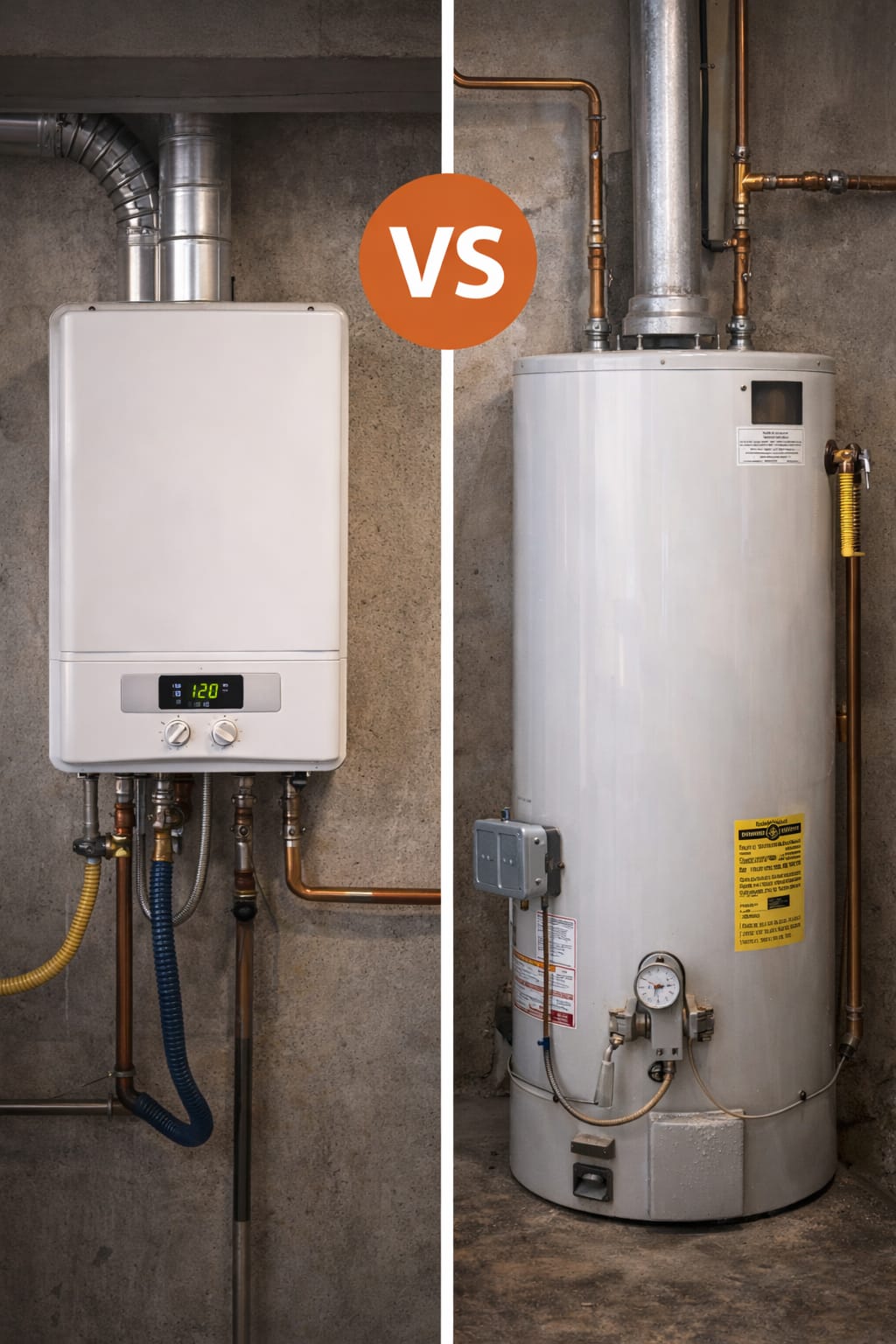
Choosing a water heater isn’t just about hot water. It’s about efficiency, reliability, installation requirements, and how well the system fits your household’s daily habits. For many homeowners, the decision comes down to two main options: tankless water heaters and traditional tank-style water heaters.
Both systems have clear advantages and trade-offs. This guide offers a straightforward comparison to help you understand how each type works and which may be the better fit for your home.
How Traditional Water Heaters Work
Traditional water heaters store a set amount of hot water in a tank, typically ranging from 30 to 80 gallons. The tank is constantly heated so hot water is ready when a faucet or appliance is used.
Once the hot water in the tank is depleted, the unit needs time to reheat a full supply. This recovery period can lead to temporary hot water shortages in larger households or during peak usage.
Tank-style systems are common, familiar, and generally simple to operate and maintain.
How Tankless Water Heaters Work
Tankless water heaters heat water on demand. Instead of storing hot water, they use powerful heating elements or burners to heat water instantly as it flows through the unit.
This design eliminates the need for a storage tank and allows for a continuous supply of hot water, as long as the unit’s flow capacity is not exceeded.
Tankless systems are more compact and often installed on walls, freeing up floor space.
Upfront Cost Comparison
Traditional water heaters typically have a lower upfront cost. The units themselves are less expensive, and installation is usually straightforward, especially if replacing an existing tank system.
Tankless water heaters generally cost more initially. The unit price is higher, and installation may require electrical upgrades, gas line modifications, or venting changes depending on the home.
The higher upfront investment is an important factor for many homeowners.
Energy Efficiency Differences
Tankless water heaters are often more energy efficient because they only heat water when it’s needed. There is no energy loss from keeping a tank of water hot around the clock.
Traditional water heaters experience standby heat loss as stored water cools over time and must be reheated, even when not in use.
Homes with irregular or lower hot water usage may see greater efficiency benefits from tankless systems, while high-demand households may experience more balanced results.
Hot Water Capacity and Demand
Tank-style water heaters are limited by the size of the tank. Once it’s empty, hot water is unavailable until the tank reheats.
Tankless systems provide continuous hot water, but they are limited by flow rate. If multiple fixtures are used simultaneously, the unit may struggle to keep up unless it’s properly sized or multiple units are installed.
Understanding household water usage patterns is key when comparing these systems.
Space and Installation Considerations
Traditional water heaters take up more space due to the tank size. They are commonly installed in garages, basements, or utility closets.
Tankless units are compact and wall-mounted, making them appealing for homes with limited space.
Installation complexity varies. Tank replacements are usually simple, while tankless installations may require infrastructure upgrades that should be evaluated beforehand.
Lifespan and Maintenance
Traditional water heaters typically last eight to twelve years with proper maintenance. Tank corrosion and sediment buildup are common factors that limit lifespan.
Tankless water heaters often last fifteen to twenty years. They have fewer components exposed to standing water, which reduces corrosion risk.
Both systems require maintenance. Tank systems benefit from periodic flushing, while tankless units require regular descaling, especially in areas with hard water. In Central Texas, where hard water is common, both types may experience mineral buildup that impacts efficiency and lifespan, making regular professional maintenance even more important.
Reliability and Repair Factors
Tank-style water heaters are mechanically simpler and often less expensive to repair. Parts are widely available, and most plumbers are familiar with servicing them.
Tankless systems use advanced components that can be more costly to repair and may require specialized service knowledge.
Reliability for both systems depends heavily on proper installation, sizing, and maintenance.
Which Option Makes More Sense?
There is no universal answer. Traditional water heaters are often a good fit for smaller households, tighter budgets, or homes with existing tank infrastructure.
Tankless water heaters may appeal to homeowners seeking energy efficiency, space savings, longer lifespan, and continuous hot water, especially in homes with consistent demand.
The best choice depends on usage patterns, budget, home layout, and long-term plans.
Making an Informed Water Heater Decision
Understanding the differences between tankless and traditional water heaters helps homeowners make confident, informed decisions. If you're evaluating your options or planning a replacement, ABM Plumbing Company of Central Texas can assess your home’s needs and provide guidance based on efficiency, performance, and long-term reliability. Serving Central Texas, we’re ready to help. Call (512) 620-8200 to schedule a consultation and find the perfect water heater for your home.
Choosing the right system today can make a noticeable difference in comfort and energy use for years to come.
In Austin and Central Texas, where water hardness averages 184 PPM from the Colorado River, choosing the right water heater matters even more. Hard water accelerates sediment buildup, which affects both tank and tankless systems differently. Austin homeowners in neighborhoods like Mueller, Hyde Park, and Tarrytown should factor in local water conditions when comparing these options. With Austin Water rates ranging from $1.36 to $35.54 per 1,000 gallons on a tiered structure, energy efficiency directly impacts your monthly costs.
Frequently Asked Questions
Which water heater is better for Austin homes?
For most Austin homes, the best choice depends on household size and hot water demand. Tankless units work well for smaller Austin homes in neighborhoods like Bouldin Creek or Travis Heights, while larger homes in Circle C or Avery Ranch with multiple bathrooms may benefit from a traditional tank or multiple tankless units. Austin’s hard water (184 PPM) means either type will need regular maintenance to prevent mineral buildup.
How much does a water heater cost in Austin?
In the Austin area, traditional tank water heaters typically cost $600 to $2,500 installed, while tankless systems range from $1,400 to $3,900. ABM Plumbing Company offers transparent pricing and free estimates for homeowners across Central Texas. Call (512) 620-8200 for current pricing.
How long do water heaters last in Austin?
Due to Austin’s hard water, tank water heaters typically last 8 to 12 years, while tankless units can last 15 to 20 years with proper maintenance. Annual flushing is essential in Central Texas to remove mineral deposits.
Does Austin offer water heater rebates?
Yes. Austin Energy offers an $800 rebate when switching to an ENERGY STAR certified heat pump water heater. Contact Austin Water at (512) 974-2199 or visit the Austin Energy savings portal for details.
About the Author
Byron D Smith is a Responsible Master Plumber at ABM Plumbing Company of Central Texas. Licensed Texas Master Plumber serving Central Texas. Byron holds Texas Master Plumber License #45625 with the Responsible Master Plumber endorsement and oversees all plumbing work performed by ABM Plumbing.
Need Professional Plumbing Help?
Contact ABM Plumbing Company for expert service in Austin, Round Rock, Cedar Park, Georgetown, Pflugerville and surrounding areas.
Get a Free Quote