Water Heater Lifespan When to Repair vs Replace
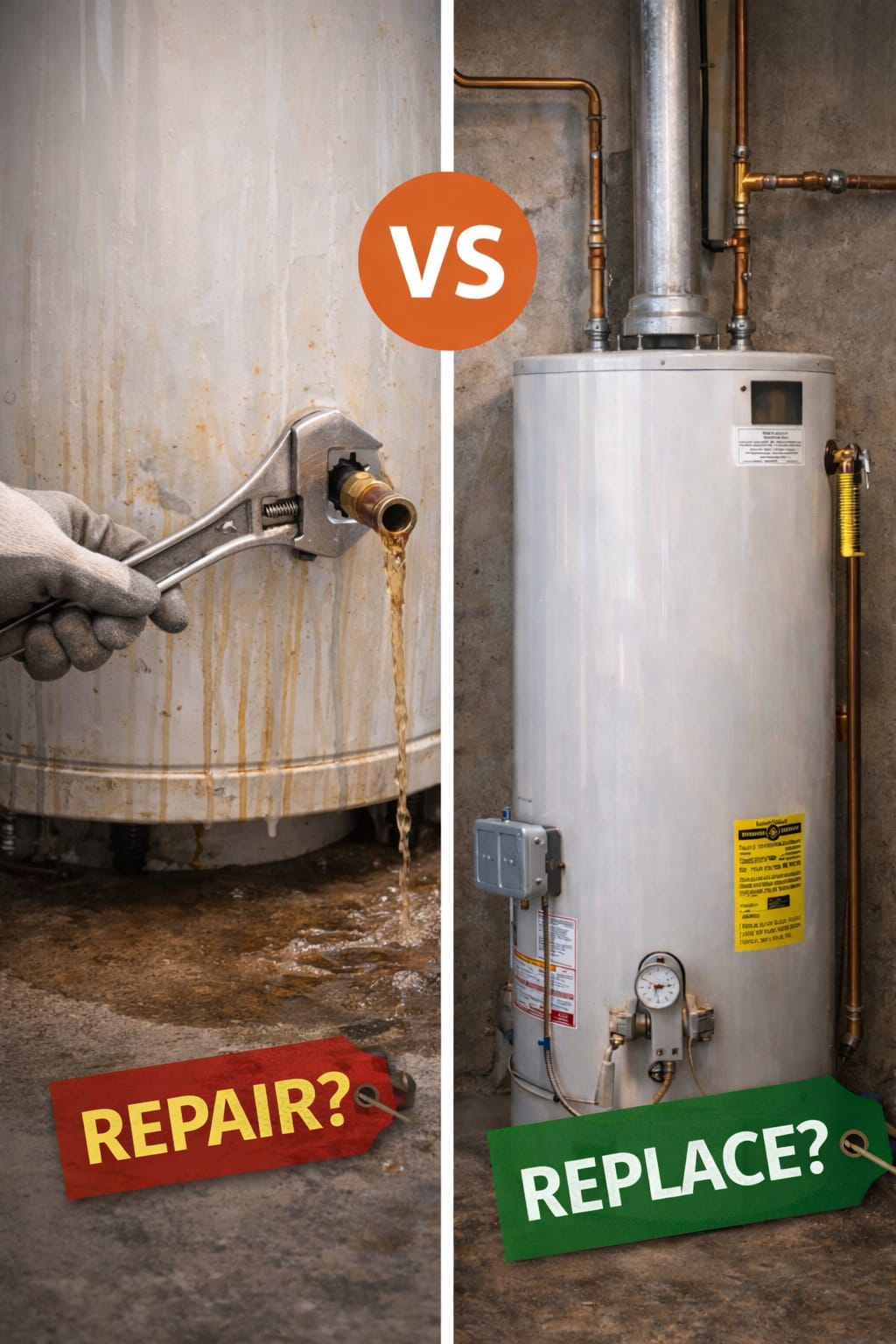
Most water heaters don’t fail without warning. Long before a unit stops producing hot water, it usually shows signs that its lifespan is nearing the end. The challenge for homeowners is knowing whether those signs mean a simple repair will solve the problem or if replacement is the smarter long-term choice.
Understanding how long water heaters typically last and what factors affect their performance can help you make a clear, confident decision before an emergency forces your hand.
Average Water Heater Lifespan
Traditional tank-style water heaters generally last eight to twelve years. Tankless water heaters often last fifteen to twenty years with proper maintenance. These ranges aren’t guarantees, but they provide a useful baseline when evaluating your system.
Actual lifespan depends on several factors, including water quality, usage patterns, installation quality, and how consistently the unit has been maintained. A well-maintained unit can outlast expectations, while a neglected one may fail early. In Austin where hard water is prevalent, regular maintenance such as flushing can significantly extend water heater lifespan on both tank and tankless systems.
Knowing the age of your water heater is the first step in deciding whether repair or replacement makes sense.
Signs Your Water Heater May Need Attention
Some warning signs point to repairable issues, while others suggest the unit is reaching the end of its life.
Common symptoms include inconsistent water temperature, reduced hot water supply, unusual noises such as popping or rumbling, discolored water, or moisture around the base of the tank. Rising energy bills without increased usage can also indicate declining efficiency.
Not all of these signs mean replacement is required, but they should never be ignored.
When Repair Makes Sense
Repair is often the right choice when the water heater is relatively young and the issue is isolated.
If the unit is under five to seven years old and the problem involves a thermostat, heating element, valve, or minor connection issue, repair is usually cost-effective. These components can wear out independently of the tank itself and can often be replaced without affecting the overall lifespan.
A repair also makes sense if the unit has been well-maintained and shows no signs of corrosion or structural damage.
When Replacement Is the Better Option
Replacement becomes more practical as a water heater approaches or exceeds its expected lifespan.
If a tank-style water heater is over ten years old and experiencing frequent issues, investing in repeated repairs often costs more over time than replacing the unit. Corrosion, rust, or leaks from the tank itself are strong indicators that replacement is necessary, as tank failure cannot be safely repaired.
If repairs are becoming more frequent or expensive, or if efficiency has noticeably declined, replacement may offer better reliability and long-term savings.
Cost Comparison: Repair vs. Replace
Repair costs are typically lower in the short term, but they should be evaluated in context.
A modest repair on a newer unit may extend its life for several years at minimal cost. However, repairing an aging water heater may only delay inevitable replacement while adding ongoing expense.
Replacement costs are higher upfront but provide predictable performance, improved efficiency, and peace of mind. Newer models often reduce energy usage, which can offset some of the initial investment over time.
Efficiency and Performance Considerations
As water heaters age, efficiency often declines. Sediment buildup, worn components, and internal corrosion make the unit work harder to deliver the same amount of hot water.
If your water heater struggles to meet household demand or takes longer to recover, replacement may restore comfort and reduce energy waste. This is especially relevant for households that have grown or changed usage patterns since the unit was installed.
Safety and Risk Factors
Older water heaters carry greater risk of leaks and water damage. A failing tank can release a large volume of water unexpectedly, causing damage to floors, walls, and belongings.
If the water heater is located in a finished area or near living spaces, the potential cost of water damage should be considered when deciding whether to keep an aging unit in service.
Proactive replacement can reduce this risk significantly.
Questions to Ask Before Deciding
Before choosing repair or replacement, consider a few key questions. How old is the unit? Has it required multiple repairs recently? Is there visible rust or corrosion? Are energy bills increasing? Does the system meet your household’s hot water needs?
Clear answers to these questions often make the right decision easier to see.
Making the Right Long-Term Choice
Austin’s hard water (184 PPM) reduces water heater lifespan compared to national averages. Tank models last 8-12 years; tankless 15-20 years. Understanding when to repair vs. replace saves money. An 8-year-old water heater that costs $600 to repair might not be worth it. Knowing your heater’s age and condition guides good decisions.
Frequently Asked Questions
How long do water heaters last in Austin?
Tank water heaters last 8-12 years in Austin (vs. 12-17 years in soft water areas) due to our hardness causing mineral buildup. Tankless units last 15-20 years. At an average repair cost of $602, a heater costing $1,200-$2,500 to replace might be worth repairing if under 8 years old. Beyond 8 years, replacement often makes sense.
How do I know if my Austin water heater should be repaired or replaced?
Check the age (serial number on the tank). Under 5 years old: repair usually makes sense. 5-8 years: repair if cost is less than 50% of replacement. Over 8 years: replacement is often better long-term. Factor in energy efficiency—new ENERGY STAR models save money on Austin Water bills. Get a professional assessment. Call ABM Plumbing at (512) 620-8200.
What’s the cost of water heater replacement in Austin?
Tank water heater replacement: $1,200-$2,500 installed. Tankless water heater replacement: $2,500-$4,500 installed. Factor in the $800 Austin Energy rebate for ENERGY STAR heat pump water heaters. Installation includes disconnection/reconnection of gas or electric, draining, and proper venting. Many companies offer financing for major replacements.
Why is Austin’s hard water so hard on water heaters?
At , minerals accumulate in the tank forming a sediment layer. This reduces heating efficiency (water has to heat through mineral layer), increases energy costs, causes rumbling sounds, and corrodes the tank. Annual flushing removes sediment and extends life. Flushing is cheap prevention ($150-$300) compared to replacement costs.
Choosing between repairing or replacing a water heater is about balancing cost, reliability, efficiency, and risk. If you’re unsure which option makes the most sense for your home, ABM Plumbing Company of Central Texas can evaluate your water heater’s condition and provide clear, practical guidance. Serving Central Texas, we’re ready to help. Call (512) 620-8200 to discuss your water heater and make the best long-term choice. Making an informed decision today can help avoid unexpected failures and ensure reliable hot water for years to come.
About the Author
Byron D Smith is a Responsible Master Plumber at ABM Plumbing Company of Central Texas. Licensed Texas Master Plumber serving Central Texas. Byron holds Texas Master Plumber License #45625 with the Responsible Master Plumber endorsement and oversees all plumbing work performed by ABM Plumbing.
Need Professional Plumbing Help?
Contact ABM Plumbing Company for expert service in Austin, Round Rock, Cedar Park, Georgetown, Pflugerville and surrounding areas.
Get a Free Quote