Water Heater Not Producing Hot Water
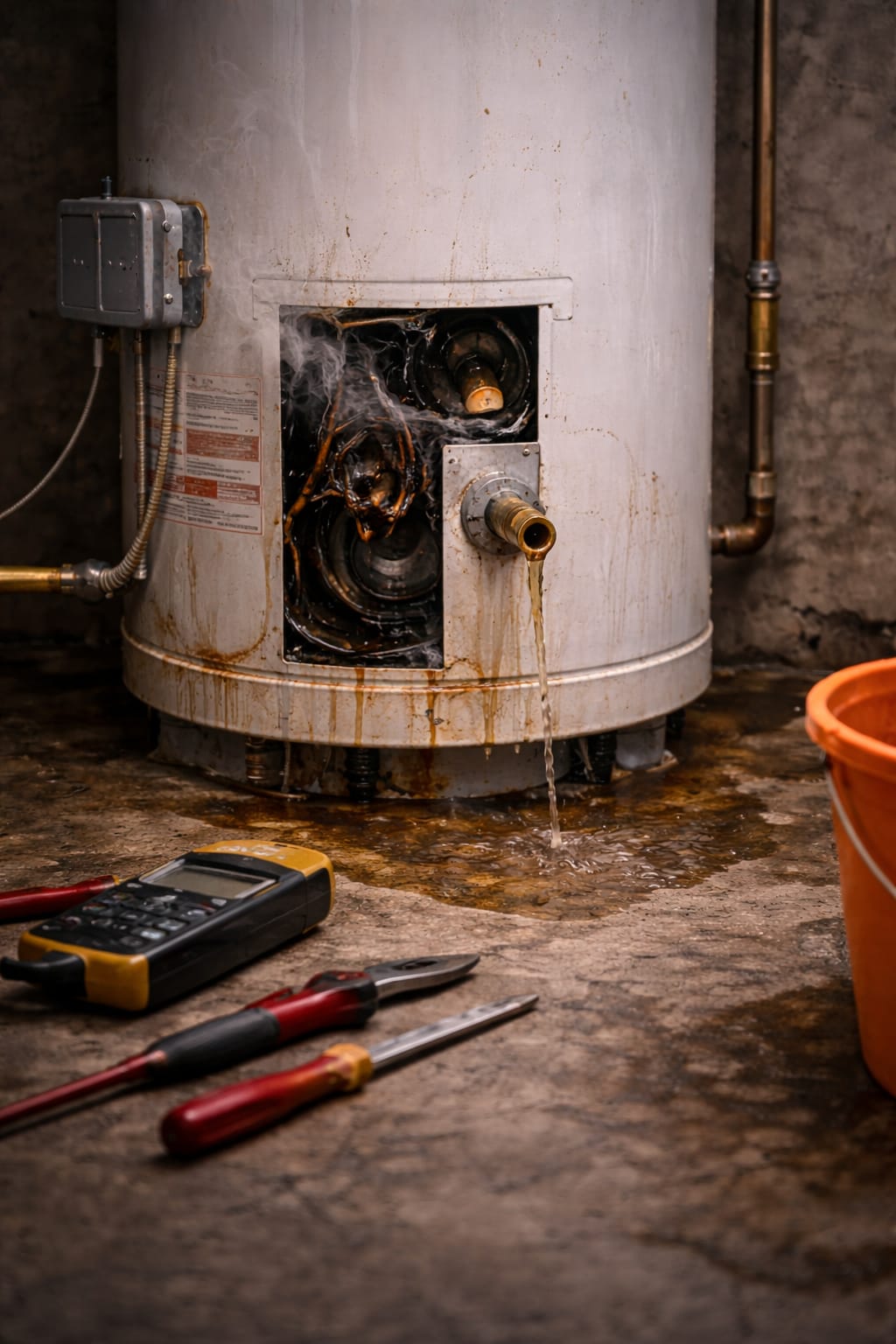
No hot water means a water heater has stopped heating incoming water due to failed heating elements, pilot light issues, thermostat problems, or tripped electrical breakers. Most repairs cost $300–$600 for parts and labor ($150–$300/hour), while full tank replacement runs $1,200–$2,500 depending on capacity and fuel type. Austin’s very hard water (184 PPM) accelerates sediment buildup and heating element failure, making regular flushing essential for water heater longevity.
The key is understanding what might be wrong before the problem escalates. This guide walks through the most common reasons a water heater stops producing hot water and how to determine whether the issue is minor or requires professional attention. For homeowners throughout Central Texas, knowing when to troubleshoot and when to call a licensed plumber can save time, money, and the headaches of an extended cold-water outage.
Start With the Basics
Before assuming the water heater has failed, check the simplest possibilities.
Make sure the unit has power or gas. For electric water heaters, check the breaker panel to see if a breaker has tripped. For gas water heaters, confirm the gas supply is on and the pilot light is lit. In Austin and surrounding areas (Mueller, Tarrytown, Hyde Park), tripped breakers are particularly common during peak usage hours or summer heat waves when air conditioning and water heaters compete for electrical capacity.
Also check the thermostat setting. If it has been turned down accidentally, the water may not be heating properly. Most systems operate best around 120 degrees Fahrenheit. In Austin, where water hardness averages 184 PPM, periodic flushing helps remove sediment that insulates heating elements and reduces efficiency, requiring higher temperatures to achieve the same warmth.
Tripped Breaker or Electrical Issue
Electric water heaters rely entirely on electrical power to heat water.
If a breaker trips, the heating elements stop working immediately. Resetting the breaker may restore hot water, but repeated tripping often indicates a deeper issue such as a failing heating element or wiring problem.
If hot water returns briefly and then disappears again, electrical components may need inspection.
Pilot Light or Gas Supply Problems
For gas water heaters, a cold-water issue often points to a pilot light or burner problem.
If the pilot light has gone out, the burner cannot heat the tank. Pilot lights can extinguish due to drafts, dirty components, or thermocouple issues.
If relighting the pilot does not solve the problem or it won’t stay lit, the issue likely requires professional service.
Failed Heating Elements
Electric water heaters typically have two heating elements. If one fails, the unit may produce limited or no hot water.
A failed lower element often results in lukewarm or cold water throughout the home. An upper element failure may stop hot water production entirely.
Heating elements wear out over time and are one of the most common repair needs in electric water heaters.
Sediment Buildup in the Tank
Sediment buildup can significantly reduce a water heater’s ability to heat water.
Minerals in the water settle at the bottom of the tank and form a hardened layer. This sediment acts as insulation between the heating source and the water, reducing efficiency and heat transfer.
In severe cases, sediment buildup can prevent heating altogether and lead to unusual noises or overheating. In Central Texas regions like Austin, hard water conditions accelerate sediment accumulation, making regular tank flushing especially important.
Faulty Thermostat
Water heater thermostats regulate temperature and signal when heating should occur.
If a thermostat fails or becomes inaccurate, the unit may not heat water to the desired temperature or may not heat at all. This can happen gradually or suddenly.
Thermostat issues often mimic other problems, making proper diagnosis important.
Temperature and Pressure Relief Valve Issues
The temperature and pressure relief valve is a critical safety component.
If it releases water frequently due to pressure or temperature problems, the tank may not maintain enough hot water. While the valve itself may not be the root cause, its activity often signals underlying issues such as pressure imbalance or overheating.
This situation should be evaluated rather than ignored.
Undersized or Overworked Water Heater
Sometimes the water heater is working, but it can’t keep up with demand.
Household changes, additional occupants, or increased hot water usage can overwhelm an existing system. When demand exceeds capacity, hot water may run out quickly or never reach desired temperatures.
This is especially common during mornings or high-use periods.
Age-Related Decline
As water heaters age, performance often declines.
Internal corrosion, worn components, and sediment buildup reduce heating efficiency. Older units may struggle to produce consistent hot water even if individual parts are replaced.
If the water heater is nearing the end of its expected lifespan, lack of hot water may be a sign that replacement is approaching.
When No Hot Water Signals Immediate Action
Some situations require prompt attention.
If there is no hot water combined with leaks, burning smells, visible corrosion, or repeated system shutdowns, the water heater should not be ignored. These signs can indicate safety risks or imminent failure.
Turning off the system and having it inspected is often the safest course of action.
Restoring Reliable Hot Water
A water heater that isn’t producing hot water can disrupt daily life, but the cause is often identifiable with the right approach. If troubleshooting doesn’t restore hot water or the issue keeps returning, ABM Plumbing Company of Central Texas can diagnose the problem and recommend the most practical solution. Serving Central Texas, we’re ready to help. Call (512) 620-8200 for expert service. Whether it’s a repair or replacement, addressing the issue early helps restore comfort and prevent unexpected breakdowns.
Related Articles
Frequently Asked Questions
How long does water heater repair take?
Most water heater repairs take 1–2 hours for heating element replacement or simple fixes. Pilot light relighting typically takes 30 minutes. Tank replacement can take 2–4 hours depending on size and connections. Emergency service availability is faster in Austin, with many plumbers offering same-day repair within 2–3 hours of the call.
How much does water heater repair cost?
Water heater repairs average $300–$600 in Austin, with service calls typically $150–$300 and labor at $90–$200/hour. Parts like heating elements cost $150–$300. Full tank replacement runs $1,200–$2,500 for traditional tanks or $2,500–$4,500 for tankless models.
Does Austin’s hard water affect water heaters?
Yes. Austin water is very hard (184 PPM), causing sediment buildup in water heater tanks. Sediment insulates heating elements, reducing efficiency and shortening heater lifespan. Annual flushing removes sediment and extends tank life by several years. Water softeners can also protect your heater and reduce overall plumbing corrosion throughout your home.
About the Author
Byron D Smith is a Responsible Master Plumber at ABM Plumbing Company of Central Texas. Licensed Texas Master Plumber serving Central Texas. Byron holds Texas Master Plumber License #45625 with the Responsible Master Plumber endorsement and oversees all plumbing work performed by ABM Plumbing.
Need Professional Plumbing Help?
Contact ABM Plumbing Company for expert service in Austin, Round Rock, Cedar Park, Georgetown, Pflugerville and surrounding areas.
Get a Free Quote