Water Heater Flooding Immediate Steps to Take
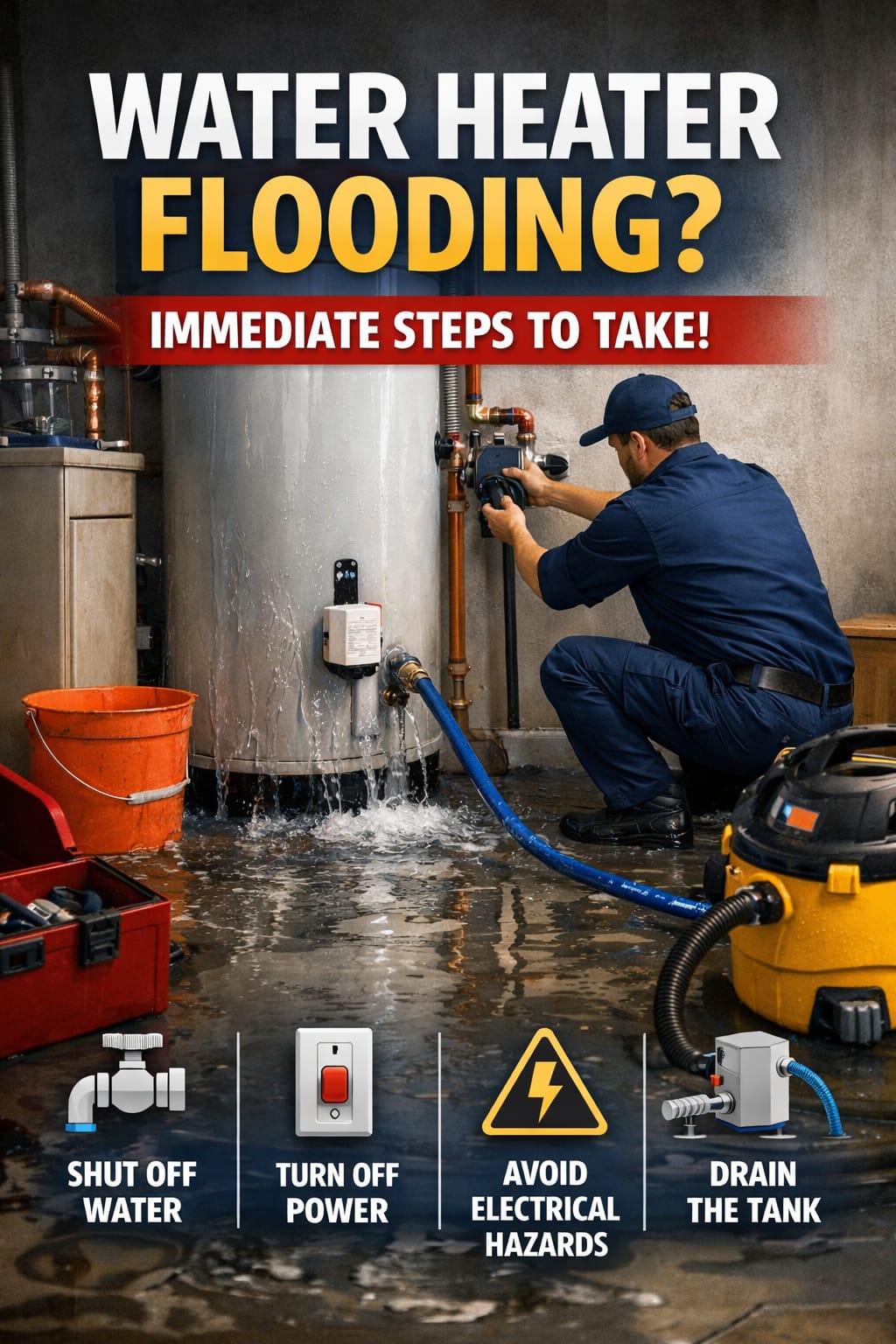
Water heater flooding occurs when a tank ruptures, a valve fails, or connection lines burst, releasing large volumes of water inside your home. This emergency can cause $500–$2,500+ in damage within minutes, affecting flooring, walls, and belongings. Immediate action—shutting off water and power—is critical to minimize damage and prevent costly secondary issues like mold and structural deterioration.
Knowing what to do immediately can significantly reduce damage and keep your home safe. Below is a clear action plan from ABM Plumbing Company to follow if your water heater starts flooding. In the Austin area, where our team serves residents across the Greater Austin area, quick response is essential to protecting your home from extensive water damage.
Austin homeowners face unique challenges with hard water (184 PPM—very hard by USGS standards) that can accelerate water heater corrosion and increase the risk of tank failure and flooding. Properties in Mueller, Tarrytown, Zilker, and other Austin neighborhoods commonly experience accelerated tank deterioration, making regular maintenance and timely replacement critical.
Step 1 - Shut Off the Water Supply
The first and most important step is stopping the flow of water.
Locate the cold water supply valve at the top of the water heater and turn it clockwise to shut it off. If the valve is damaged or will not close, shut off the home’s main water supply instead.
Stopping the water source prevents additional flooding and limits damage to your home.
Step 2 - Turn Off Power or Gas to the Water Heater
Once the water is shut off, protect the water heater and reduce safety risks.
For electric water heaters, turn off the breaker that supplies power to the unit. Running an electric water heater while it is flooded or empty can permanently damage the heating elements.
For gas water heaters, turn the gas control valve to the off position. If you smell gas or are unsure how to shut it off safely, leave the area and call a professional immediately.
Step 3 - Avoid Electrical Hazards
If water is spreading near outlets, extension cords, appliances, or the electrical panel, do not step into standing water.
Water and electricity are a dangerous combination. If you cannot safely access the breaker panel, wait for a licensed plumber or electrician to assist.
Step 4 - Drain the Water Heater if Possible
If the flooding is coming directly from the tank and it is safe to do so, draining the water heater can help reduce further water release.
Attach a garden hose to the drain valve at the bottom of the tank and run the hose to a floor drain or outside. Open the drain valve slowly. Hot water may still be inside, so use caution.
If the drain valve is corroded or leaking, do not force it open. A plumber can handle this safely.
Step 5 - Contain and Remove Standing Water
Once the source is controlled, begin minimizing water damage.
Use towels, buckets, or a wet/dry vacuum to remove standing water. Move furniture, rugs, and stored items away from the flooded area. If the water heater is located in a garage, closet, or utility room, pay close attention to nearby drywall and baseboards, which can absorb moisture quickly.
The faster water is removed, the lower the risk of mold and long-term damage.
Step 6 - Document the Damage
Before major cleanup or disposal, take photos and videos of the flooded area, the water heater, and any damaged property.
This documentation can be helpful for insurance claims and gives your plumber a clearer picture of the extent of the issue.
Step 7 - Call a Plumber Immediately
Water heater flooding is rarely a simple fix. Common causes include tank failure, internal corrosion, failed temperature and pressure relief valves, loose connections, or excessive water pressure.
A licensed plumber can:
-
Identify the cause of the flooding
-
Safely repair or replace the water heater
-
Inspect surrounding plumbing for additional issues
-
Ensure the new or repaired system meets code and safety standards
Delaying professional service can lead to repeat flooding, hidden water damage, and higher repair costs.
Common Causes of Water Heater Flooding
Understanding why the flooding occurred can help prevent it from happening again.
Tank failure is common in older water heaters as internal corrosion weakens the metal over time. High water pressure can stress valves and fittings. Faulty drain valves or temperature and pressure relief valves can also release large amounts of water unexpectedly. In some cases, improper installation or aging supply lines are to blame.
Regular maintenance and timely replacement are the best ways to reduce these risks. In Austin’s harsh hard water environment, most tanks last 8–10 years instead of the typical 10–15 years, making proactive replacement a smart investment.
How to Reduce the Risk of Future Water Heater Flooding
Homeowners can take a few proactive steps to protect their property:
-
Have your water heater inspected annually
-
Replace aging units before failure occurs
-
Install a drain pan and leak detection system
-
Address high water pressure issues early
-
Know where your water and power shutoffs are located
Related Articles
Frequently Asked Questions
How much does a water heater flooding repair cost in Austin?
Water heater tank replacement typically costs $1,200–$2,500 in the Austin area, plus emergency service fees of 1.5–3x normal hourly rates during nights, weekends, or holidays. Total emergency costs typically range $800–$3,500+ depending on tank type and water damage cleanup needs.
Can I prevent water heater flooding?
Preventive steps include annual professional inspections, replacing tanks before they reach 10–12 years old, installing drain pans and leak detection systems, and addressing high water pressure. In Austin’s hard water environment, flushing your tank annually helps remove sediment buildup that accelerates corrosion.
Should I shut off my water heater if it’s leaking slightly?
Yes. Even minor leaks signal valve failure or tank corrosion. Turn off the water supply to the heater immediately and contact a licensed plumber within 24 hours. Small leaks become catastrophic floods within days, making prompt repair essential to avoid property damage.
How quickly should I call an emergency plumber?
Call immediately—within minutes of detecting flooding. Water damage spreads rapidly; even 30 minutes of uncontrolled flooding can saturate flooring and walls. Most Austin plumbers can dispatch an emergency technician within 1–2 hours during business hours and 2–4 hours nights and weekends.
Trust ABM Plumbing Company for Water Heater Emergencies
Water heater flooding is disruptive, but fast action and professional repair make all the difference. ABM Plumbing Company provides reliable emergency plumbing services to protect your home and restore your hot water safely.
If your water heater is leaking or flooding, contact ABM Plumbing Company right away for expert help and peace of mind.
Serving Central Texas with emergency water heater repair and replacement services. Call ABM Plumbing Company at (512) 620-8200 for immediate assistance.
About the Author
Byron D Smith is a Responsible Master Plumber at ABM Plumbing Company of Central Texas. Licensed Texas Master Plumber serving Central Texas. Byron holds Texas Master Plumber License #45625 with the Responsible Master Plumber endorsement and oversees all plumbing work performed by ABM Plumbing.
Need Professional Plumbing Help?
Contact ABM Plumbing Company for expert service in Austin, Round Rock, Cedar Park, Georgetown, Pflugerville and surrounding areas.
Get a Free Quote