Electric vs Gas Water Heaters Cost Analysis
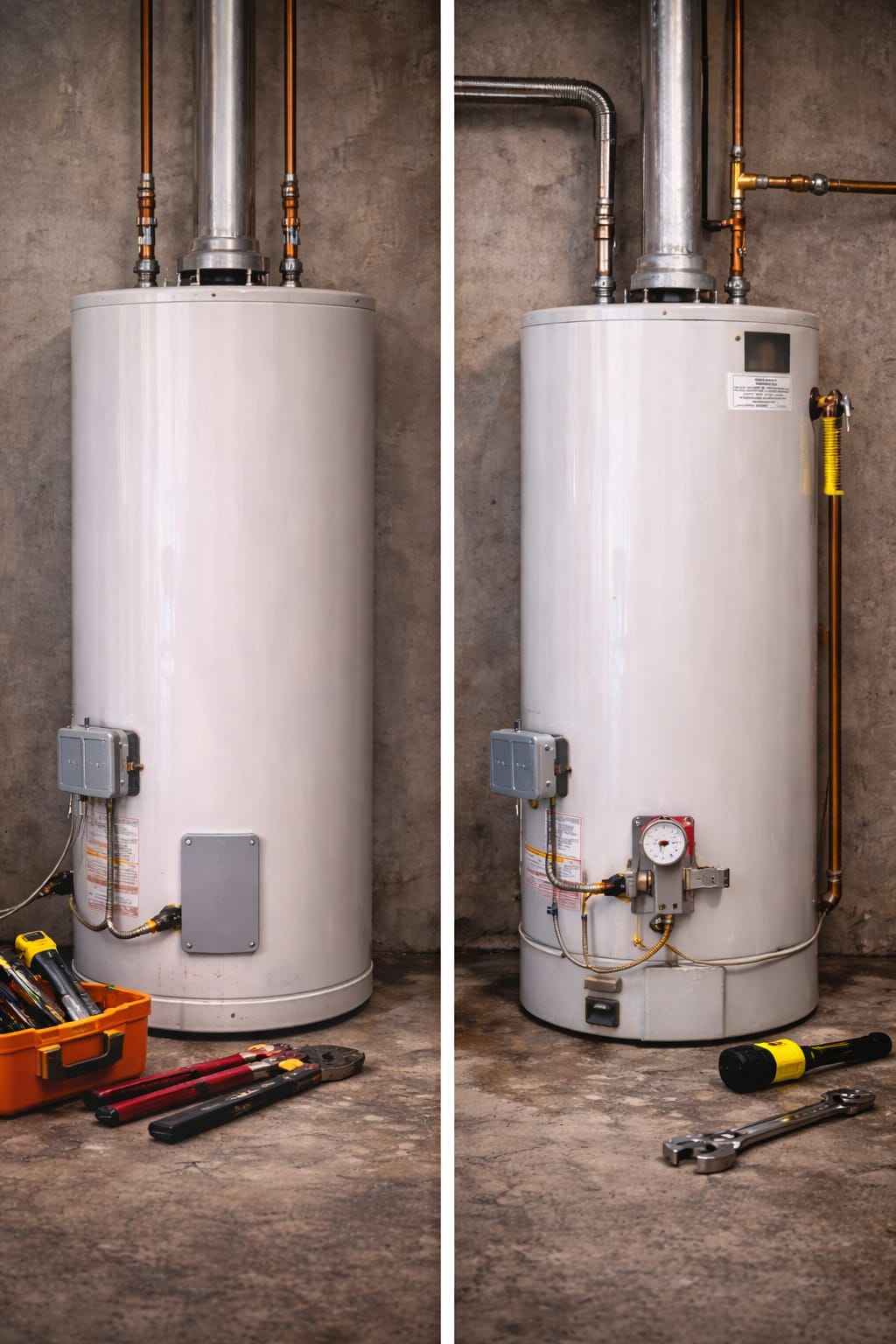
Choosing between an electric and a gas water heater often comes down to cost, but the true cost isn’t just the price tag on the unit. Installation requirements, energy usage, maintenance, and lifespan all play a role in what you’ll actually spend over time.
This guide breaks down the real costs of electric and gas water heaters so homeowners can make a decision based on long-term value, not just upfront price.
Upfront Purchase Cost
Electric water heaters generally cost less to purchase. The units themselves are simpler in design and typically priced lower than comparable gas models.
Gas water heaters usually have a higher initial cost. They require burners, venting components, and additional safety features that increase manufacturing expense.
For homeowners focused strictly on initial budget, electric models often appear more attractive at first glance.
Installation Costs
Installation costs can vary widely depending on the home’s existing setup.
Electric water heaters are usually less expensive to install if the home already has adequate electrical capacity. They do not require gas lines or venting, which simplifies installation.
Gas water heaters often cost more to install. Proper venting is required to safely remove combustion gases, and gas line modifications may be necessary. If venting or gas infrastructure needs to be added or upgraded, installation costs can increase significantly.
Homes without existing gas service typically face much higher costs when installing a gas water heater.
Energy Costs Over Time
Energy usage is where the cost comparison becomes more nuanced.
Electric water heaters convert nearly all incoming electricity into heat, making them highly efficient at the unit level. However, electricity is often more expensive per unit of energy than natural gas.
Gas water heaters tend to have lower operating costs in areas where natural gas is affordable. Even though gas units lose some efficiency through venting, fuel costs are often lower than electricity, resulting in reduced monthly energy bills.
Local utility rates play a major role in determining which option is cheaper to operate. For Austin homeowners, comparing current Austin Energy rates and natural gas prices through providers like Atmos Energy can provide an accurate picture of operating costs.
Efficiency and Performance Considerations
Electric water heaters provide consistent heating and are less affected by heat loss during operation. They are also quieter and have fewer moving parts.
Gas water heaters typically heat water faster, which can be beneficial in larger households or homes with high hot water demand. Faster recovery times mean less waiting for hot water during peak usage.
Efficiency ratings matter, but real-world performance depends on household habits and demand.
Maintenance and Repair Costs
Electric water heaters tend to have lower maintenance costs. They lack burners, gas valves, and venting systems, which reduces the number of components that can fail.
Gas water heaters require periodic inspection of burners, venting, and gas connections. These additional components can increase maintenance complexity and repair costs over time.
Both systems benefit from regular flushing and inspection, especially in areas with hard water.
Lifespan and Replacement Timing
Electric and gas water heaters have similar average lifespans, typically ranging from eight to twelve years for tank-style units.
Gas water heaters may experience slightly more wear due to heat intensity and combustion-related components, but proper maintenance can keep either system operating reliably for many years.
Replacement costs at the end of the system’s life should be factored into long-term planning.
Safety and Risk Factors
Electric water heaters eliminate combustion risks, making them simpler from a safety standpoint. However, electrical failures can still occur and should be addressed promptly.
Gas water heaters require careful attention to venting and gas connections. While modern systems are very safe when installed correctly, gas-related issues can pose higher risk if components fail or are neglected.
Safety considerations may influence cost indirectly through inspection, maintenance, and compliance requirements.
Long-Term Cost Comparison
Over the lifespan of the system, gas water heaters often cost less to operate but more to install. Electric water heaters usually cost less upfront but may result in higher monthly energy bills depending on local electricity rates.
There is no universal winner. The most cost-effective option depends on utility pricing, installation conditions, household demand, and how long the homeowner plans to stay in the property.
Choosing the Most Cost-Effective Option
Cost analysis works best when paired with a realistic view of how your household uses hot water. Factors like family size, usage patterns, existing infrastructure, and energy rates all affect the final outcome.
If you’re weighing electric versus gas water heaters and want a clearer picture of long-term costs for your specific home, ABM Plumbing Company of Central Texas can help evaluate your options and provide guidance based on efficiency, reliability, and total cost of ownership. Serving Greater Austin area, we’re here to assist. Call (512) 620-8200 for a cost analysis. A well-informed choice today can lead to years of dependable hot water and predictable expenses.
Frequently Asked Questions
What’s the cost difference in Austin?
Electric: $300-$800 upfront, $30-$50/month. Gas: $400-$900 upfront, $25-$35/month.
Which lasts longer?
Gas units: 8-12 years. Electric: 10-15 years. Tankless: 15-20+ years.
Does Austin’s hard water affect both?
Yes. 184 PPM hard water increases buildup in both types. Regular flushing extends life.
Which is more energy efficient?
Electric: 95% efficient but costly to run. Gas: 80% but cheaper. Tankless gas: 96%+ efficiency.
About the Author
Byron D Smith is a Responsible Master Plumber at ABM Plumbing Company of Central Texas. Licensed Texas Master Plumber serving Central Texas. Byron holds Texas Master Plumber License #45625 with the Responsible Master Plumber endorsement and oversees all plumbing work performed by ABM Plumbing.
Need Professional Plumbing Help?
Contact ABM Plumbing Company for expert service in Austin, Round Rock, Cedar Park, Georgetown, Pflugerville and surrounding areas.
Get a Free Quote