Water Heater Sizing Guide
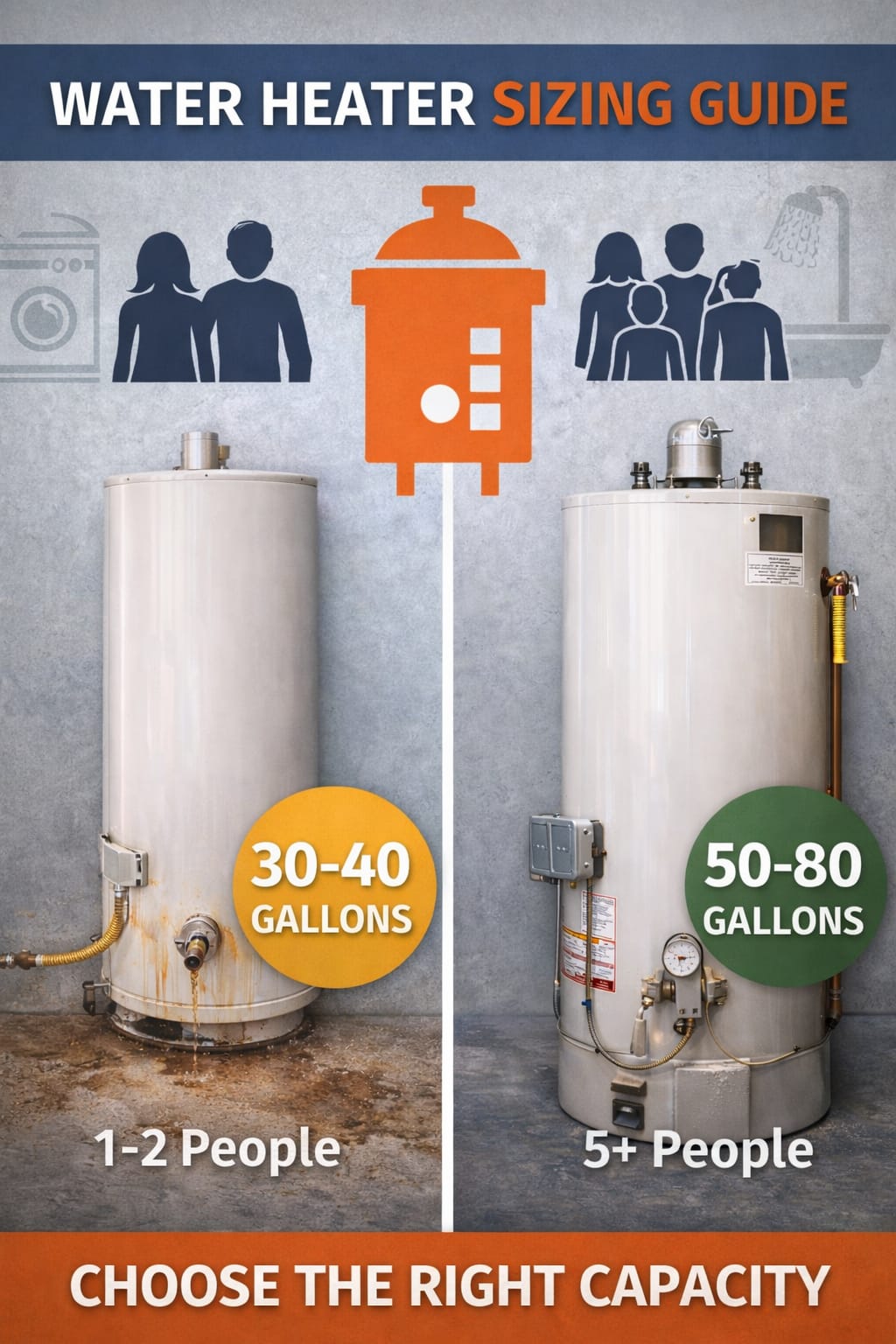
Water heater sizing matches capacity to household demand. A system that’s too small can leave you without hot water during peak use, while an oversized unit may waste energy and increase operating costs. Proper sizing balances comfort, efficiency, and long-term reliability.
This guide explains how water heater sizing works, what factors matter most, and how to estimate the right size for your household.
Why Proper Water Heater Sizing Matters
Water heaters are designed to meet a specific level of demand. When a system is undersized, it struggles to keep up, leading to cold showers, long recovery times, and increased wear on components.
Oversizing may seem like a safe option, but it often leads to higher upfront costs, unnecessary energy use, and inefficient operation. The goal is to match capacity to how your household actually uses hot water.
Key Factors That Affect Water Heater Size
Several factors influence how much hot water a home needs.
Household size is the most obvious consideration. More people generally means more showers, laundry, and dishwashing. Usage patterns also matter. A household that runs multiple hot water appliances at the same time will require more capacity than one with staggered use.
Fixture types, appliance efficiency, and lifestyle habits all play a role. Homes with large soaking tubs, rain-style showers, or high-flow fixtures often need larger systems.
Sizing Traditional Tank Water Heaters
Traditional water heaters are sized based on tank capacity, measured in gallons.
A rough guideline for tank-style systems is:
-
One to two people often do well with a 30 to 40 gallon tank
-
Three to four people typically need a 40 to 50 gallon tank
-
Five or more people may require a 50 to 80 gallon tank
These ranges assume average usage. If multiple showers or appliances run at the same time, a larger tank may be necessary.
Another important concept is first-hour rating. This measures how much hot water the heater can deliver in the first hour of use, combining stored hot water and recovery rate. Matching the first-hour rating to peak household demand helps ensure consistent performance.
Sizing Tankless Water Heaters
Tankless water heaters are sized differently. Instead of storage capacity, they are rated by flow rate, measured in gallons per minute.
To estimate required flow rate, add up the hot water demand of fixtures likely to run at the same time. A shower may use around two gallons per minute, while a sink or dishwasher uses less. In Central Texas, groundwater temperature typically ranges from 60 to 70 degrees Fahrenheit, which affects how much heating capacity is needed for desired temperatures.
Tankless units must also be sized for incoming water temperature. Colder groundwater requires more energy to heat, which affects performance. Homes in cooler climates often need more powerful units to achieve the same flow rate.
Because of these variables, tankless sizing is more precise and often benefits from professional calculation.
Peak Demand vs. Average Use
Water heater sizing should focus on peak demand rather than average daily use.
Peak demand refers to the busiest period, such as mornings when showers, sinks, and appliances may be used simultaneously. Sizing for peak demand ensures comfort even during high-use times.
Average use matters for efficiency, but peak demand determines whether the system can keep up when it counts.
Common Sizing Mistakes to Avoid
One common mistake is sizing solely based on the existing unit without considering changes in household size or usage habits. Renovations, added bathrooms, or lifestyle changes can significantly affect demand.
Another mistake is assuming bigger is always better. Oversizing increases cost and can reduce efficiency without improving comfort.
Ignoring local water temperature and fixture flow rates can also lead to poor performance, especially with tankless systems.
Planning for the Future
When choosing a water heater size, consider both current and future needs.
If household size is expected to change or additional fixtures are planned, sizing with some flexibility can help avoid early replacement. However, this should be balanced carefully to avoid unnecessary oversizing.
Long-term planning leads to better comfort and value over the life of the system.
When Professional Sizing Makes Sense
While general guidelines are helpful, accurate sizing often requires a detailed assessment.
Professional evaluation considers fixture flow rates, water temperature, system type, and installation constraints. This is especially important for tankless systems or homes with high or complex hot water demand.
Choosing the Right Size with Confidence
A properly sized water heater delivers consistent hot water, operates efficiently, and lasts longer. If you’re replacing a unit or planning an upgrade, ABM Plumbing Company of Central Texas can help assess your household’s needs and recommend the right size for reliable performance. Serving Central Texas, we’re here to help. Call (512) 620-8200 to get a sizing assessment. Choosing the correct capacity from the start helps ensure comfort without unnecessary cost or waste.
Frequently Asked Questions
How do I calculate the right water heater size?
Count bathrooms, estimate peak-hour demand, and factor Austin’s climate. A professional plumber can help with accurate sizing.
What size do most Austin homes need?
Most Austin homes use 40-50-gallon tanks for 3-4 people. Larger families need 50-75 gallons. Tankless units offer flexible sizing.
How does Austin’s hard water affect sizing?
Austin’s hard water impacts efficiency. Harder water requires larger systems or more maintenance.
Is tankless sizing different from traditional?
Yes. Tankless units size by flow rate (GPM), not gallons. More expensive but compact.
About the Author
Byron D Smith is a Responsible Master Plumber at ABM Plumbing Company of Central Texas. Licensed Texas Master Plumber serving Central Texas. Byron holds Texas Master Plumber License #45625 with the Responsible Master Plumber endorsement and oversees all plumbing work performed by ABM Plumbing.
Need Professional Plumbing Help?
Contact ABM Plumbing Company for expert service in Austin, Round Rock, Cedar Park, Georgetown, Pflugerville and surrounding areas.
Get a Free Quote