Water Heater Maintenance Schedule
Water heaters are often taken for granted until something goes wrong. Leaks, inconsistent hot water, strange noises, or sudden failure are usually the result of skipped maintenance rather than sudden defects.
Like any major appliance, a water heater performs best when it’s checked regularly and serviced at the right intervals.
For Austin and Central Texas homeowners with hard water, following a consistent water heater maintenance schedule helps improve efficiency, reduce energy costs, and extend the life of the unit. This guide breaks maintenance down into manageable timeframes so homeowners know what to look for and when.
Monthly Water Heater Checks
Monthly checks are quick visual inspections that take only a few minutes but can catch early warning signs.
Look around the base of the water heater for moisture, rust, or corrosion. Even small amounts of water can indicate a slow leak or condensation problem that deserves attention.
Listen for unusual sounds while the unit is operating. Popping, cracking, or rumbling noises may suggest sediment buildup inside the tank.
Check the temperature setting on the thermostat. Most homes operate efficiently and safely with the temperature set around 120 degrees Fahrenheit. Higher settings increase energy use and can contribute to scalding risk and faster wear.
Quarterly Maintenance Tasks
Every few months, it’s worth taking a closer look at visible components.
Inspect the water supply lines for corrosion, bulging, or loose connections. Flexible hoses and fittings are common failure points as they age.
Look at the temperature and pressure relief valve discharge pipe. It should be intact, properly directed downward, and not leaking. Any signs of moisture around this area should be noted.
Make sure the area around the water heater remains clear. Stored items too close to the unit can restrict airflow, hide leaks, or create safety issues.
Annual Water Heater Maintenance
Annual maintenance is the most important part of keeping a water heater healthy.
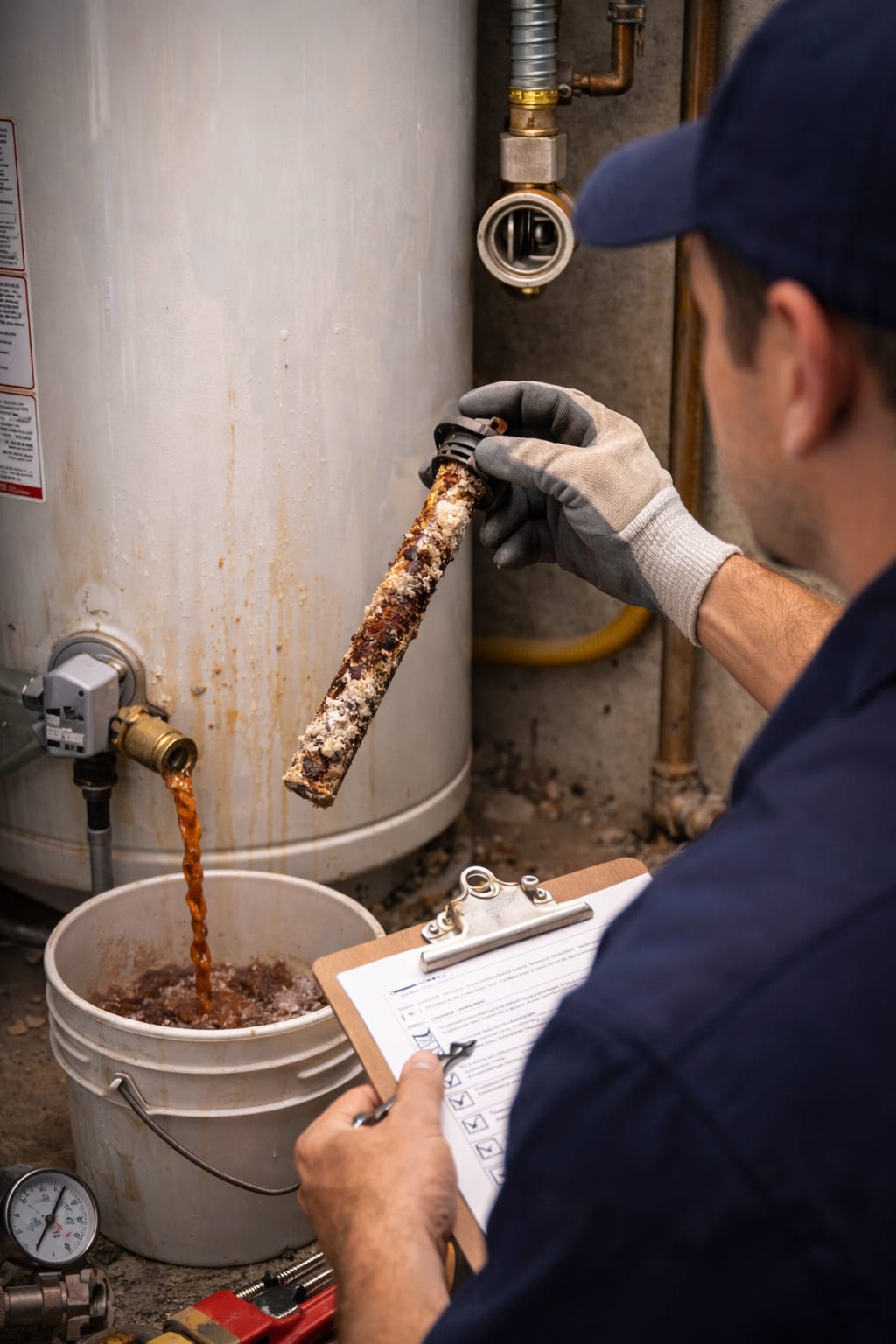
Flushing the tank helps remove sediment that settles at the bottom over time. Sediment reduces efficiency, causes overheating, and accelerates internal corrosion. In areas with hard water, sediment buildup can occur more quickly.
The anode rod should be inspected during annual maintenance. This component helps prevent the tank from rusting by sacrificing itself over time. A worn or depleted anode rod leaves the tank vulnerable to corrosion and premature failure.
Gas water heaters should also have burners and venting visually inspected for signs of debris, soot, or improper combustion. Electric units should be checked for signs of overheating at wiring connections.
Maintenance Every Two to Three Years
Some maintenance items don’t need annual attention but should still be part of a long-term schedule.
Water pressure should be tested periodically to ensure it remains within safe limits. Excessive pressure puts stress on the water heater and plumbing system, increasing the risk of leaks and valve failure.
If your home has a pressure reducing valve or expansion tank, these components should be inspected to ensure they’re functioning properly.
For tankless water heaters, descaling is often recommended every one to two years depending on water quality and usage. Mineral buildup can significantly reduce performance if left untreated.
Age-Based Maintenance Considerations
As water heaters age, maintenance becomes more critical.
Units under five years old typically require routine inspections and flushing to stay efficient. Water heaters between five and ten years old should be monitored more closely for corrosion, leaks, and performance changes.
Once a water heater approaches the end of its expected lifespan, proactive inspections can help avoid sudden failure. Early signs of decline often appear months or years before a full breakdown.
Knowing the age of your water heater helps guide how aggressively it should be monitored and maintained.
Warning Signs Maintenance Can’t Ignore
A maintenance schedule works best when combined with attention to warning signs.
Discolored water, inconsistent temperatures, reduced hot water supply, or unexplained increases in energy bills may signal internal problems. Moisture around the tank, rust on fittings, or recurring relief valve discharge should never be ignored.
These signs don’t always mean replacement is necessary, but they do indicate that professional evaluation is needed.
Why Consistent Maintenance Matters
Regular maintenance improves energy efficiency, helps the water heater heat faster, and reduces strain on internal components. It also lowers the risk of water damage caused by tank leaks or valve failure.
From a cost perspective, routine maintenance is far less expensive than emergency repairs or water damage cleanup. It also gives homeowners more control over when replacement happens, rather than being forced into a decision after a sudden failure.
When Professional Service Makes Sense
While homeowners can perform basic visual checks, many maintenance tasks require proper tools and experience. Flushing tanks, inspecting anode rods, testing pressure, and servicing gas or electrical components should be done carefully and correctly.
If your water heater has not been serviced in several years, shows signs of wear, or is approaching the end of its lifespan, a professional inspection can provide clarity and help plan next steps.
Keeping Your Water Heater Reliable Long Term
Regular water heater maintenance is critical for Austin homeowners, where very hard water at from the Colorado River accelerates sediment buildup and reduces efficiency faster than in most US cities. Without proper maintenance, Austin water heaters can lose 20 to 30 percent of their heating efficiency within just a few years and may fail years earlier than expected. Homes throughout the Austin metro area face the same hard water challenges. Following a structured maintenance schedule can extend your water heater life by 3 to 5 years and reduce energy costs significantly.
Frequently Asked Questions
How often should I flush my water heater in Austin?
Due to Austin hard water at , professionals recommend flushing your water heater every 6 months rather than the standard annual recommendation for areas with softer water. This removes calcium and mineral sediment that accumulates faster in Central Texas.
How much does water heater maintenance cost in Austin?
Professional water heater maintenance in Austin typically costs $100 to $200 for a comprehensive service including flushing, anode rod inspection, thermostat check, and safety valve testing. ABM Plumbing Company provides maintenance services across Austin and surrounding areas. Call (512) 620-8200.
What happens if I skip water heater maintenance?
Skipping maintenance in Austin hard water conditions leads to rapid sediment buildup, popping or rumbling noises, reduced hot water output, higher energy bills, and premature tank failure. A neglected water heater in Austin may only last 6 to 8 years instead of the typical 10 to 15 years.
Does Austin offer water heater rebates?
Yes. Austin Energy offers an $800 rebate when switching to an ENERGY STAR certified heat pump water heater. Contact Austin Water at (512) 974-2199 or visit the Austin Energy savings portal for eligibility details and application instructions.
A consistent water heater maintenance schedule is one of the best ways to protect your home and avoid unexpected breakdowns. If you’d like help with annual maintenance, inspections, or evaluating the condition of your current system, ABM Plumbing Company provides professional water heater services focused on efficiency, safety, and long-term reliability. Taking care of your water heater today helps ensure dependable hot water tomorrow.
About the Author
Byron D Smith is a Responsible Master Plumber at ABM Plumbing Company of Central Texas. Licensed Texas Master Plumber serving Central Texas. Byron holds Texas Master Plumber License #45625 with the Responsible Master Plumber endorsement and oversees all plumbing work performed by ABM Plumbing.
Need Professional Plumbing Help?
Contact ABM Plumbing Company for expert service in Austin, Round Rock, Cedar Park, Georgetown, Pflugerville and surrounding areas.
Get a Free Quote