Tree Roots in Sewer Lines
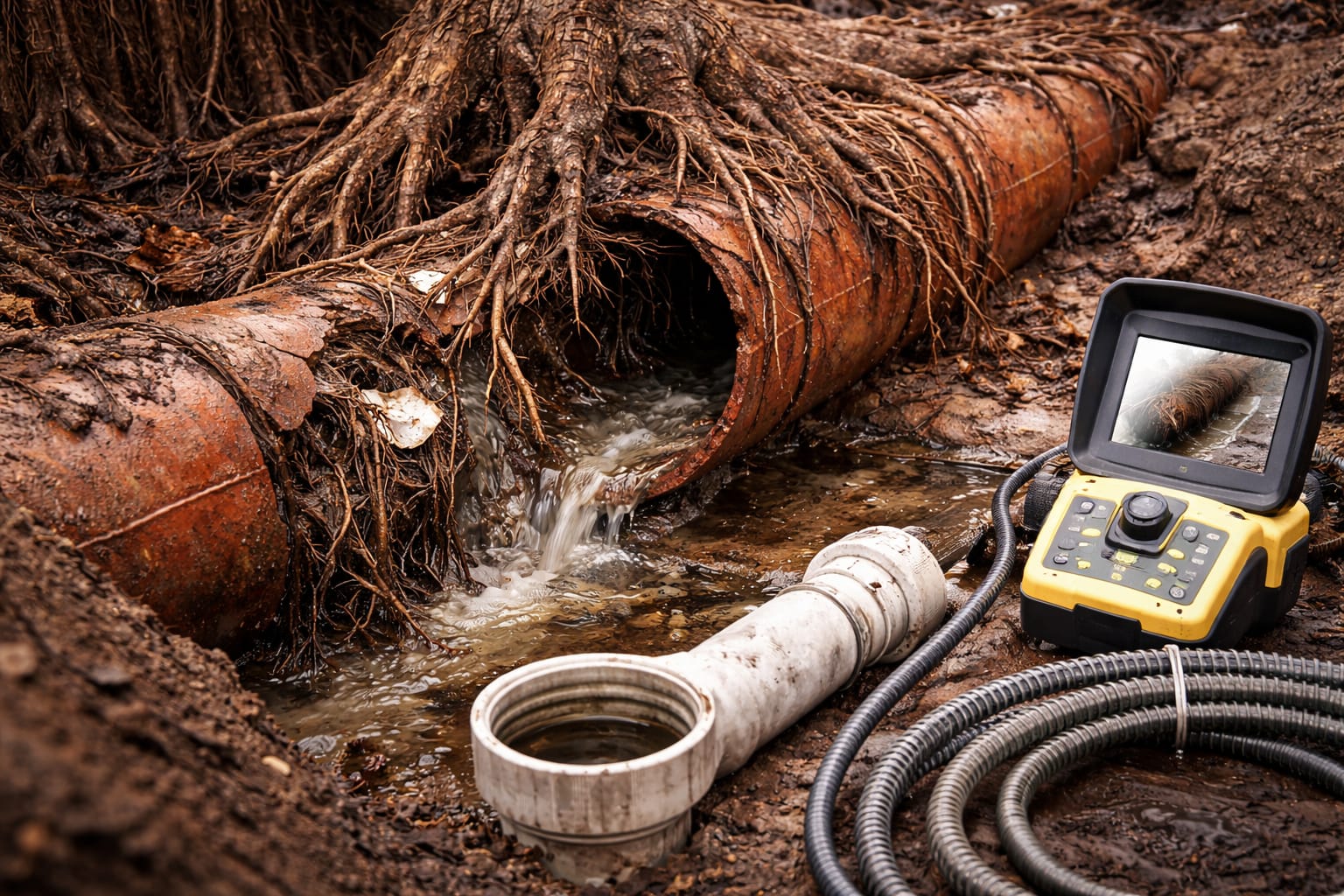
Tree roots are a surprisingly common cause of sewer line problems in Central Texas homes, especially older properties with mature trees. The clay soil prevalent in the Austin area, combined with the region’s abundant vegetation, creates ideal conditions for root intrusion. While trees and shrubs may look harmless above ground, their root systems are constantly searching for moisture. Unfortunately, sewer lines provide an ideal target.
When roots infiltrate a sewer line, they can restrict flow, cause repeated clogs, and eventually damage or collapse the pipe. Understanding how this happens and what signs to watch for can help homeowners address the issue before it turns into a major repair.
Why Tree Roots Target Sewer Lines
Sewer pipes carry warm water and organic material, creating a moist environment that naturally attracts roots. Even small leaks or condensation around pipe joints can signal a water source underground.
Older sewer lines are especially vulnerable. Many were built using clay, cast iron, or concrete pipes that have joints every few feet. Over time, these joints can shift, crack, or separate slightly, creating entry points for roots.
Once a root finds its way inside, it continues growing, feeding on moisture and nutrients within the pipe.
How Root Intrusion Develops
Root intrusion typically starts small. Fine, hair-like roots enter through tiny cracks or joints. As they grow, they thicken and branch out, catching toilet paper, waste, and debris.
Over time, this buildup restricts flow and causes recurring clogs. As roots expand, they can widen cracks or force joints apart, accelerating pipe damage.
In advanced cases, roots can completely block the sewer line or cause sections of pipe to collapse.
Common Warning Signs of Tree Roots in Sewer Lines
Tree root problems often develop gradually, with symptoms appearing long before a full backup occurs.
Slow drains throughout the home are a common early sign. When multiple fixtures drain slowly at the same time, the issue is often in the main sewer line rather than a single drain.
Frequent clogs that return after being cleared can also indicate root intrusion. Gurgling sounds from toilets or drains may occur as air struggles to move past blockages.
In more severe cases, sewage odors, water backing up into tubs or floor drains, or unexplained wet spots in the yard may appear.
Why Root-Related Problems Keep Coming Back
One of the most frustrating aspects of root intrusion is that temporary fixes often don’t last.
Clearing a blockage without removing or addressing the roots allows them to continue growing. Even if flow is restored, roots will usually return unless they are fully removed and the pipe repaired.
This is why homeowners often experience repeated sewer issues months apart when roots are the underlying cause.
How Tree Roots Are Diagnosed
The most accurate way to diagnose root intrusion is through a sewer camera inspection.
A camera allows plumbers to see inside the pipe, confirm the presence of roots, and assess the condition of the sewer line. This helps determine whether the pipe can be cleaned and maintained or if repairs are necessary.
Visual inspection is especially important because symptoms caused by roots can look similar to other sewer issues.
Solutions for Tree Roots in Sewer Lines
The right solution depends on how severe the intrusion is and the condition of the pipe.
In early stages, mechanical root cutting can remove roots and restore flow. This approach clears existing growth but does not repair damaged pipe sections.
If roots have caused cracks or joint separation, pipe repair or replacement may be needed to prevent regrowth. Modern repair methods can sometimes fix sections of pipe without extensive excavation, depending on the situation.
Chemical root treatments are sometimes used as a follow-up to slow regrowth, but they are not a standalone solution for damaged pipes.
Preventing Future Root Problems
Complete prevention isn’t always possible, but risk can be reduced.
Avoid planting trees or large shrubs near sewer lines, especially species known for aggressive root systems. Understanding where sewer lines run on your property can help guide landscaping decisions.
Regular sewer inspections are helpful for older homes or properties with mature trees. Early detection makes management easier and less costly.
When Root Intrusion Becomes a Serious Issue
Tree roots in sewer lines should never be ignored. What starts as a slow drain can eventually become a full sewage backup or pipe failure.
Repeated clogs, sewage smells, or backups are signs that the problem has progressed beyond a minor inconvenience. Addressing the issue early protects your plumbing system and reduces the risk of property damage.
Addressing Tree Root Problems the Right Way
Tree root intrusion is a common but manageable sewer issue when handled properly. If you suspect roots in your sewer line or are dealing with recurring drain problems, ABM Plumbing Company can inspect your system and recommend the most effective long-term solution. Identifying and resolving the issue early helps protect your home and avoid unexpected sewer emergencies.
Tree roots in sewer lines are Austin’s #1 cause of main line failure. Our expansive clay soil and prevalence of live oaks and pecans create perfect conditions. Roots find sewer cracks and can completely block lines. Early detection through camera inspection prevents catastrophic failures costing $2,000+.
Frequently Asked Questions
Why are tree roots such a problem in Austin sewer lines?
Austin’s expansive clay soil shifts and creates stress cracks in buried lines. Live oak and pecan tree roots (common in Austin yards) naturally seek water and fertilizer in sewage. Once roots find a crack, they grow exponentially, eventually blocking the entire line. Prevention is easier than cure.
How do I know if tree roots are in my sewer line?
Signs include slow drains despite snaking attempts, sewage smells in your yard, wet patches in lawn, raw sewage pooling, and multiple drains clogging simultaneously. Get a camera inspection (cost: $200–$500) to confirm root intrusion. Don’t wait for obvious signs if you have large trees above your line.
What’s the treatment for tree roots in Austin sewer lines?
Hydro-jetting ($150-$500) removes roots temporarily (6-12 months). Root-killing chemicals slow regrowth. For permanent solution, trenchless pipe lining ($3,000-$15,000) or full replacement ($5,000-$25,000+) seals cracks. Best prevention: don’t plant large trees over sewer lines.
Is tree root removal covered by insurance in Austin?
Most homeowners policies don’t cover sewer line damage from roots. Some have sewer backup coverage for indoor damage. Check your policy. Separate sewer line coverage is available but may be expensive. ABM Plumbing can advise on your situation.
Serving Central Texas, TX. Call ABM Plumbing Company at (512) 620-8200 for sewer camera inspections and professional root removal services.
About the Author
Byron D Smith is a Responsible Master Plumber at ABM Plumbing Company of Central Texas. Licensed Texas Master Plumber serving Central Texas. Byron holds Texas Master Plumber License #45625 with the Responsible Master Plumber endorsement and oversees all plumbing work performed by ABM Plumbing.
Need Professional Plumbing Help?
Contact ABM Plumbing Company for expert service in Austin, Round Rock, Cedar Park, Georgetown, Pflugerville and surrounding areas.
Get a Free Quote