Main Sewer Line Problems & Warning Signs
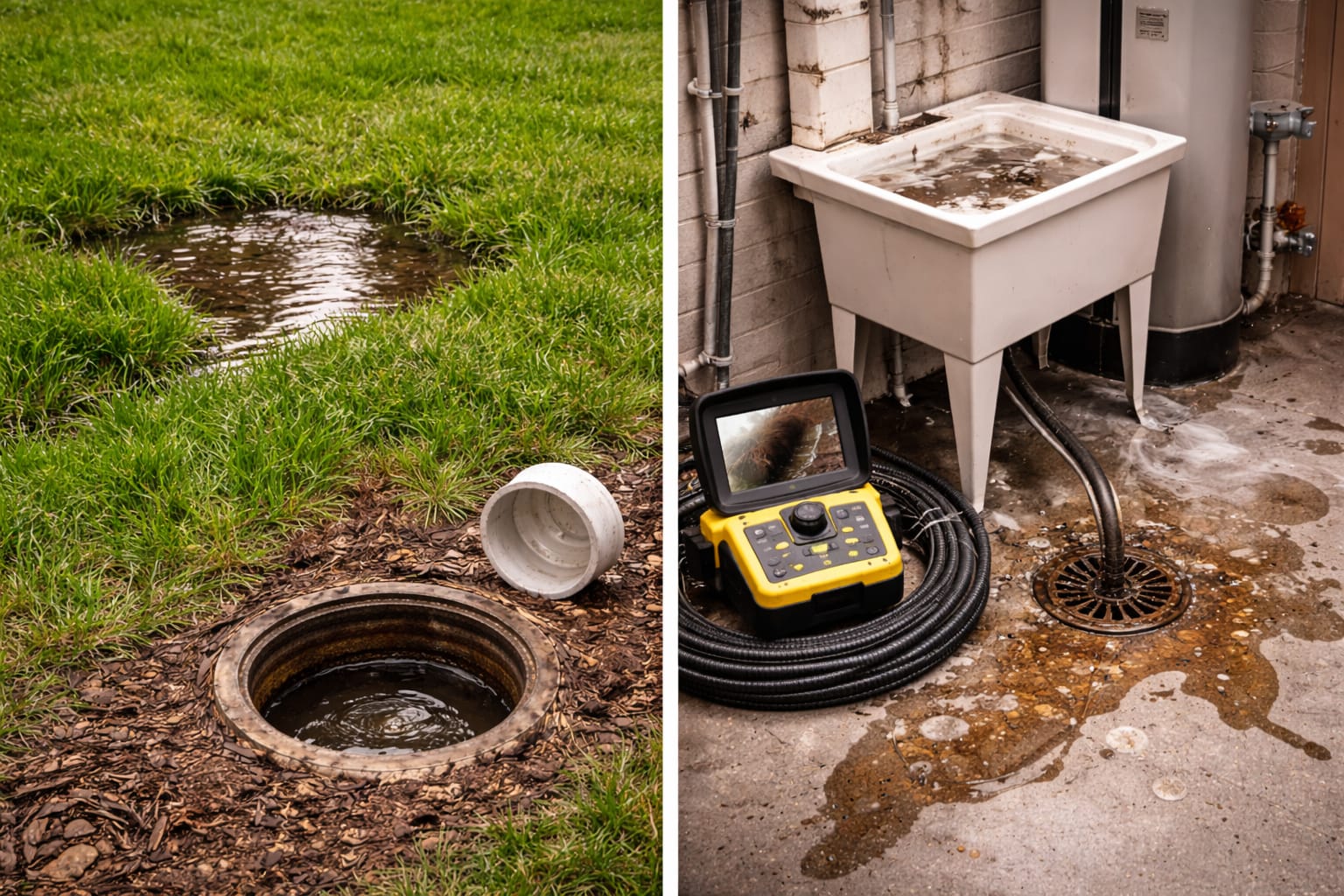
The main sewer line is one of the most important parts of a home's plumbing system, yet it's also one of the least visible. When problems develop, they often start quietly and worsen over time. By the time sewage backs up into a home or the yard floods, the issue has usually been present for a while.
Austin's aging clay soils and decades-old infrastructure create unique sewer line challenges throughout neighborhoods like Zilker, Travis Heights, Barton Hills, and East Austin. Live oak and pecan tree roots—among the top causes of sewer damage—infiltrate clay tile and cast iron lines common in homes built before 1970. Recognizing early warning signs of main sewer line problems can help homeowners in Central Texas act before damage becomes extensive ($3,000–$15,000+ in repairs). This guide outlines the most common indicators of sewer line problems.
What the Main Sewer Line Does
The main sewer line carries wastewater from all drains in the home to the municipal sewer system or septic tank. Every sink, toilet, shower, and appliance that uses water depends on this line to function properly.
Because it handles such a high volume of waste, any restriction or damage in the sewer line affects the entire plumbing system, not just a single fixture.
Multiple Slow Drains at Once
One of the earliest signs of a sewer line problem is slow drainage throughout the home.
If more than one sink, tub, or toilet is draining slowly at the same time, the issue is likely not a localized clog. Instead, it may indicate a partial blockage or restriction in the main sewer line.
This is especially concerning if the problem persists after basic drain cleaning or worsens over time.
Recurring Drain Clogs
Occasional clogs happen, but clogs that return frequently are a red flag.
If drains clear temporarily and then clog again within weeks or months, the underlying issue may still be present. Sewer line blockages caused by grease buildup, roots, or pipe damage often allow some flow but quickly trap debris again.
Recurring clogs across different fixtures often point to a main line issue rather than isolated drain problems.
Gurgling Sounds From Drains or Toilets
Unusual noises can also signal sewer trouble.
Gurgling sounds from toilets, sinks, or tubs often occur when air is trapped in the plumbing system due to restricted flow. As wastewater struggles to move past a blockage, air bubbles are forced back through fixtures.
These sounds are especially telling when they occur after flushing a toilet or running water elsewhere in the house.
Water Backing Up Into Fixtures
Water backing up is one of the most obvious and serious warning signs.
Sewage may appear in bathtubs, showers, or floor drains, especially in lower-level areas of the home. This happens when wastewater can't exit through the sewer line and instead reverses direction.
Even minor backups should be taken seriously, as they often indicate a developing blockage that could worsen suddenly.
Sewage Odors Inside or Outside the Home
Sewer odors are never normal.
Persistent smells coming from drains, basements, crawl spaces, or the yard may indicate cracks, blockages, or leaks in the sewer line. These odors can become stronger when water is running or after heavy use.
Because sewer gases can pose health risks, unexplained odors should not be ignored.
Unusual Yard Changes
Main sewer line problems don't always stay indoors.
Soggy patches of grass, unexplained wet spots, or unusually green and fast-growing areas in the yard can indicate a leaking sewer line underground. Wastewater can fertilize grass, creating noticeable differences in growth.
Sinkholes or soft spots near where the sewer line runs are more serious signs that require immediate attention.
Toilet Water Level Changes
Fluctuating toilet water levels can also point to sewer issues.
If the water level in the toilet bowl rises or falls unpredictably, or if flushing one toilet affects another fixture, it may indicate a blockage or airflow issue in the main line.
These changes often appear alongside other symptoms such as slow drains or gurgling sounds.
Tree Roots and Aging Pipes
Tree roots are one of the most common causes of sewer line problems, particularly in older homes.
Roots are attracted to moisture and can enter pipes through small cracks or joints. Over time, they grow inside the pipe, catching debris and restricting flow.
In Austin and Central Texas, many older sewer pipes were made of clay, cast iron, or early concrete. These materials are particularly vulnerable to cracking, corrosion, and joint failure, increasing the risk of blockages and leaks in properties throughout the region.
Why Sewer Line Problems Shouldn’t Be Ignored
Main sewer line issues rarely fix themselves.
What begins as slow drainage can progress to full backups, property damage, and health risks. Delaying investigation often leads to more extensive repairs and higher costs.
Early detection provides more options for repair and helps prevent emergencies.
When to Take the Next Step
If you notice multiple warning signs or symptoms that keep returning, it's a strong indication that the main sewer line should be evaluated. Professional inspection can identify the cause and severity of the issue before it escalates.
If you're experiencing signs of a main sewer line problem, ABM Plumbing Company can assess your system and help determine the most practical path forward. Addressing sewer issues early protects your home, your plumbing system, and your peace of mind.
Austin homeowners face specific sewer line challenges due to our expansive clay soil and extensive tree roots from live oaks and pecans. A main line problem costs approximately $2,000 on average to repair, with sewer line excavation running $150-$300 per linear foot. Early detection through camera inspection prevents catastrophic failures. Understanding warning signs helps Austin homeowners act before a $10,000+ emergency occurs.
Frequently Asked Questions
What are the main causes of sewer line problems in Austin?
Austin’s expansive clay soil shifts and stresses buried lines, causing cracks. Tree roots from live oaks and pecans are the #1 cause in our area, infiltrating cracks and blocking lines completely. Our hard water doesn’t directly cause sewer problems but makes pipe corrosion worse over time. Older neighborhoods (South Congress, East Austin, Barton Hills) have vintage clay tile pipes more prone to failure.
What are the warning signs of a failing main line?
Watch for multiple slow drains (not just one), sewage odors in your yard or home, wet patches in lawn, toilet backing up when other drains run, and structural cracks in foundation. If you see these, get a camera inspection immediately before the line fails completely. Early detection saves thousands in excavation costs.
How much does sewer line repair cost in Austin?
A simple clog cleaning costs $200-$450. Trenchless repair (CIPP pipe lining) for cracks: $3,000-$15,000. Traditional excavation and replacement: $3,000-$25,000+ depending on depth, length, and difficulty. The average Austin sewer repair is approximately $2,000. Financing options are often available for major work. Call ABM Plumbing at (512) 620-8200 for camera inspection.
Does homeowner’s insurance cover sewer line repair?
Most standard policies don’t cover sewer line damage unless caused by a covered event (like a fallen tree crushing the line). Some policies have sewer backup coverage for indoor damage. Check your policy. Separate sewer line coverage is available but may be expensive. ABM Plumbing can help you understand your situation and explore options.
Serving Greater Austin area, TX. Call ABM Plumbing Company at (512) 620-8200 for professional sewer line inspection and repair services.
About the Author
Byron D Smith is a Responsible Master Plumber at ABM Plumbing Company of Central Texas. Licensed Texas Master Plumber serving Central Texas. Byron holds Texas Master Plumber License #45625 with the Responsible Master Plumber endorsement and oversees all plumbing work performed by ABM Plumbing.
Need Professional Plumbing Help?
Contact ABM Plumbing Company for expert service in Austin, Round Rock, Cedar Park, Georgetown, Pflugerville and surrounding areas.
Get a Free Quote