Hydro-Jetting vs. Traditional Drain Cleaning
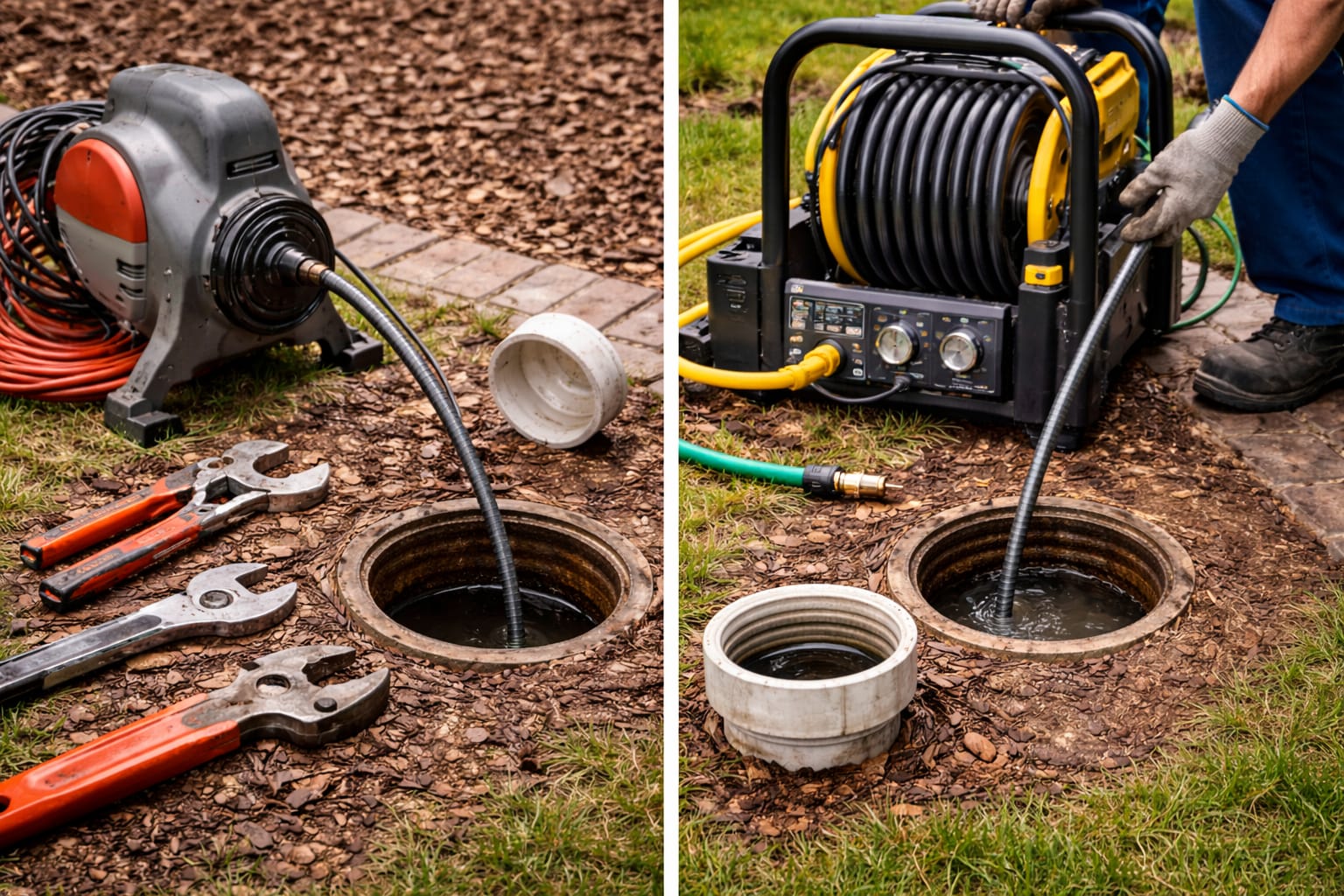
When drains slow down or clog repeatedly, clearing the blockage is only part of the solution. The cleaning method matters just as much as restoring flow. In Austin and Central Texas, where hard water and mineral buildup are common issues, the right cleaning method is especially important. Two common professional approaches are traditional drain cleaning and hydro-jetting.
Both restore proper drainage but work differently and suit different situations. Understanding these differences helps homeowners choose the right approach and prevent recurring problems.
What Traditional Drain Cleaning Is
Traditional drain cleaning uses mechanical tools to break through or remove blockages.
Drain snakes or augers are the most common tools. A flexible cable with a cutting or grabbing head feeds into the pipe and rotates to break apart clogs or pull debris out.
This method effectively handles localized blockages like hair, soap buildup, small objects, or grease accumulations near drain openings.
What Hydro-Jetting Is
Hydro-jetting uses high-pressure water to clean pipe interiors.
A specialized hose inserts into the drain or sewer line and releases water at extremely high pressure. This pressure scours pipe walls and flushes out grease, sludge, mineral buildup, roots, and debris.
Rather than just opening a path through clogs, hydro-jetting cleans the full pipe diameter, restoring pipes closer to original condition.
How the Two Methods Differ
The biggest difference is cleaning thoroughness.
Traditional drain cleaning focuses on clearing blockages. It restores flow but often leaves residue on pipe walls. That residue quickly collects new debris, leading to recurring clogs.
Hydro-jetting removes both blockages and the buildup causing them. By cleaning entire pipe interiors, it reduces future problems.
Effectiveness on Different Types of Clogs
Traditional drain cleaning works well for simple, isolated clogs. Hair in bathroom drains, small grease blockages, or accidentally flushed objects can often be cleared quickly with mechanical tools.
Hydro-jetting handles heavy buildup, recurring clogs, grease accumulation, and sewer line issues more effectively. It works especially well when clogs affect multiple fixtures or originate deep in the system.
For tree roots, hydro-jetting can remove root masses and flush debris, though pipe condition requires evaluation first.
Impact on Pipe Condition
Pipe condition significantly influences method selection.
Traditional drain cleaning is generally safe for most pipes, including older systems, when performed correctly. However, it doesn't address pipe wall buildup contributing to long-term issues.
Hydro-jetting is safe for most modern plumbing but requires inspection beforehand. Severely deteriorated, cracked, or collapsed pipes may not withstand high-pressure water. Camera inspection is often recommended before hydro-jetting to confirm structural soundness.
Speed and Thoroughness
Traditional drain cleaning is often faster for simple clogs. It can restore flow quickly with minimal setup in many cases.
Hydro-jetting typically takes longer but delivers more comprehensive results. Because it cleans entire pipe interiors, it addresses root causes rather than symptoms.
The choice often depends on whether the goal is quick relief or long-term prevention.
Long-Term Results and Maintenance
Traditional drain cleaning may require repetition if buildup remains inside pipes. This commonly occurs in kitchens where grease accumulates slowly over time.
Hydro-jetting provides longer-lasting results by completely removing buildup. For homes with recurring drain issues, heavy grease usage, or older sewer lines, hydro-jetting reduces future problem frequency.
Neither method replaces good drain habits, but hydro-jetting offers a stronger reset when buildup becomes significant.
Cost Considerations
Traditional drain cleaning usually costs less upfront. It requires simpler equipment and less time for straightforward cases.
Hydro-jetting typically costs more due to specialized equipment, setup, and time. However, higher upfront costs may reduce future service calls by preventing recurring clogs.
Evaluating cost over time rather than per visit often provides clearer value assessment.
When Each Method Makes Sense
Traditional drain cleaning often works best for first-time clogs, minor slow drains, or isolated issues near fixtures.
Hydro-jetting better suits recurring clogs, multiple slow drains, heavy grease buildup, sewer line issues, or preventative maintenance in high-use systems.
The right method depends on cause, severity, and plumbing system condition.
Choosing the Right Drain Cleaning Approach
Both hydro-jetting and traditional drain cleaning maintain healthy plumbing systems. If you're dealing with persistent drain problems or want long-term solutions instead of temporary fixes, ABM Plumbing Company can evaluate your system and recommend the most effective approach. Choosing the right method protects pipes, reduces future issues, and keeps drains flowing reliably.
When Austin drain cleaning is needed, hydro-jetting and traditional snaking each have advantages. Austin’s hard water (184 PPM) often leaves mineral buildup that snakes can’t fully remove. Tree roots from live oaks and pecans (major causes of main line problems here) may require jetting. Understanding when each method works saves money.
Frequently Asked Questions
What’s the cost difference between hydro-jetting and snaking in Austin?
Traditional snaking costs $150-$300. Hydro-jetting runs $150-$500 depending on severity. For mineral buildup from our 184 PPM water, snaking might suffice. For tree roots or severely blocked mains, jetting is necessary. ABM Plumbing assesses which method works best. Call (512) 620-8200.
Will hydro-jetting damage my Austin pipes?
No, when done correctly by professionals. High-pressure water (typically 4,000 PSI) clears roots and mineral deposits without harming modern pipes. It’s safer for older clay or cast iron pipes than snaking. A camera inspection first determines if your pipes can handle jetting.
When is hydro-jetting worth the cost in Austin?
Jetting is worth it when you have recurring clogs despite multiple snaking attempts, when tree roots are confirmed, or when mineral deposits are severe. For first-time clogs, try snaking. For main lines, jetting removes roots and prevents expensive replacement.
How often should Austin homes have drains professionally cleaned?
Most homes: annually. Homes with tree roots nearby: every 6-12 months. Older Austin neighborhoods with clay tile pipes: consider preventive jetting. ABM Plumbing recommends maintenance schedules based on your situation.
Serving Greater Austin area, TX. Call ABM Plumbing Company at (512) 620-8200 to discuss the best drain cleaning solution for your home.
About the Author
Byron D Smith is a Responsible Master Plumber at ABM Plumbing Company of Central Texas. Licensed Texas Master Plumber serving Central Texas. Byron holds Texas Master Plumber License #45625 with the Responsible Master Plumber endorsement and oversees all plumbing work performed by ABM Plumbing.
Need Professional Plumbing Help?
Contact ABM Plumbing Company for expert service in Austin, Round Rock, Cedar Park, Georgetown, Pflugerville and surrounding areas.
Get a Free Quote