Eco-Friendly Plumbing Fixtures | Calculate Your Real ROI Before You Buy
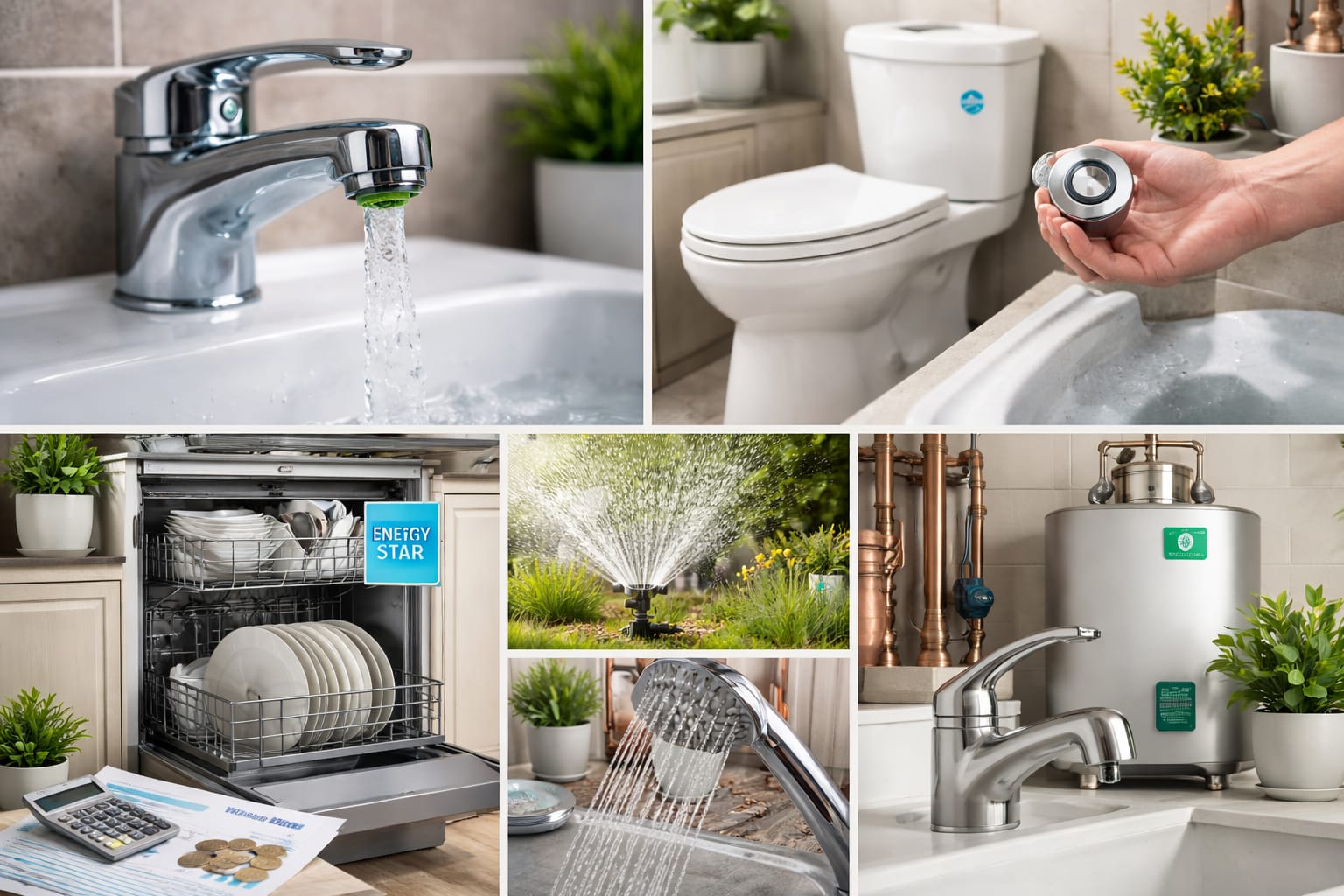
Eco-friendly plumbing fixtures represent one of the most predictable home investments available—delivering quantifiable returns through reduced utility costs, increased property value, and extended equipment lifespan. After analyzing data from thousands of residential upgrades and conducting cost-benefit analyses across different climate zones and utility rate structures, the financial case for efficient plumbing has never been stronger.
Austin and Central Texas residents benefit from various rebate programs and incentives for water-efficient fixtures. ABM Plumbing Company can help you understand available programs while calculating your real return on investment.
This guide breaks down the actual numbers behind eco-friendly plumbing ROI, helping you make informed decisions based on your household's specific usage patterns and local costs.
Defining "Eco-Friendly" in Measurable Terms
Not all fixtures marketed as "eco-friendly" deliver equivalent performance or savings. Understanding certification standards helps identify products with verified efficiency.
Key Certification Standards:
WaterSense (EPA): Fixtures must use at least 20% less water than standard federal requirements while meeting strict performance criteria. Products undergo independent testing to ensure they don't sacrifice user experience for efficiency.
ENERGY STAR: Primarily applies to water heaters and appliances, certifying products that use 10-50% less energy than standard models while maintaining or exceeding performance expectations.
CALGreen & Local Standards: Some states and municipalities mandate efficiency levels exceeding federal standards. California's CALGreen code, for example, requires maximum flow rates of 1.8 gpm for showerheads versus the federal 2.5 gpm standard.
Performance Metrics That Matter:
-
Toilets: Gallons per flush (gpf) and Maximum Performance (MaP) score rating
-
Showerheads: Gallons per minute (gpm) and spray force measurement
-
Faucets: Flow rate (gpm) at specific pressure levels
-
Water heaters: Uniform Energy Factor (UEF) rating
Fixtures meeting these standards aren't just environmentally responsible—they're engineered for optimal cost-efficiency over their operational lifetime.
Water Efficiency: Breaking Down the Actual Savings
Let's calculate real savings based on documented consumption patterns and current utility rates.
Low-Flow Toilets: Your Biggest Single Upgrade
The Numbers:
-
Standard pre-1994 toilets: 3.5-7 gallons per flush
-
Federal standard (1994-present): 1.6 gpf
-
WaterSense high-efficiency toilets: 1.28 gpf or less
-
Dual-flush models: 0.8 gpf (liquid waste) / 1.6 gpf (solid waste)
Real-World Calculation: A family of four flushing an average of 5 times per person daily:
-
Old toilet (3.5 gpf): 25,550 gallons annually
-
Standard toilet (1.6 gpf): 11,680 gallons annually
-
WaterSense toilet (1.28 gpf): 9,344 gallons annually
Upgrading from old to WaterSense: 16,206 gallons saved annually
At national average water/sewer rates of $0.015 per gallon (combined), this equals $243 in annual savings. In high-cost areas like San Francisco ($0.025/gallon), savings reach $405 annually.
Upfront Investment: $150-400 for the fixture, plus $100-200 for professional installation (total: $250-600)
Payback Period: 12-30 months depending on local rates and current fixture efficiency
Real Case Study: A Seattle homeowner replaced two 1980s toilets (5 gpf) with dual-flush WaterSense models, reducing household water consumption by 18,000 gallons annually—saving $315 in combined water and sewer charges. Total investment of $720 achieved full payback in 27 months.
High-Efficiency Showerheads: Fast Payback, Major Impact
Flow Rate Comparison:
-
Standard showerhead: 2.5 gpm
-
WaterSense showerhead: 2.0 gpm or less
-
Advanced efficiency models: 1.5-1.8 gpm
Usage Pattern: Average 8-minute shower
Annual Consumption (per person):
-
Standard (2.5 gpm): 7,300 gallons
-
WaterSense (2.0 gpm): 5,840 gallons
-
High-efficiency (1.5 gpm): 4,380 gallons
Family of Four Switching to 1.5 gpm:
-
Water saved: 11,680 gallons annually
-
Water cost savings: $175 (national average)
-
Energy savings from reduced hot water: $120-180 annually (assuming 65% hot water, electric water heater)
-
Combined annual savings: $295-355
Upfront Investment: $30-120 for quality WaterSense showerhead, DIY installation
Payback Period: 2-5 months
Performance Reality Check: Modern pressure-compensating technology and optimized spray patterns mean 1.5 gpm showerheads often deliver superior perceived pressure compared to older 2.5 gpm models. Independent testing confirms 95%+ user satisfaction ratings for quality low-flow models.
Water-Efficient Faucets and Aerators
Kitchen Faucets:
-
Standard flow: 2.2 gpm
-
WaterSense certified: 1.5 gpm maximum (at 60 psi)
Bathroom Faucets:
-
Standard flow: 2.2 gpm
-
Efficient models: 0.5-1.0 gpm
Annual Savings Calculation: For a household running faucets 15 minutes daily total:
-
Standard (2.2 gpm): 12,045 gallons annually
-
Efficient (1.5 gpm): 8,213 gallons annually
-
Savings: 3,832 gallons, worth $57-95 depending on location
Upfront Investment: $3-8 per aerator (DIY), or $120-300 for complete faucet replacement
Payback Period: Aerators pay back in weeks; complete faucet replacements in 18-36 months
Energy Savings: The Often-Overlooked ROI Component
Water heating accounts for 14-18% of home energy costs nationally. Reducing hot water consumption through efficient fixtures creates compound savings.
Energy Cost Calculation Framework:
For every 1,000 gallons of hot water saved:
-
Electric water heater: $45-65 in energy costs avoided
-
Natural gas water heater: $15-25 in energy costs avoided
-
Heat pump water heater: $15-20 in energy costs avoided
Example Scenario: Household reduces hot water consumption by 8,000 gallons annually through showerhead and faucet upgrades (realistic for family of four):
-
Electric system: $360-520 annual energy savings
-
Gas system: $120-200 annual energy savings
Extended Water Heater Lifespan: Reduced cycling and lower demand can extend water heater life by 2-4 years (worth $800-2,000 in delayed replacement costs).
Temperature Adjustment Opportunity: With efficient fixtures, many households can lower water heater temperature from 140°F to 120°F, saving an additional 6-10% on water heating costs without sacrificing comfort.
Calculating Your Actual Payback Period
Formula for Total ROI:
Annual Savings = (Water Cost Savings) + (Energy Cost Savings) + (Maintenance Reduction)
Payback Period = (Total Upfront Investment) ÷ (Annual Savings)
Comprehensive Example:
Household Profile: Family of four, electric water heater, national average utility rates
Upgrades Implemented:
-
Two WaterSense toilets: $1,100 total
-
Two efficient showerheads (1.5 gpm): $140 total
-
Faucet aerators (3 locations): $18 total
Total Investment: $1,258
Annual Savings:
-
Water cost reduction: $380
-
Energy cost reduction: $285
-
Reduced maintenance/repairs: $50 (estimated)
-
Total Annual Savings: $715
Payback Period: 21 months
20-Year Net Benefit: $14,300 - $1,258 = $13,042 net savings (not accounting for inflation or utility rate increases, which historically average 3-4% annually)
Property Value Impact: Quantifying Curb Appeal
Multiple studies demonstrate measurable value increases from water-efficient upgrades:
National Association of Realtors Data (2024): Homes with WaterSense-certified fixtures sell for 2-3% more than comparable properties, with efficiency features ranking among the top 15 desired amenities for buyers under 45.
Appraisal Institute Research: Water-efficient upgrades contribute $1.50-2.00 in home value for every $1.00 in annual utility savings they generate.
Example: A home with $500 in annual savings from plumbing upgrades could see $750-1,000 in increased market value.
Regional Variations: In drought-prone areas (Southwest, California), efficiency upgrades command premium valuations, sometimes approaching 4-5% above comparable homes.
Marketing Advantage: Homes marketed with documented low utility costs sell 15-25% faster than comparable properties, particularly in competitive markets where buyers scrutinize operating costs.
Maximizing ROI Through Rebates and Incentives
Utility-sponsored rebate programs can reduce upfront costs by 30-70%, dramatically improving ROI.
Common Rebate Programs:
WaterSense Toilet Rebates: $75-150 per toilet (available in 400+ utilities nationwide)
Showerhead Programs: Some utilities provide free WaterSense showerheads or rebates of $10-30 per unit
Whole-Home Efficiency Audits: Many utilities offer subsidized or free audits ($300-500 value) that identify optimization opportunities
Federal Tax Credits: Under the Inflation Reduction Act, certain high-efficiency water heaters qualify for up to $2,000 in tax credits
How to Find Your Local Programs:
-
Contact your water utility directly—most maintain updated rebate information online
-
Visit the EPA's WaterSense rebate finder: epa.gov/watersense/rebate-finder
-
Check state energy office websites for comprehensive incentive databases
-
Ask your plumber or retailer about available programs during purchase
Real Example: A Denver homeowner received $250 in total rebates ($125 per toilet) for replacing two fixtures. Combined with $380 in annual savings, the net investment of $470 paid back in 14 months instead of 21 months without rebates.
Long-Term Reliability: The Hidden ROI Factor
Modern efficient fixtures often exceed the durability of standard models due to improved engineering and quality materials.
Documented Reliability Advantages:
Ceramic Disc Valve Technology: Found in quality faucets, virtually eliminates dripping and extends operational life to 20+ years versus 7-10 years for compression faucets
Pressure-Assist Toilets: Fewer moving parts than traditional gravity-flush designs, reducing repair frequency by an estimated 40%
Solid Brass Construction: Common in WaterSense faucets, resists corrosion and maintains performance far longer than zinc alloy alternatives
Warranty Comparisons:
-
Budget fixtures: 1-5 year limited warranties
-
Quality efficient fixtures: Lifetime warranties on mechanical components (increasingly common)
Maintenance Cost Reduction: Homeowners report 30-50% fewer plumbing service calls after upgrading to quality efficient fixtures, saving $75-200 annually in repair costs.
Making the Investment Decision: Your Action Plan
Priority Rankings by ROI Speed:
-
Faucet aerators (weeks to payback, minimal investment)
-
Showerheads (2-5 months, easy DIY installation)
-
Toilet replacement (12-30 months, significant water savings)
-
High-efficiency water heater (3-7 years, major energy savings)
-
Complete fixture package (18-36 months, maximum impact)
Budget-Based Approach:
Under $100: Install aerators on all faucets, replace one showerhead $100-500: Add second showerhead, address highest-use toilet $500-1,500: Full bathroom fixture upgrade (toilet, shower, faucet) $1,500+: Whole-home efficiency overhaul including water heater
Decision Framework Questions:
-
What are my current utility rates? (Higher rates accelerate payback)
-
How long do I plan to own this home? (Longer ownership increases cumulative savings)
-
Are rebates available in my area? (Can reduce investment by 30-70%)
-
Which fixtures see heaviest use? (Prioritize high-traffic locations)
-
What's my household size? (Larger households see faster ROI)
The Financial Bottom Line
Eco-friendly plumbing fixtures represent rare home investments that deliver positive cash flow within their first 1-3 years while continuing to generate returns for 15-25 years.
Typical 15-Year Financial Summary (Family of Four):
-
Total investment: $1,800 (after rebates)
-
Cumulative savings: $16,500+
-
Net benefit: $14,700
-
Average annual return: 45-55%
Few home improvements match this combination of rapid payback, reliable returns, and increased property value.
Beyond the Numbers: Efficient fixtures provide insurance against water scarcity, rate increases, and regulatory changes while reducing your environmental footprint by 20,000-40,000 gallons annually—equivalent to removing 2-4 cars from the road in carbon impact.
Starting Point: Begin with a water audit to identify your highest consumption areas, research available rebates, and prioritize upgrades based on your budget and usage patterns. Track your water bills for 6-12 months post-upgrade to document actual savings and adjust behavior accordingly.
Austin Water’s tiered rate structure ($1.36-$35.54 per 1,000 gallons) makes eco-friendly fixtures financially smart, not just environmentally responsible. The average Austin resident uses 131 gallons daily; WaterSense-certified fixtures reduce this by 20-30%. Combine Austin Water’s rebates (including the $800 heat pump water heater rebate) with lower monthly bills to see genuine ROI. Homes across Austin neighborhoods benefit equally from water conservation investments.
Frequently Asked Questions
Do eco-friendly plumbing fixtures save money in Austin?
Yes, significantly. At Austin’s average water rate of $22.63/month, saving 10-15 gallons daily ($3-$5/month) adds up. A $400 low-flow toilet pays for itself in 2-3 years, then saves $50-$80 annually. Austin Water offers rebates for qualifying fixtures. Over 10 years, eco-friendly upgrades save hundreds to thousands of dollars.
What eco-friendly fixtures should Austin homeowners prioritize?
Start with low-flow toilets (1.28 GPF) for immediate savings. Add showerheads under 2 GPM. These two alone reduce your 131-gallon daily average. Then upgrade to a tankless or heat pump water heater using Austin Energy’s $800 rebate. WaterSense faucets prevent mineral waste in our hard water environment.
How much water do eco-friendly fixtures save in Austin?
A family of four using low-flow toilets, showerheads, and faucets cuts usage from 400+ gallons daily to 250-300 gallons. That’s 100-150 gallons saved daily, worth $30-$50/month on your water and sewer bill. Over a year, that’s $360-$600 in savings.
What rebates does Austin offer for efficient fixtures?
Austin Water offers free showerheads and aerators. Austin Energy provides $800 rebates for ENERGY STAR heat pump water heaters and rebates for WaterSense toilets. Call (512) 974-2199 for current programs. ABM Plumbing can help you maximize rebates during fixture upgrades.
The question isn't whether eco-friendly plumbing fixtures offer strong ROI—it's why more homeowners haven't already made the switch.
About the Author
Byron D Smith is a Responsible Master Plumber at ABM Plumbing Company of Central Texas. Licensed Texas Master Plumber serving Central Texas. Byron holds Texas Master Plumber License #45625 with the Responsible Master Plumber endorsement and oversees all plumbing work performed by ABM Plumbing.
Need Professional Plumbing Help?
Contact ABM Plumbing Company for expert service in Austin, Round Rock, Cedar Park, Georgetown, Pflugerville and surrounding areas.
Get a Free Quote