Water Conservation Tips That Save Money | A Homeowner's Practical Guide
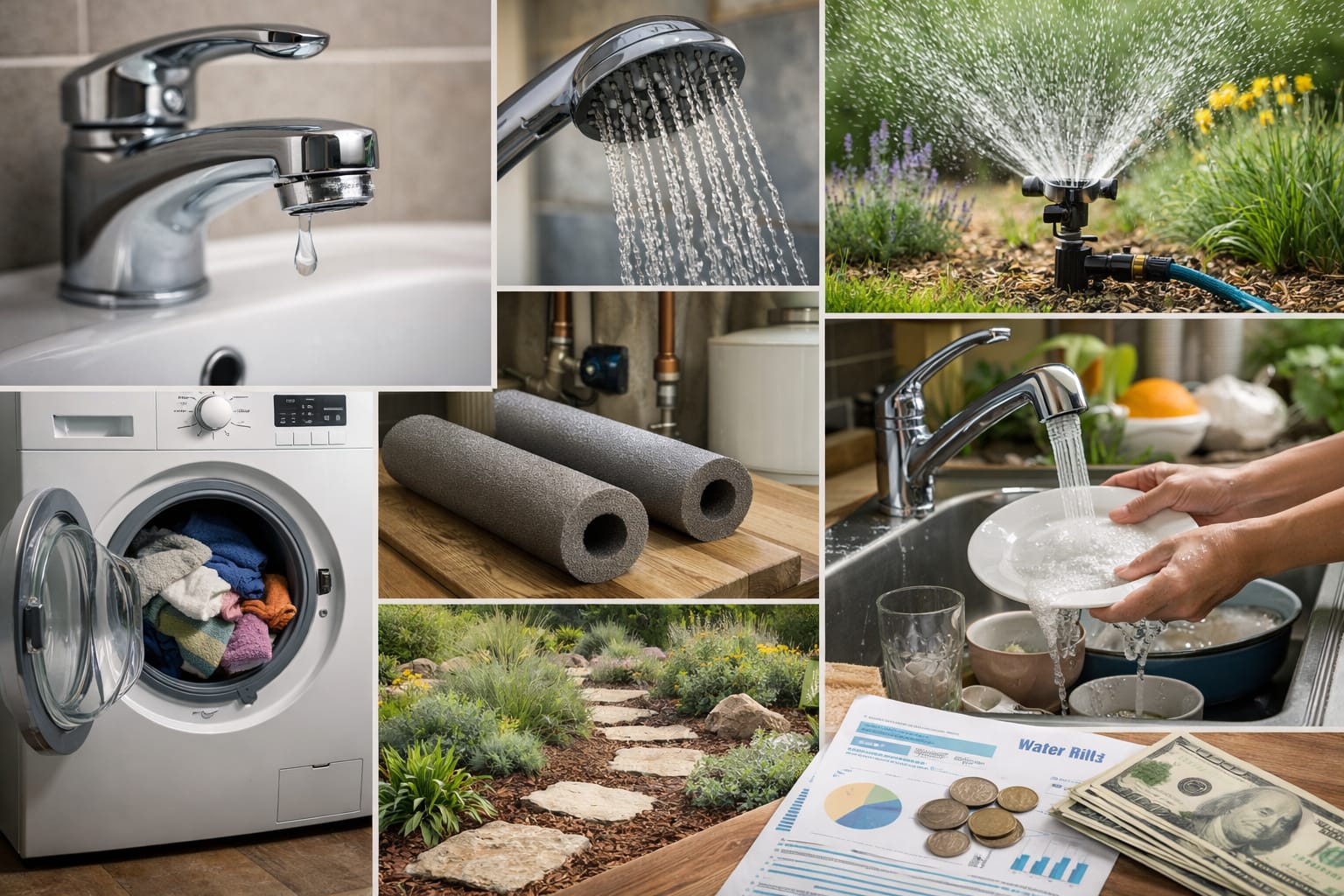
Saving water isn't just an environmental responsibility—it's a financial strategy that can reduce your monthly utility costs by 20-50% or more. After helping hundreds of homeowners optimize their water usage over the past decade, I've seen firsthand how strategic changes and proactive maintenance can dramatically lower bills while improving plumbing system longevity.
Central Texas faces unique water challenges with periodic droughts, making conservation essential for Central Texas homeowners. These practical tips help you save money while protecting our region’s precious water resources.
According to the EPA's WaterSense program, the average American family wastes approximately 180 gallons of water per week—that's 9,400 gallons annually—from household leaks alone. This guide breaks down proven, actionable water conservation strategies that deliver measurable savings without sacrificing comfort.
Fix Leaks Before They Drain Your Wallet
The Real Cost of "Small" Leaks
A single dripping faucet losing one drop per second wastes over 3,000 gallons annually—adding roughly $35-50 to your water bill depending on local rates. A running toilet can waste up to 200 gallons per day, costing homeowners $500+ per year.
How to Detect Hidden Leaks:
-
Check your water meter before and after a 2-hour period when no water is being used. If the reading changes, you likely have a leak
-
Add food coloring to toilet tanks; if color appears in the bowl within 15 minutes without flushing, the flapper needs replacement
-
Inspect under sinks, around water heaters, and near outdoor spigots for moisture or water stains
-
Monitor your water bill for unexplained increases of 12% or more
Real-World Example: One client discovered a toilet flapper leak that had gone unnoticed for eight months, costing them an extra $340 in water charges. A $12 replacement part solved the problem immediately.
Upgrade to Water-Efficient Fixtures (And Calculate Your ROI)
Modern water-efficient fixtures have improved dramatically in recent years, delivering performance that often exceeds older models while using significantly less water.
Low-Flow Toilets: Pre-1994 toilets use 3.5-7 gallons per flush, while WaterSense-certified models use just 1.28 gallons. For a family of four, this translates to savings of approximately 13,000 gallons and $90-130 annually.
Efficient Showerheads: Standard showerheads flow at 2.5 gallons per minute (gpm), while efficient models use 2.0 gpm or less without sacrificing pressure. A household taking four 8-minute showers daily can save roughly 7,300 gallons yearly—about $50-70 in combined water and heating costs.
Aerating Faucets: Kitchen and bathroom faucet aerators reduce flow from 2.2 gpm to 1.5 gpm or lower. At less than $5 per aerator with simple DIY installation, this upgrade typically pays for itself within weeks.
Investment Recovery Timeline: Most fixture upgrades recoup their initial cost within 1-3 years through utility savings, with continued benefits for the life of the product (typically 10-20 years).
Optimize Appliance Usage for Maximum Efficiency
Dishwashers and washing machines represent significant water consumption—but also major savings opportunities when used strategically.
Evidence-Based Strategies:
-
Running only full loads in a modern Energy Star dishwasher uses less water than hand-washing the same dishes (6 gallons vs. 27 gallons on average)
-
Front-loading washing machines use 40% less water than top-loaders, saving approximately 7,000 gallons annually for typical households
-
Washing clothes in cold water reduces energy costs by up to 90% per load while preserving water heating capacity
When to Upgrade: If your appliances are over 10 years old, newer models typically use 30-50% less water and qualify for utility rebates in many areas. Check with your local water authority for available incentives.
Reduce Outdoor Water Waste (Where Savings Are Biggest)
Landscape irrigation accounts for nearly 30% of household water use nationally, and up to 60% in arid regions, making it the single largest opportunity for conservation.
Smart Watering Practices:
-
Water during early morning (4-10 AM) when evaporation rates are lowest—you'll need 20-30% less water to achieve the same results
-
Most lawns need only 1 inch of water per week, including rainfall. Place empty tuna cans around your lawn to measure sprinkler output
-
Adjust sprinkler heads to eliminate overspray onto driveways and sidewalks, which can waste 15-20% of water applied
Drought-Resistant Landscaping: Converting even 25% of traditional turf to native plants or xeriscaping can reduce outdoor water use by 40-60%. Many municipalities offer rebates of $1-3 per square foot for lawn replacement programs.
Real Results: A California homeowner reduced their outdoor water consumption by 12,000 gallons annually (saving $150+) simply by adjusting irrigation schedules and fixing misaligned sprinkler heads—no major landscaping changes required.
Master the 5-Minute Shower Challenge
The average American shower lasts 8 minutes and uses 17 gallons of water. Reducing shower time to 5 minutes saves approximately 40 gallons per person weekly.
Making It Sustainable:
-
Use a waterproof timer or play a 5-minute playlist
-
Install a shower timer that provides visual cues
-
Combine with a 1.5 gpm showerhead for enhanced savings without compromising experience
Annual Impact: A family of four reducing shower time by 3 minutes daily saves roughly 16,000 gallons and $175-250 when factoring in both water and water heating costs.
Eliminate "Phantom" Water Waste
Small behavioral changes accumulate into substantial savings over time.
High-Impact Habit Changes:
-
Turning off the tap while brushing teeth twice daily saves approximately 8 gallons per person daily (2,900 gallons annually per person)
-
Using a basin for dishwashing prep instead of running water continuously saves 10+ gallons per session
-
Thawing frozen foods in the refrigerator overnight instead of under running water
Insulate Hot Water Pipes for Dual Savings
Pipe insulation costs $1-2 per linear foot and can be installed in an afternoon. Benefits include faster hot water delivery, reduced standby heat loss, and less water wasted while waiting for temperature.
Measured Results: Properly insulated pipes can raise water temperature 2-4°F, reducing the wait time for hot water by 30-60 seconds. For households running hot water 10+ times daily, this prevents 1,500-2,500 gallons of waste annually.
Monitor Your Water Bill Like a Financial Asset
Your water bill contains valuable diagnostic information beyond the amount due.
What to Track:
-
Compare usage month-to-month and year-over-year to identify seasonal patterns and anomalies
-
A sudden 12-15% increase without explanation typically indicates a leak
-
Calculate your per-gallon cost to understand the financial impact of conservation measures
Many water utilities now offer online portals with daily usage data, allowing you to spot problems within 24 hours rather than waiting for the monthly bill.
The Bottom Line: Your Water Conservation ROI
Implementing these strategies typically costs $100-500 for most households (if replacing some fixtures) but delivers $300-800 in annual savings—a compelling return on investment that continues year after year.
Beyond financial benefits, water conservation:
-
Extends plumbing system lifespan by reducing pressure and wear
-
Decreases water heater energy consumption by 10-20%
-
Reduces strain on municipal water treatment infrastructure
-
Provides peace of mind during drought conditions or water restrictions
Start Small, Think Long-Term: You don't need to implement everything at once. Begin with zero-cost habit changes, address obvious leaks, then gradually upgrade fixtures as budget allows. Track your water bill to measure progress and stay motivated.
Austin’s tiered water rate structure ($1.36-$35.54 per 1,000 gallons) makes conservation financially smart. Reducing from 131 gallons daily (Austin average) to 100 gallons saves $10-$15/month. Year-round conservation (not just drought restrictions) saves money and reduces strain on our water supplies. Simple changes in Austin homes reduce consumption by 20-30%.
Frequently Asked Questions
What water conservation changes save the most money in Austin?
Fix leaks immediately (saves $30-$100/month). Install low-flow showerheads (saves $5-$10/month). Replace old toilets with dual-flush models (saves $10-$20/month). Reduce outdoor watering (huge summer savings). A combination cuts usage 20-30%, saving $50-$100+ monthly. Austin Water offers free water conservation kits. Call (512) 974-2199.
How much water does the average Austin family waste?
The average Austin resident uses 131 gallons daily. A dripping faucet wastes 3,000 gallons yearly. A family of four using 500+ gallons daily wastes 100+ gallons through inefficiency. Leaks often account for 10-15% of usage. Identifying and fixing waste is the quickest savings path.
What’s the realistic savings from conservation in Austin?
Fix obvious leaks: immediate $30-$100+/month savings. Install low-flow fixtures (cost $300-$1,000): saves $100-$200/month. Changes pay for themselves in 3-12 months. Over 10 years, conservation could save $12,000-$24,000 in water and sewer charges while reducing your 131-gallon daily average.
Does Austin offer rebates for water conservation?
Yes. Austin Water offers free showerheads, aerators, and toilet rebates for high-efficiency models. Austin Energy offers rebates for heat pump water heaters ($800). Some rebates are instant at retailers; others mail-in. Call (512) 974-2199 for current programs. ABM Plumbing can help coordinate rebates during fixture upgrades.
Water conservation isn't about sacrifice—it's about smart resource management that benefits your wallet, your home, and your community.
About the Author
Byron D Smith is a Responsible Master Plumber at ABM Plumbing Company of Central Texas. Licensed Texas Master Plumber serving Central Texas. Byron holds Texas Master Plumber License #45625 with the Responsible Master Plumber endorsement and oversees all plumbing work performed by ABM Plumbing.
Need Professional Plumbing Help?
Contact ABM Plumbing Company for expert service in Austin, Round Rock, Cedar Park, Georgetown, Pflugerville and surrounding areas.
Get a Free Quote